

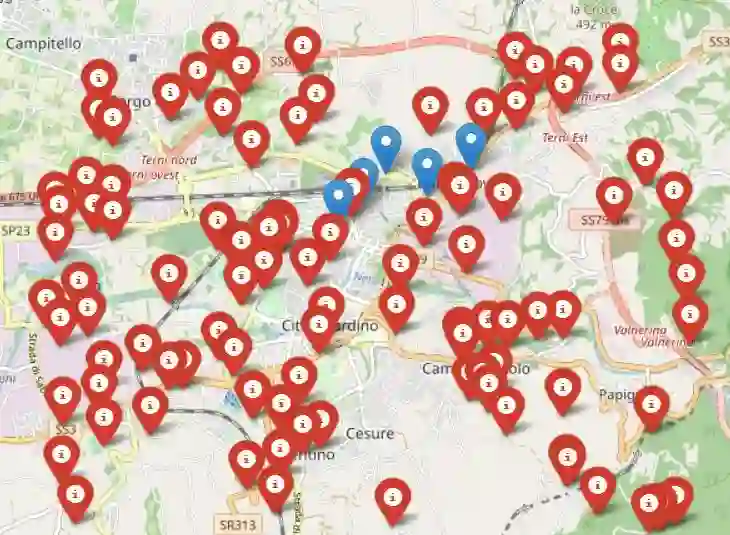
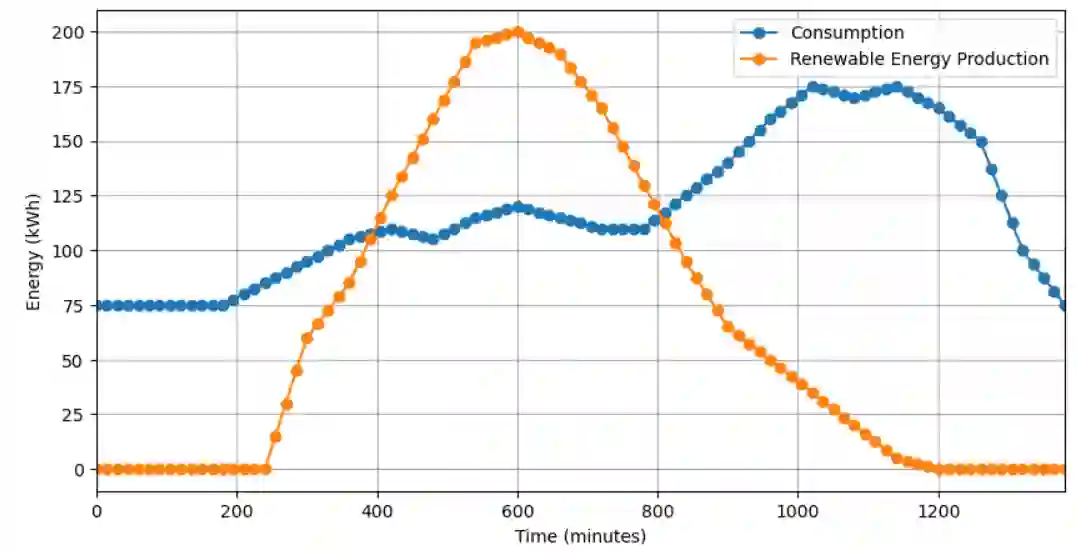
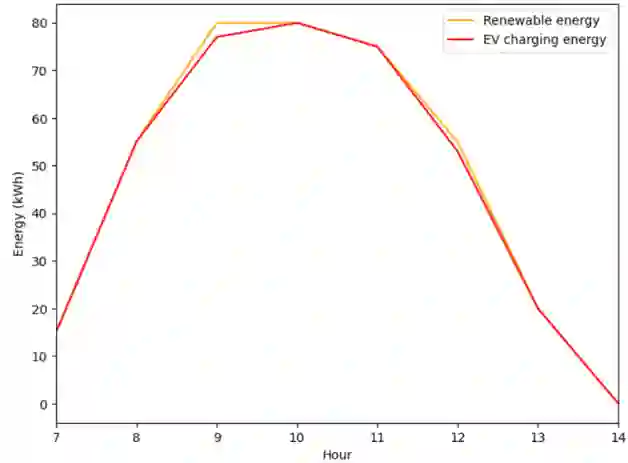
The rise of renewables coincides with the shift towards Electrical Vehicles (EVs) posing technical and operational challenges for the energy balance of the local grid. Nowadays, the energy grid cannot deal with a spike in EVs usage leading to a need for more coordinated and grid aware EVs charging and discharging strategies. However, coordinating power flow from multiple EVs into the grid requires sophisticated algorithms and load-balancing strategies as the complexity increases with more control variables and EVs, necessitating large optimization and decision search spaces. In this paper, we propose an EVs fleet coordination model for the day ahead aiming to ensure a reliable energy supply and maintain a stable local grid, by utilizing EVs to store surplus energy and discharge it during periods of energy deficit. The optimization problem is addressed using Harris Hawks Optimization (HHO) considering criteria related to energy grid balancing, time usage preference, and the location of EV drivers. The EVs schedules, associated with the position of individuals from the population, are adjusted through exploration and exploitation operations, and their technical and operational feasibility is ensured, while the rabbit individual is updated with a non-dominated EV schedule selected per iteration using a roulette wheel algorithm. The solution is evaluated within the framework of an e-mobility service in Terni city. The results indicate that coordinated charging and discharging of EVs not only meet balancing service requirements but also align with user preferences with minimal deviations.
翻译:可再生能源的增长恰逢电动汽车的普及,这对当地电网的能量平衡提出了技术和运营挑战。当前,电网无法应对电动汽车使用的激增,因此需要更加协调且具备电网意识的电动汽车充放电策略。然而,协调多辆电动汽车向电网的电力输送需要复杂的算法和负载均衡策略,因为随着控制变量和电动汽车数量的增加,复杂性也随之提高,这需要庞大的优化和决策搜索空间。本文提出了一种日前电动汽车车队协同模型,旨在通过利用电动汽车存储多余能量并在能量短缺期间放电,确保可靠的能源供应并维持当地电网的稳定。采用哈里斯鹰优化算法处理该优化问题,考虑了电网平衡、时间使用偏好以及电动汽车驾驶员位置等相关准则。与种群中个体位置相关联的电动汽车调度,通过探索和利用操作进行调整,并确保其技术和运营可行性,同时使用轮盘赌算法每轮迭代更新非支配电动汽车调度对应的兔子个体。该解决方案在特尔尼市的一项电动出行服务框架内进行了评估。结果表明,电动汽车的协调充放电不仅能满足平衡服务要求,还能以最小偏差符合用户偏好。




相关内容



 微信扫码咨询专知VIP会员