

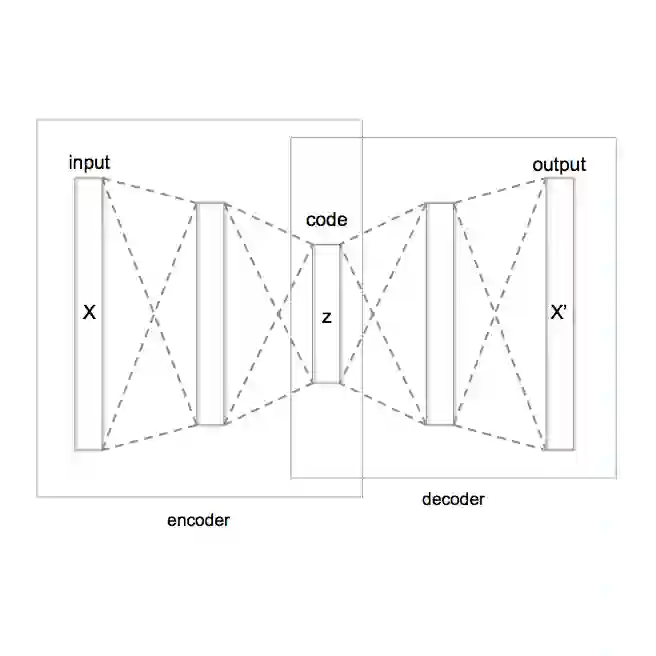
Advancements in digital imaging technologies have sparked increased interest in using multiplexed immunofluorescence (mIF) images to visualise and identify the interactions between specific immunophenotypes with the tumour microenvironment at the cellular level. Current state-of-the-art multiplexed immunofluorescence image analysis pipelines depend on cell feature representations characterised by morphological and stain intensity-based metrics generated using simple statistical and machine learning-based tools. However, these methods are not capable of generating complex representations of cells. We propose a deep learning-based cell feature extraction model using a variational autoencoder with supervision using a latent subspace to extract cell features in mIF images. We perform cell phenotype classification using a cohort of more than 44,000 multiplexed immunofluorescence cell image patches extracted across 1,093 tissue microarray cores of breast cancer patients, to demonstrate the success of our model against current and alternative methods.
翻译:数字成像技术的进步引发了人们日益增长的兴趣,即利用多重免疫荧光图像在细胞水平上可视化并识别特定免疫表型与肿瘤微环境之间的相互作用。当前最先进的多重免疫荧光图像分析流程依赖于细胞特征表示,这些特征由基于形态学和染色强度的度量所表征,这些度量是使用简单的统计和基于机器学习的工具生成的。然而,这些方法无法生成复杂的细胞表示。我们提出了一种基于深度学习的细胞特征提取模型,该模型使用变分自编码器,并通过潜在子空间进行监督,以提取多重免疫荧光图像中的细胞特征。我们利用从1,093个乳腺癌患者组织微阵列核心中提取的超过44,000个多重免疫荧光细胞图像块进行细胞表型分类,以证明我们的模型相对于当前及其他方法的成功。




相关内容




 微信扫码咨询专知VIP会员