

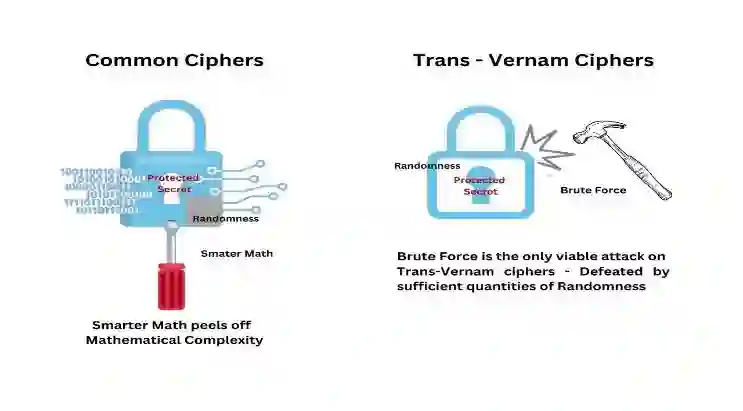
Artificial Intelligence (AI) presents prodigious technological prospects for development, however, all that glitters is not gold! The cyber-world faces the worst nightmare with the advent of AI and quantum computers. Together with Quantum Artificial Intelligence (QAI), they pose a catastrophic threat to modern cryptography. It would also increase the capability of cryptanalysts manifold, with its built-in persistent and extensive predictive intelligence. This prediction ability incapacitates the constrained message space in device cryptography. With the comparison of these assumptions and the intercepted ciphertext, the code-cracking process will considerably accelerate. Before the vigorous and robust developments in AI, we have never faced and never had to prepare for such a plaintext-originating attack. The supremacy of AI can be challenged by creating ciphertexts that would give the AI attacker erroneous responses stymied by randomness and misdirect them. AI threat is deterred by deviating from the conventional use of small, known-size keys and pattern-loaded ciphers. The strategy is vested in implementing larger secret size keys, supplemented by ad-hoc unilateral randomness of unbound limitations and a pattern-devoid technique. The very large key size can be handled with low processing and computational burden to achieve desired unicity distances. The strategy against AI odds is feasible by implementing non-algorithmic randomness, large and inexpensive memory chips, and wide-area communication networks. The strength of AI, i.e., randomness and pattern detection can be used to generate highly optimized ciphers and algorithms. These pattern-devoid, randomness-rich ciphers also provide a timely and plausible solution for NIST's proactive approach toward the quantum challenge.
翻译:人工智能(AI)为发展带来了巨大的技术前景,然而,并非所有闪光之物皆为黄金!随着人工智能和量子计算机的出现,网络世界正面临最严峻的噩梦。结合量子人工智能(QAI),它们对现代密码学构成了灾难性威胁。凭借其内置的持久且广泛的预测智能,它们还将成倍提升密码分析者的能力。这种预测能力使设备密码学中受限的消息空间失效。通过比较这些假设与截获的密文,破解密码的过程将大幅加速。在人工智能蓬勃发展之前,我们从未面临也无需准备应对这种源自明文的攻击。可以通过生成密文来挑战AI的优越性,这些密文会因随机性而让AI攻击者产生错误响应,从而误导它们。通过摒弃使用小型固定尺寸密钥和模式化密码的传统方式,可以遏制AI威胁。该策略在于采用更大尺寸的密钥,辅以无界限制的临时单边随机性和无模式技术。通过低处理量和计算负担即可处理超大密钥尺寸,以达到所需的单一性距离。实施非算法随机性、大容量且低成本的内存芯片以及广域通信网络,是应对AI挑战的可行策略。AI的优势——即随机性和模式检测能力——可用于生成高度优化的密码和算法。这些无模式、富随机性的密码也为NIST应对量子挑战的前瞻性方法提供了及时且可行的解决方案。




相关内容




 微信扫码咨询专知VIP会员