

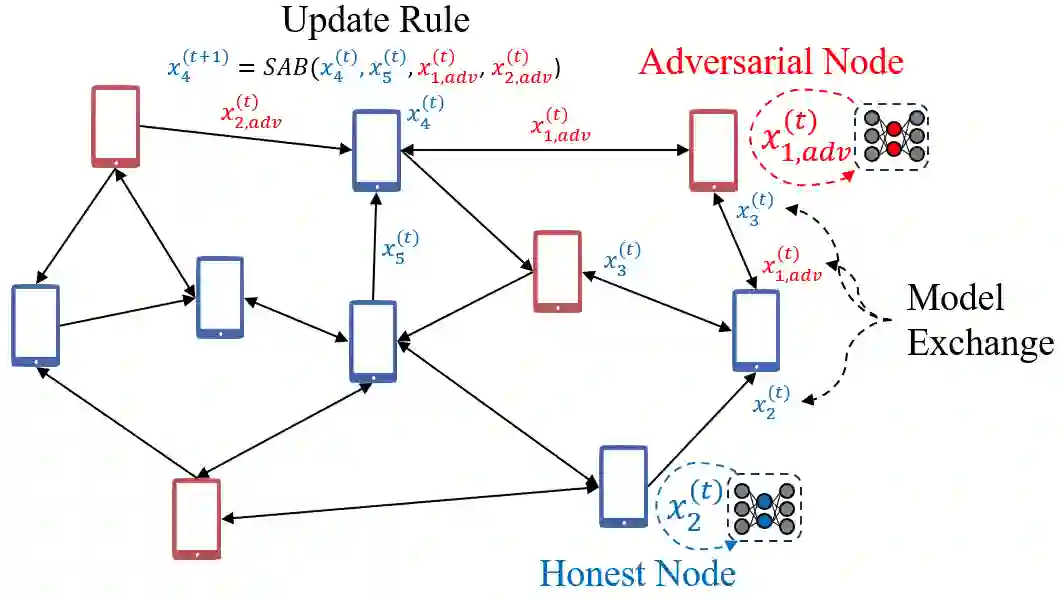
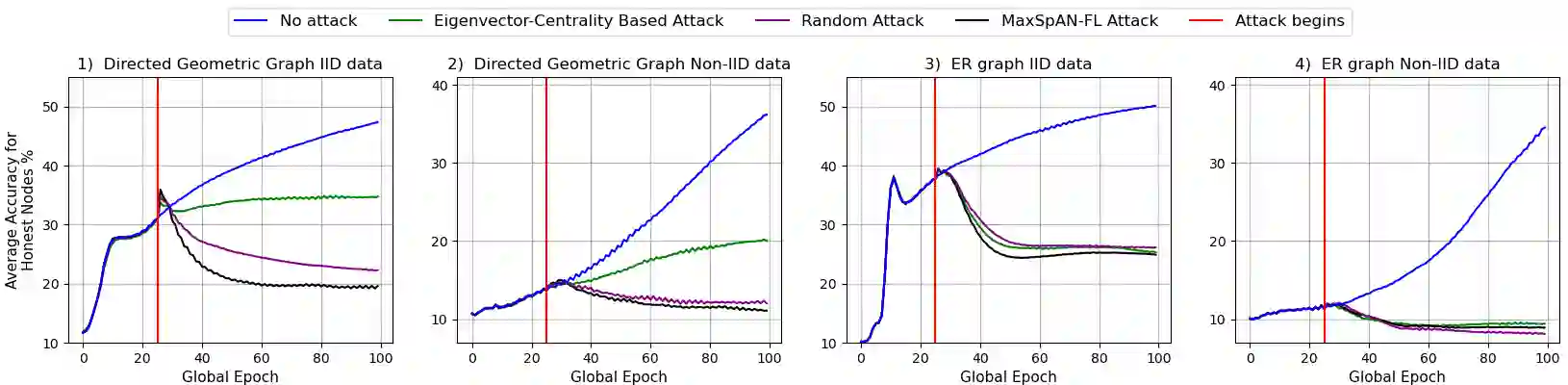
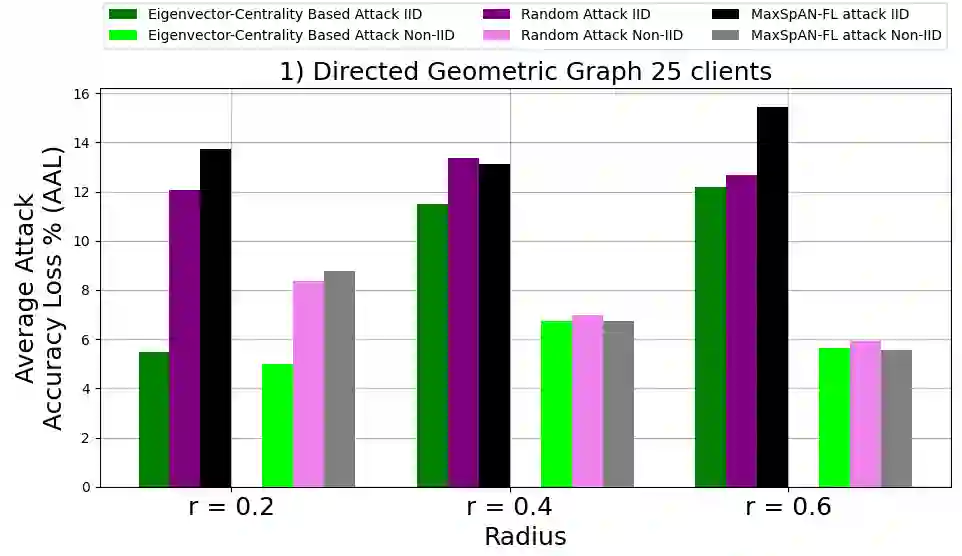
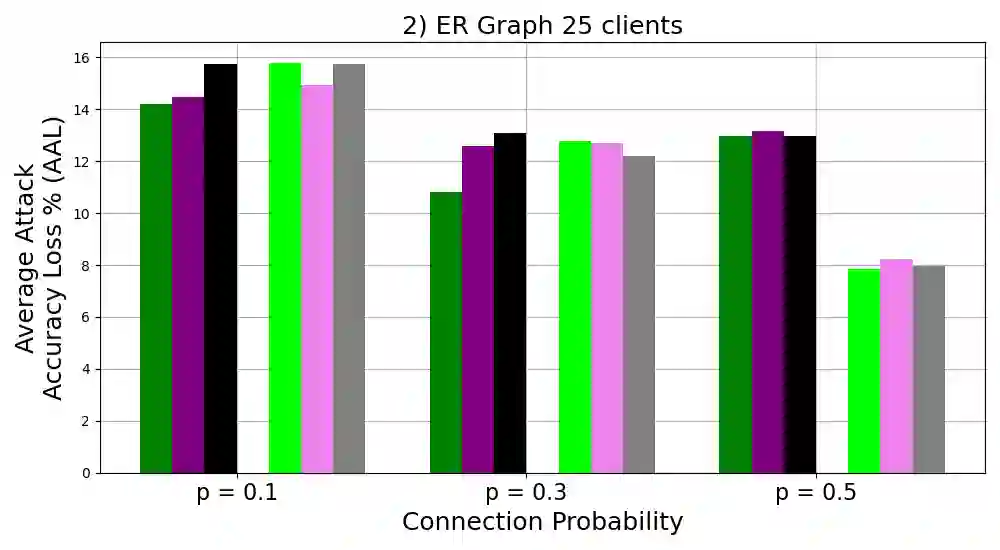
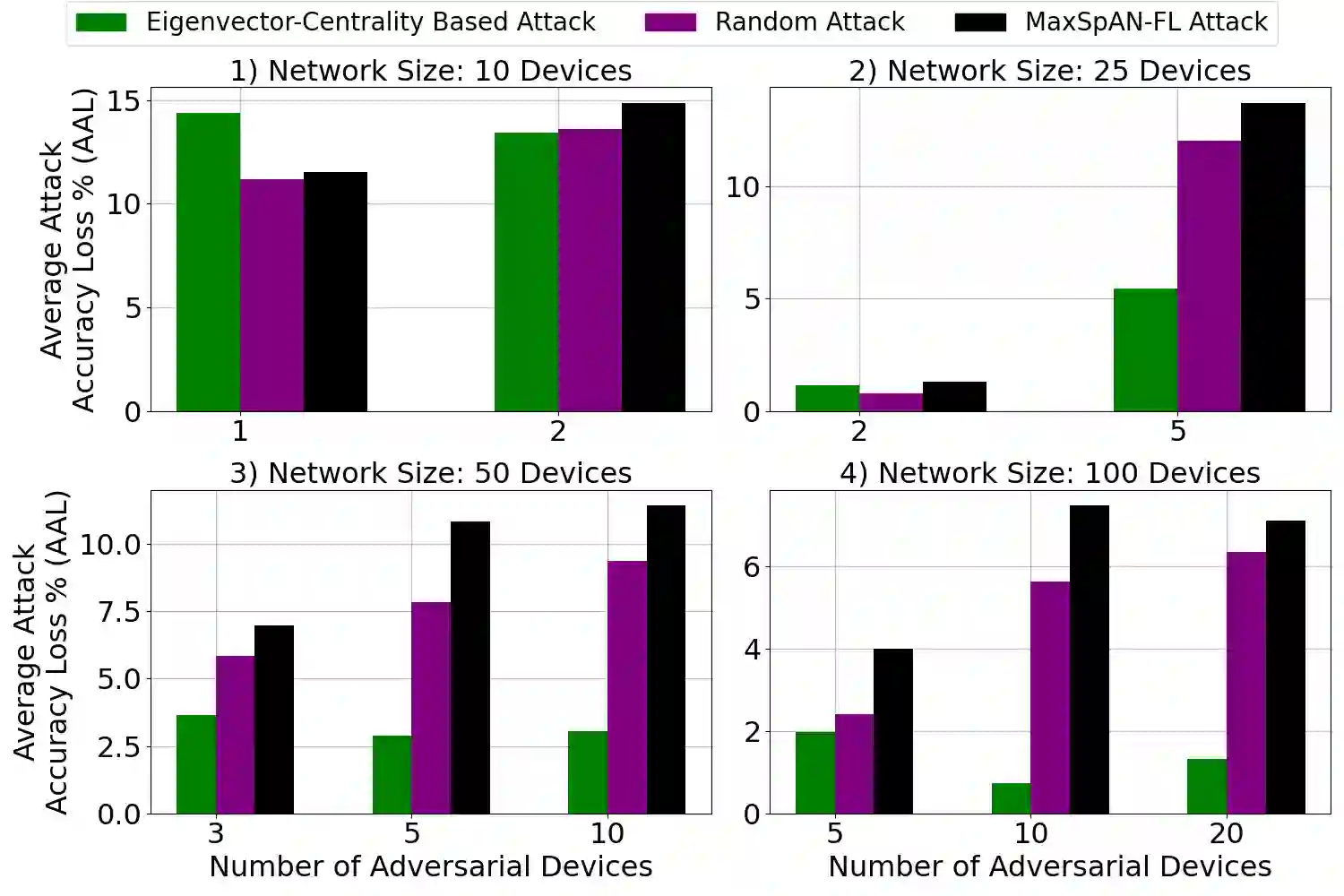
As Federated Learning (FL) grows in popularity, new decentralized frameworks are becoming widespread. These frameworks leverage the benefits of decentralized environments to enable fast and energy-efficient inter-device communication. However, this growing popularity also intensifies the need for robust security measures. While existing research has explored various aspects of FL security, the role of adversarial node placement in decentralized networks remains largely unexplored. This paper addresses this gap by analyzing the performance of decentralized FL for various adversarial placement strategies when adversaries can jointly coordinate their placement within a network. We establish two baseline strategies for placing adversarial node: random placement and network centrality-based placement. Building on this foundation, we propose a novel attack algorithm that prioritizes adversarial spread over adversarial centrality by maximizing the average network distance between adversaries. We show that the new attack algorithm significantly impacts key performance metrics such as testing accuracy, outperforming the baseline frameworks by between 9% and 66.5% for the considered setups. Our findings provide valuable insights into the vulnerabilities of decentralized FL systems, setting the stage for future research aimed at developing more secure and robust decentralized FL frameworks.
翻译:随着联邦学习(Federated Learning, FL)日益普及,新的去中心化框架正变得愈发广泛。这些框架利用去中心化环境的优势,实现了快速且节能的设备间通信。然而,这种日益增长的普及性也加剧了对稳健安全措施的需求。尽管现有研究已探索了联邦学习安全的多个方面,但去中心化网络中对抗性节点部署的作用在很大程度上仍未被研究。本文通过分析不同对抗性部署策略下,当对手能够协同协调其在网络中的部署位置时去中心化联邦学习的性能表现,填补了这一研究空白。我们确立了两种对抗性节点部署的基线策略:随机部署和基于网络中心性的部署。在此基础之上,我们提出了一种新颖的攻击算法,该算法通过最大化对抗性节点间的平均网络距离,优先考虑对抗性传播而非对抗性中心性。我们证明,新攻击算法会显著影响测试准确率等关键性能指标,在所考虑的配置下,其效果比基线框架高出9%至66.5%。我们的研究结果为去中心化联邦学习系统的脆弱性提供了宝贵见解,为未来旨在开发更安全、更稳健的去中心化联邦学习框架的研究奠定了基础。




相关内容




 微信扫码咨询专知VIP会员