

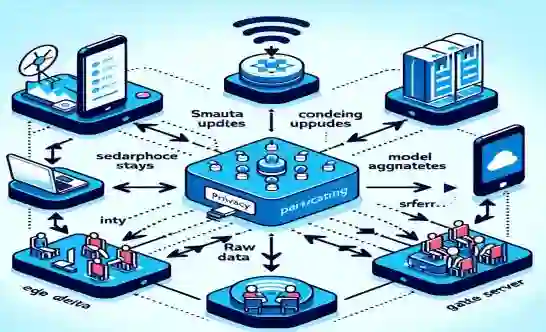
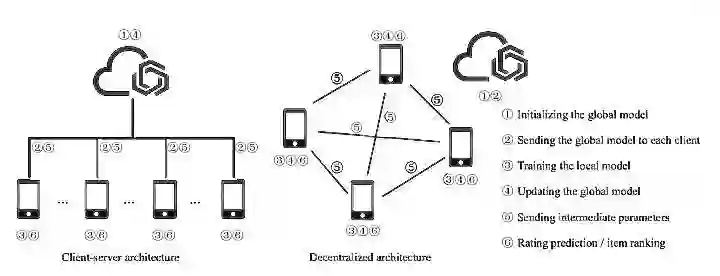
To enable large-scale and efficient deployment of artificial intelligence (AI), the combination of AI and edge computing has spawned Edge Intelligence, which leverages the computing and communication capabilities of end devices and edge servers to process data closer to where it is generated. A key technology for edge intelligence is the privacy-protecting machine learning paradigm known as Federated Learning (FL), which enables data owners to train models without having to transfer raw data to third-party servers. However, FL networks are expected to involve thousands of heterogeneous distributed devices. As a result, communication efficiency remains a key bottleneck. To reduce node failures and device exits, a Hierarchical Federated Learning (HFL) framework is proposed, where a designated cluster leader supports the data owner through intermediate model aggregation. Therefore, based on the improvement of edge server resource utilization, this paper can effectively make up for the limitation of cache capacity. In order to mitigate the impact of soft clicks on the quality of user experience (QoE), the authors model the user QoE as a comprehensive system cost. To solve the formulaic problem, the authors propose a decentralized caching algorithm with federated deep reinforcement learning (DRL) and federated learning (FL), where multiple agents learn and make decisions independently
翻译:为实现人工智能(AI)的大规模高效部署,AI与边缘计算的结合催生了边缘智能技术,该技术利用终端设备和边缘服务器的计算与通信能力,在数据生成更近的位置进行数据处理。边缘智能的关键技术之一是称为联邦学习的隐私保护机器学习范式,它使数据所有者能够在不将原始数据传输至第三方服务器的情况下训练模型。然而,联邦学习网络需包含数千个异构分布式设备,这使得通信效率始终是核心瓶颈。为减少节点故障和设备退出,本文提出一种分层联邦学习框架,其中指定的集群领导者通过中间模型聚合支持数据所有者。基于边缘服务器资源利用率的提升,该论文有效弥补了缓存容量的局限性。为缓解软点击对用户体验质量(QoE)的影响,作者将用户QoE建模为综合系统成本。为解决公式化问题,作者提出了一种基于联邦深度强化学习(DRL)与联邦学习(FL)的去中心化缓存算法,其中多个智能体独立进行学习与决策。







相关内容




 微信扫码咨询专知VIP会员