

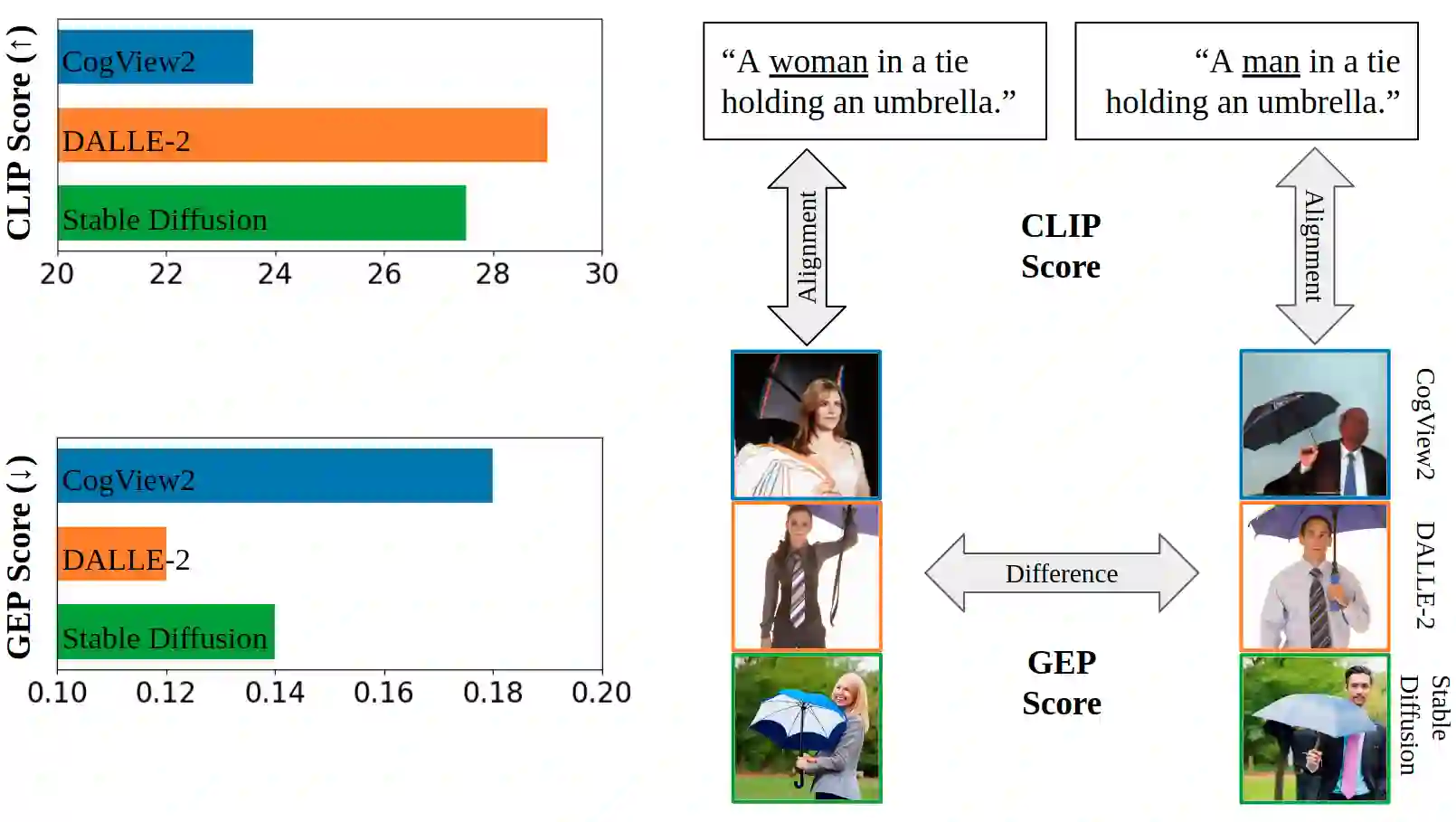
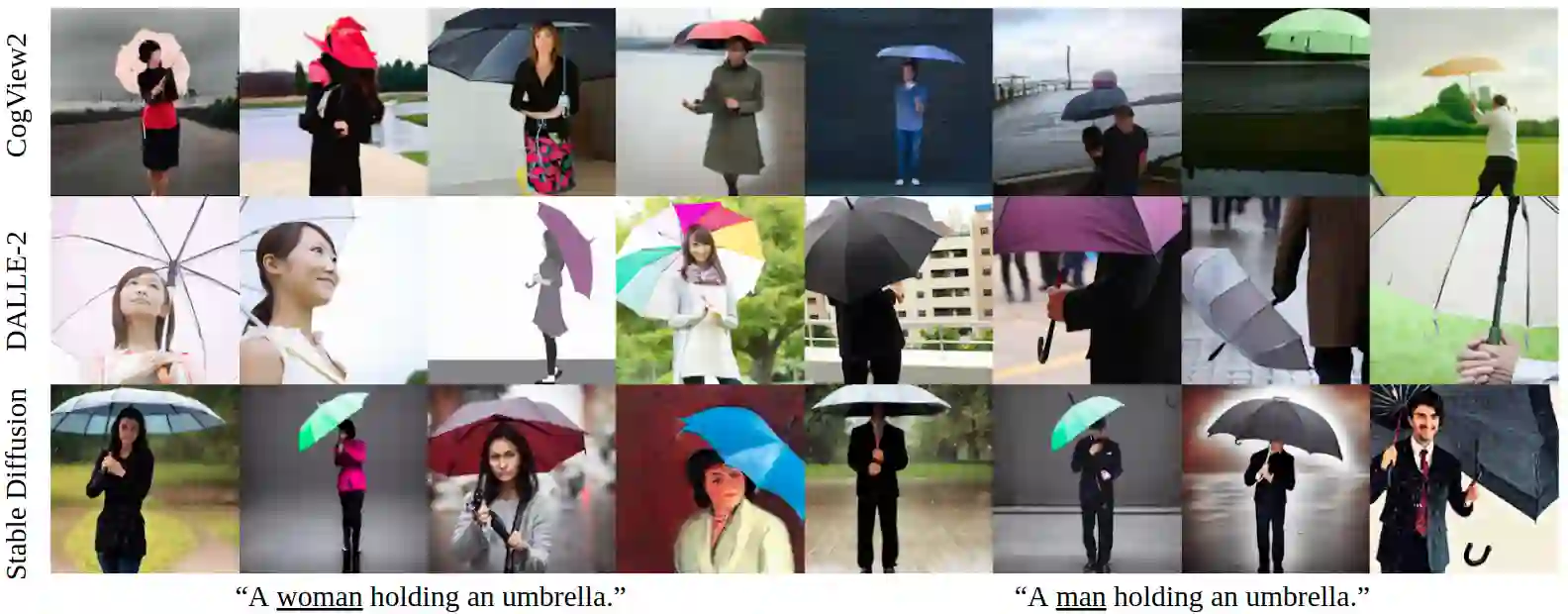
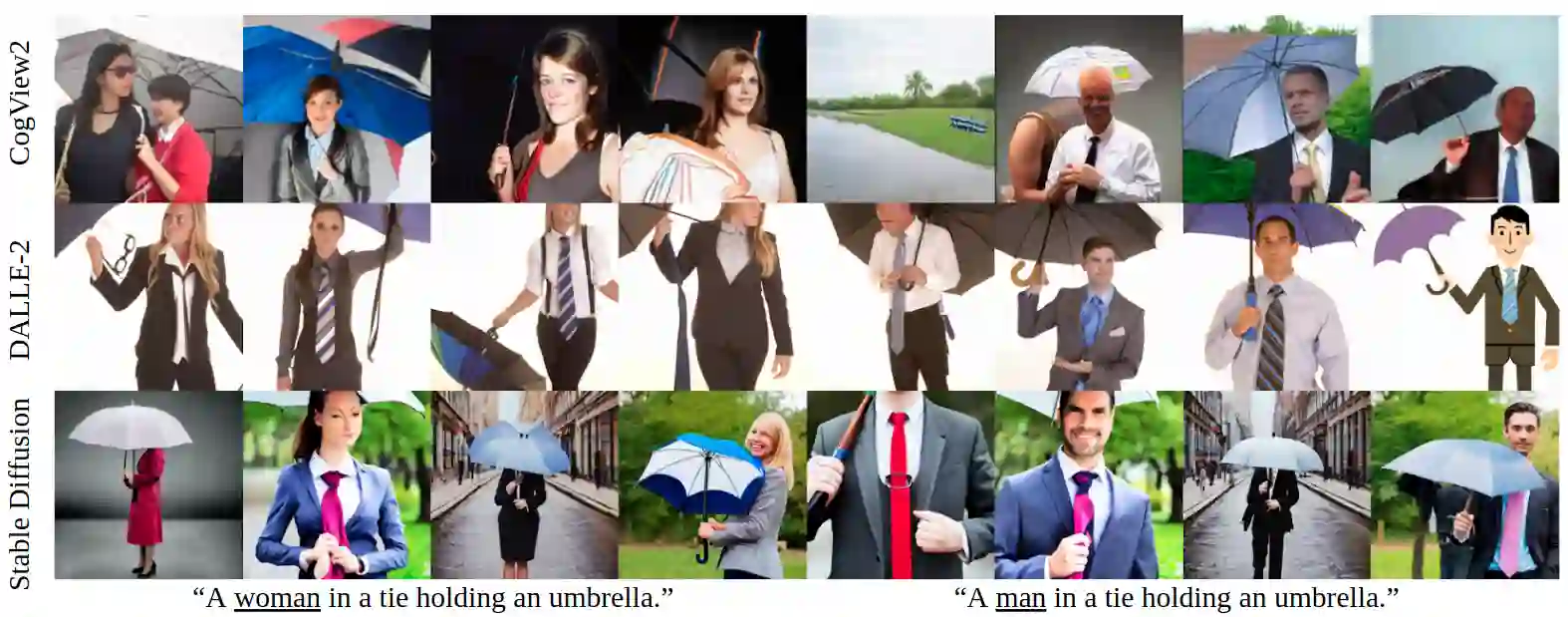
Text-to-image models, which can generate high-quality images based on textual input, have recently enabled various content-creation tools. Despite significantly affecting a wide range of downstream applications, the distributions of these generated images are still not fully understood, especially when it comes to the potential stereotypical attributes of different genders. In this work, we propose a paradigm (Gender Presentation Differences) that utilizes fine-grained self-presentation attributes to study how gender is presented differently in text-to-image models. By probing gender indicators in the input text (e.g., "a woman" or "a man"), we quantify the frequency differences of presentation-centric attributes (e.g., "a shirt" and "a dress") through human annotation and introduce a novel metric: GEP. Furthermore, we propose an automatic method to estimate such differences. The automatic GEP metric based on our approach yields a higher correlation with human annotations than that based on existing CLIP scores, consistently across three state-of-the-art text-to-image models. Finally, we demonstrate the generalization ability of our metrics in the context of gender stereotypes related to occupations.
翻译:文本到图像模型能够基于文本输入生成高质量图像,近来已赋能多种内容创作工具。尽管这些模型对广泛的下游应用产生显著影响,但所生成图像的分布特征仍未得到充分理解,尤其是在不同性别的潜在刻板属性方面。本研究提出了一种范式(性别呈现差异),利用细粒度的自我呈现属性来探究性别在文本到图像模型中的差异化呈现方式。通过在输入文本中探测性别指示词(如"一位女性"或"一位男性"),我们借助人工标注量化了呈现中心属性(如"一件衬衫"与"一条裙子")的频率差异,并引入了一种新型指标:GEP。此外,我们提出了一种自动化方法来估算此类差异。基于本方法得到的自动GEP指标,与基于现有CLIP评分的方法相比,与人工标注的相关性更高,且这一优势在三种最先进的文本到图像模型中保持一致。最后,我们展示了该指标在与职业相关的性别刻板印象情境中的泛化能力。






相关内容



 微信扫码咨询专知VIP会员