

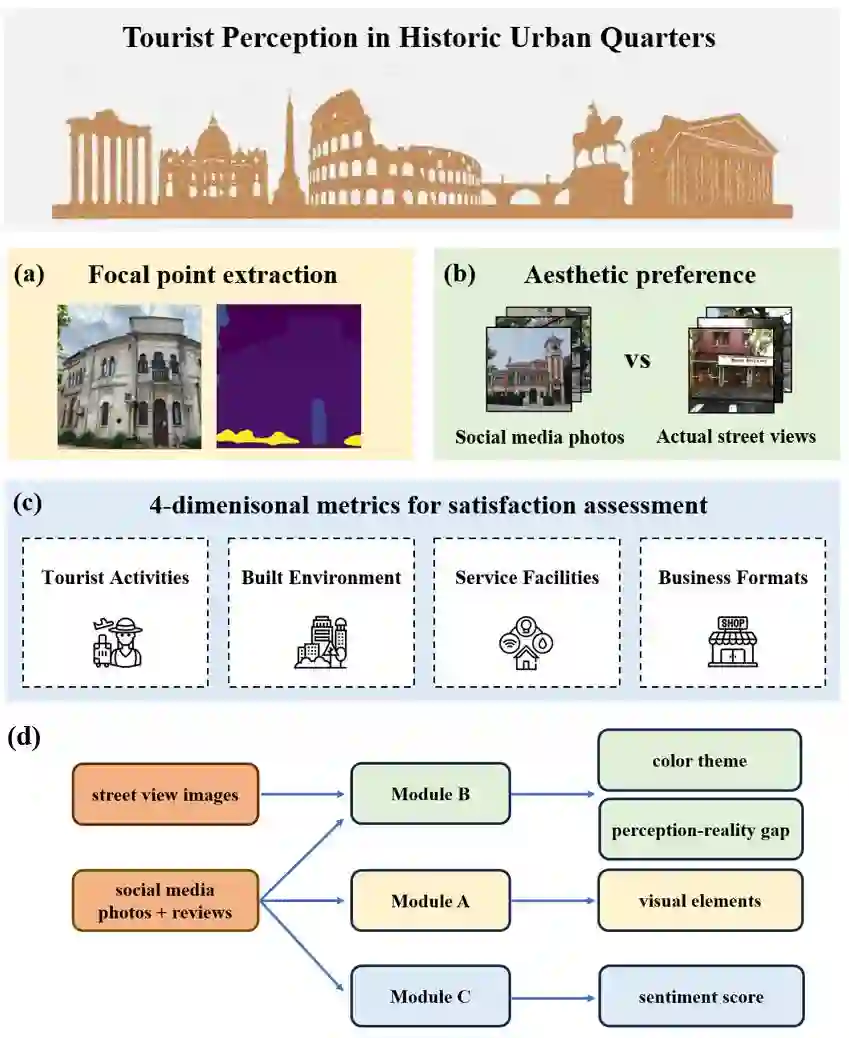
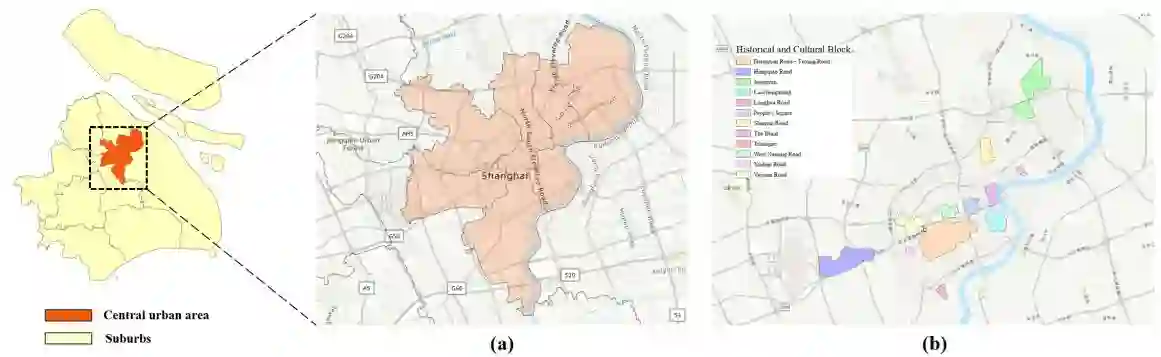
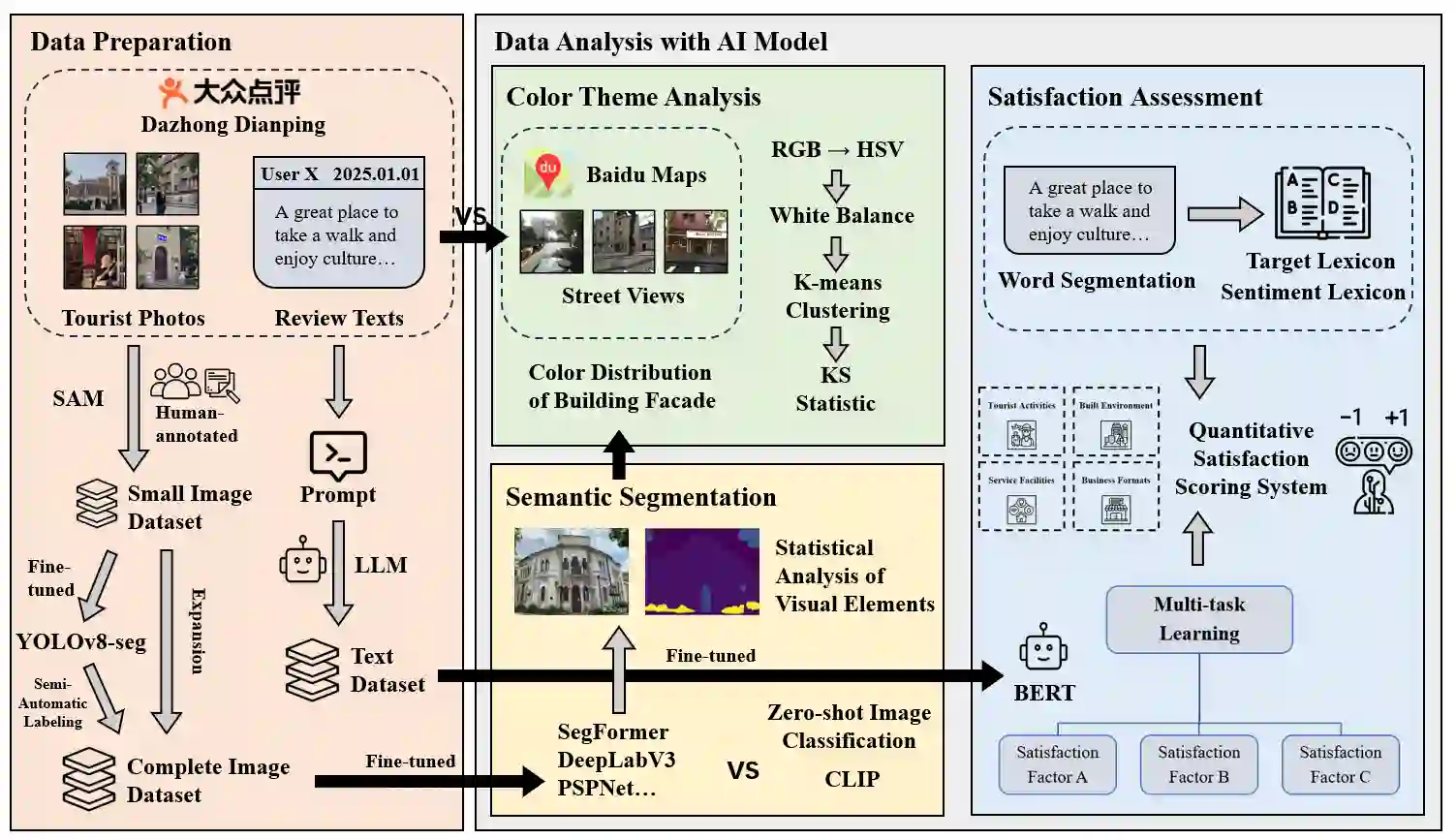
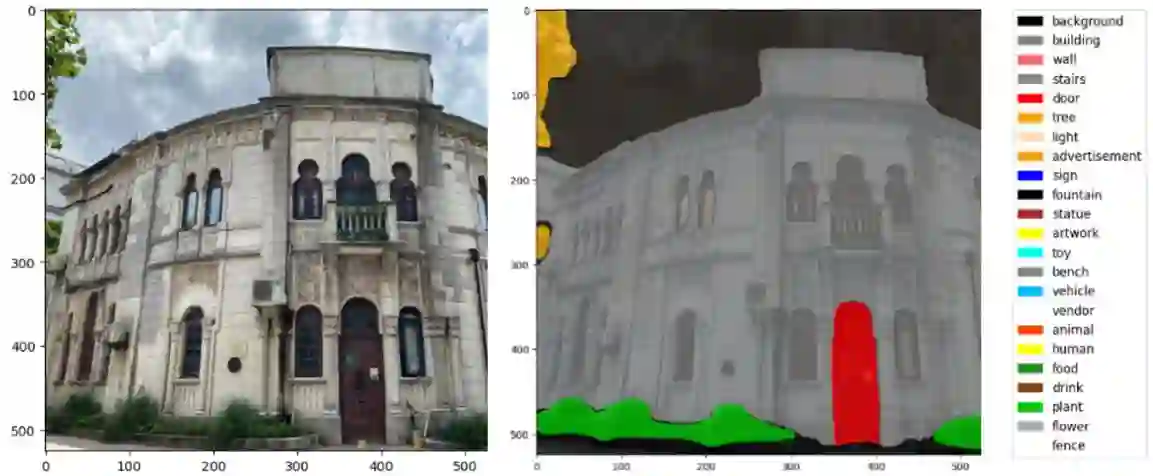
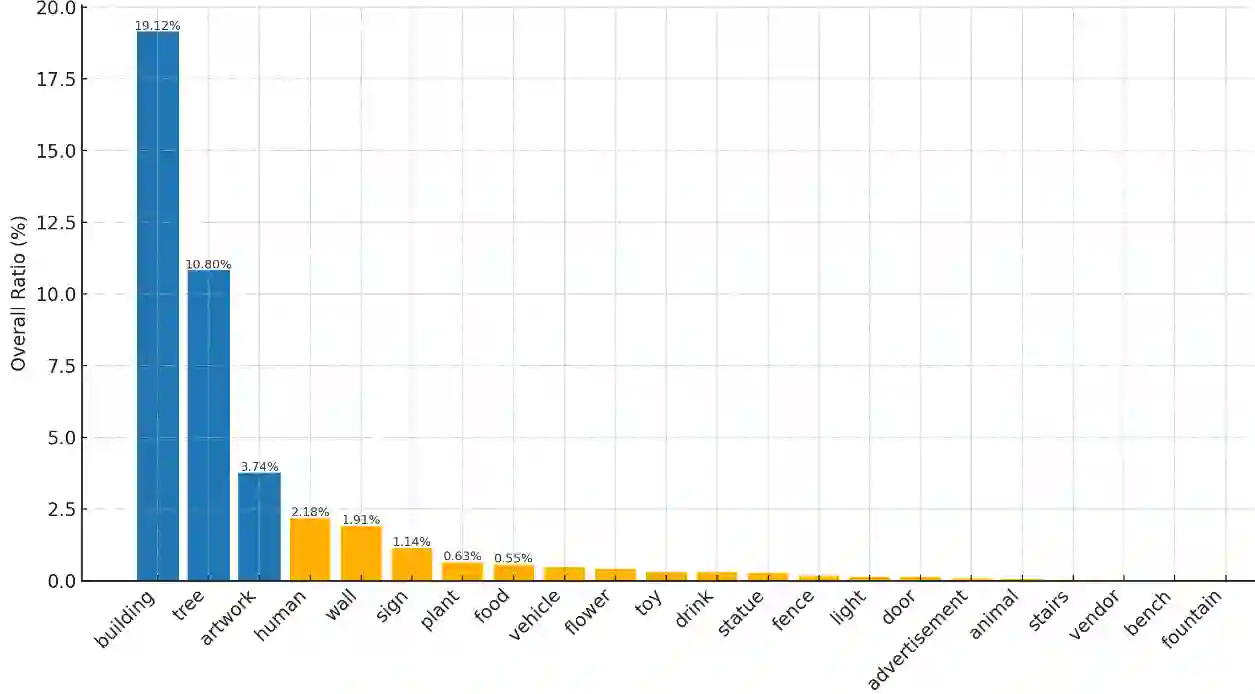
Historic urban quarters play a vital role in preserving cultural heritage while serving as vibrant spaces for tourism and everyday life. Understanding how tourists perceive these environments is essential for sustainable, human-centered urban planning. This study proposes a multidimensional AI-powered framework for analyzing tourist perception in historic urban quarters using multimodal data from social media. Applied to twelve historic quarters in central Shanghai, the framework integrates focal point extraction, color theme analysis, and sentiment mining. Visual focus areas are identified from tourist-shared photos using a fine-tuned semantic segmentation model. To assess aesthetic preferences, dominant colors are extracted using a clustering method, and their spatial distribution across quarters is analyzed. Color themes are further compared between social media photos and real-world street views, revealing notable shifts. This divergence highlights potential gaps between visual expectations and the built environment, reflecting both stylistic preferences and perceptual bias. Tourist reviews are evaluated through a hybrid sentiment analysis approach combining a rule-based method and a multi-task BERT model. Satisfaction is assessed across four dimensions: tourist activities, built environment, service facilities, and business formats. The results reveal spatial variations in aesthetic appeal and emotional response. Rather than focusing on a single technical innovation, this framework offers an integrated, data-driven approach to decoding tourist perception and contributes to informed decision-making in tourism, heritage conservation, and the design of aesthetically engaging public spaces.
翻译:历史城区在保护文化遗产的同时,作为旅游与日常生活的活跃空间发挥着至关重要的作用。理解游客如何感知这些环境对于实现可持续、以人为本的城市规划至关重要。本研究提出一个多维AI驱动框架,利用社交媒体多模态数据分析历史城区的游客感知。该框架应用于上海中心城区的十二个历史街区,整合了焦点提取、色彩主题分析和情感挖掘。通过微调的语义分割模型,从游客分享的照片中识别视觉关注区域。为评估审美偏好,采用聚类方法提取主导色彩,并分析其在不同街区的空间分布。进一步比较社交媒体照片与真实街景的色彩主题,揭示了显著差异。这种分歧凸显了视觉期望与建成环境之间的潜在差距,反映了风格偏好与感知偏差。通过结合基于规则的方法与多任务BERT模型的混合情感分析技术评估游客评论。满意度从四个维度进行评估:旅游活动、建成环境、服务设施与商业业态。结果揭示了审美吸引力与情感反应的空间异质性。本框架并非聚焦单一技术创新,而是提供了一种综合的、数据驱动的方法来解码游客感知,为旅游管理、遗产保护及具有美学吸引力的公共空间设计提供决策支持。




相关内容




 微信扫码咨询专知VIP会员