

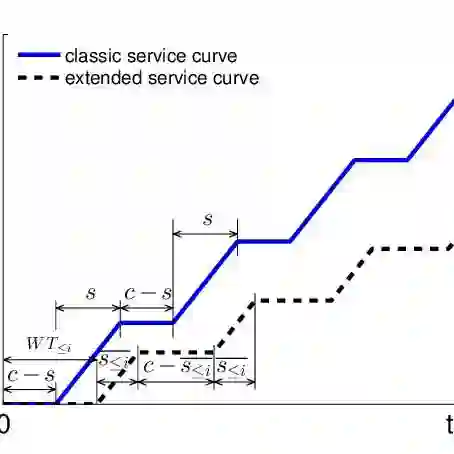
Multi-robot system for manufacturing is an Industry Internet of Things (IIoT) paradigm with significant operational cost savings and productivity improvement, where Unmanned Aerial Vehicles (UAVs) are employed to control and implement collaborative productions without human intervention. This mission-critical system relies on 3-Dimension (3-D) scene recognition to improve operation accuracy in the production line and autonomous piloting. However, implementing 3-D point cloud learning, such as Pointnet, is challenging due to limited sensing and computing resources equipped with UAVs. Therefore, we propose a Digital Twin (DT) empowered Knowledge Distillation (KD) method to generate several lightweight learning models and select the optimal model to deploy on UAVs. With a digital replica of the UAVs preserved at the edge server, the DT system controls the model sharing network topology and learning model structure to improve recognition accuracy further. Moreover, we employ network calculus to formulate and solve the model sharing configuration problem toward minimal resource consumption, as well as convergence. Simulation experiments are conducted over a popular point cloud dataset to evaluate the proposed scheme. Experiment results show that the proposed model sharing scheme outperforms the individual model in terms of computing resource consumption and recognition accuracy.
翻译:面向制造的多机器人系统是工业物联网(IIoT)的一种范式,可在无需人工干预的情况下,通过部署无人机(UAV)控制并实现协同生产,从而显著节约运营成本并提升生产力。这一关键任务系统依赖于三维(3-D)场景识别以提高生产线操作精度及自主导航能力。然而,由于无人机配备的感知与计算资源有限,实现Pointnet等三维点云学习技术面临挑战。为此,我们提出一种数字孪生(DT)赋能的知识蒸馏(KD)方法,用于生成多个轻量化学习模型,并选择最优模型部署于无人机。通过将无人机的数字副本保存于边缘服务器,DT系统可控制模型共享网络拓扑结构与学习模型架构,从而进一步提升识别精度。此外,我们引入网络演算理论对模型共享配置问题进行建模与求解,以最小化资源消耗并确保收敛性。基于主流点云数据集的仿真实验验证了所提方案的有效性。实验结果表明,所提出的模型共享方案在计算资源消耗与识别精度方面均优于单一模型。







相关内容




 微信扫码咨询专知VIP会员