

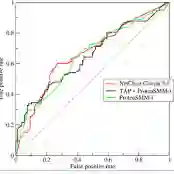
We propose to integrate weapon system features (such as weapon system manufacturer, deployment time and location, storage time and location, etc.) into a parameterized Cox-Weibull [1] reliability model via a neural network, like DeepSurv [2], to improve predictive maintenance. In parallel, we develop an alternative Bayesian model by parameterizing the Weibull parameters with a neural network and employing dropout methods such as Monte-Carlo (MC)-dropout for comparative purposes. Due to data collection procedures in weapon system testing we employ a novel interval-censored log-likelihood which incorporates Monte-Carlo Markov Chain (MCMC) [3] sampling of the Weibull parameters during gradient descent optimization. We compare classification metrics such as receiver operator curve (ROC) area under the curve (AUC), precision-recall (PR) AUC, and F scores to show our model generally outperforms traditional powerful models such as XGBoost and the current standard conditional Weibull probability density estimation model.
翻译:我们提出通过神经网络(如DeepSurv [2])将武器系统特征(例如武器系统制造商、部署时间与地点、存储时间与地点等)融入参数化的Cox-Weibull [1]可靠性模型中,以改进预测性维护。同时,我们开发了一种替代的贝叶斯模型,通过神经网络对Weibull参数进行参数化,并采用蒙特卡洛(MC)dropout等方法进行对比分析。针对武器系统测试中的数据收集流程,我们采用了一种新颖的区间删失对数似然函数,该函数在梯度下降优化过程中结合了Weibull参数的蒙特卡洛马尔可夫链(MCMC)[3]采样。通过比较分类指标,如接收者操作特征(ROC)曲线下面积(AUC)、精确率-召回率(PR)AUC和F值,我们证明所提出的模型通常优于传统强模型(如XGBoost)以及当前标准的条件Weibull概率密度估计模型。




相关内容

 微信扫码咨询专知VIP会员