

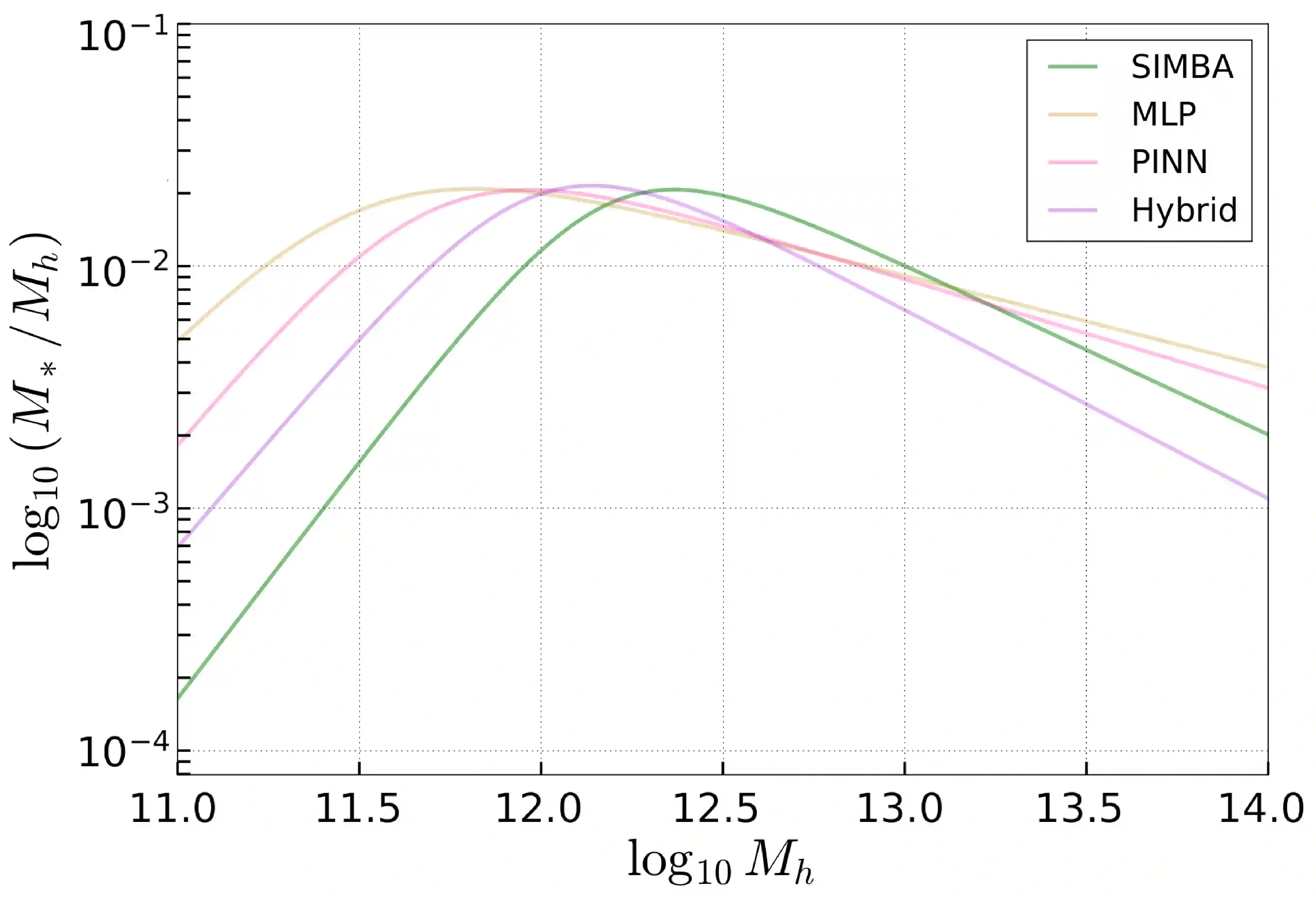
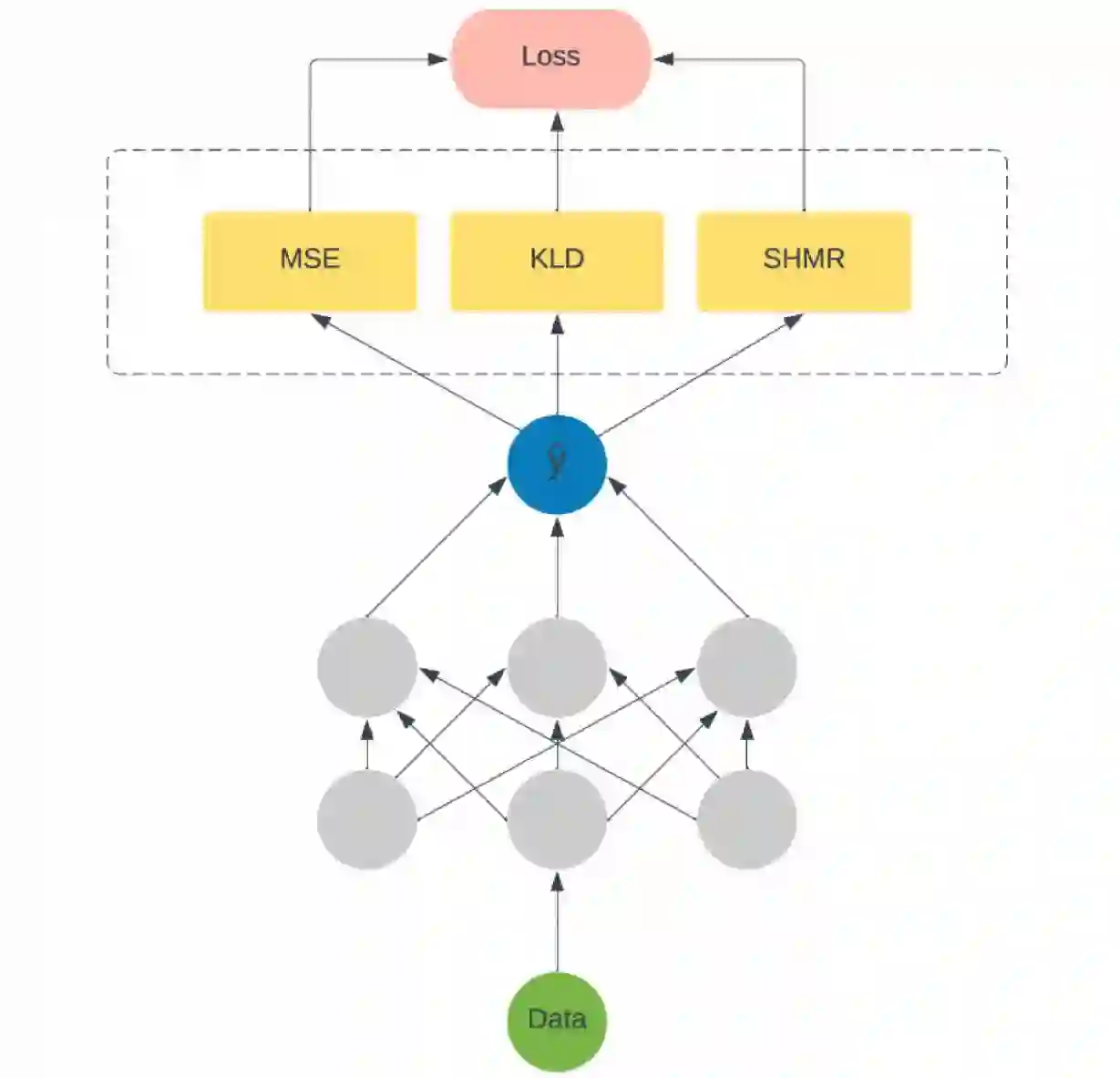
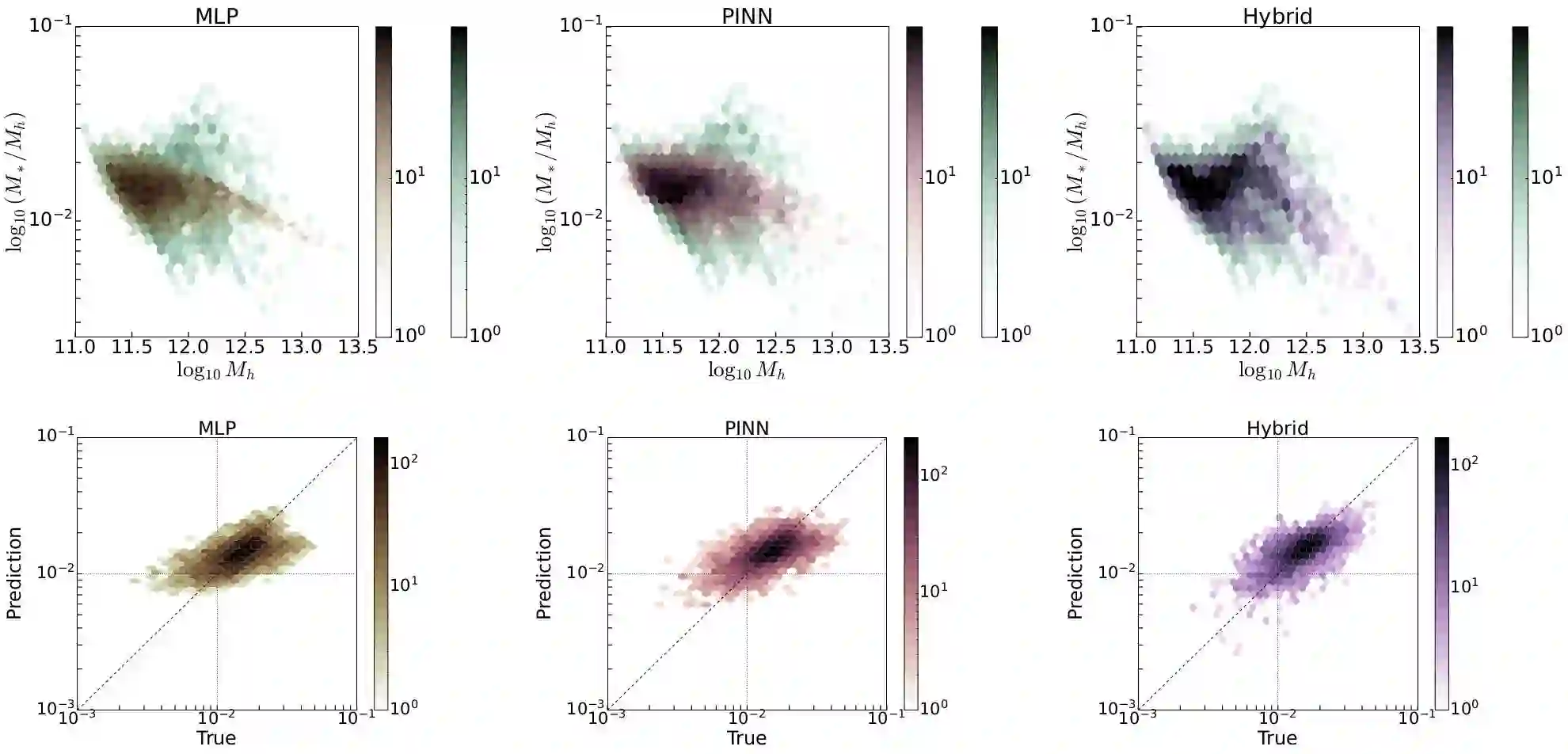
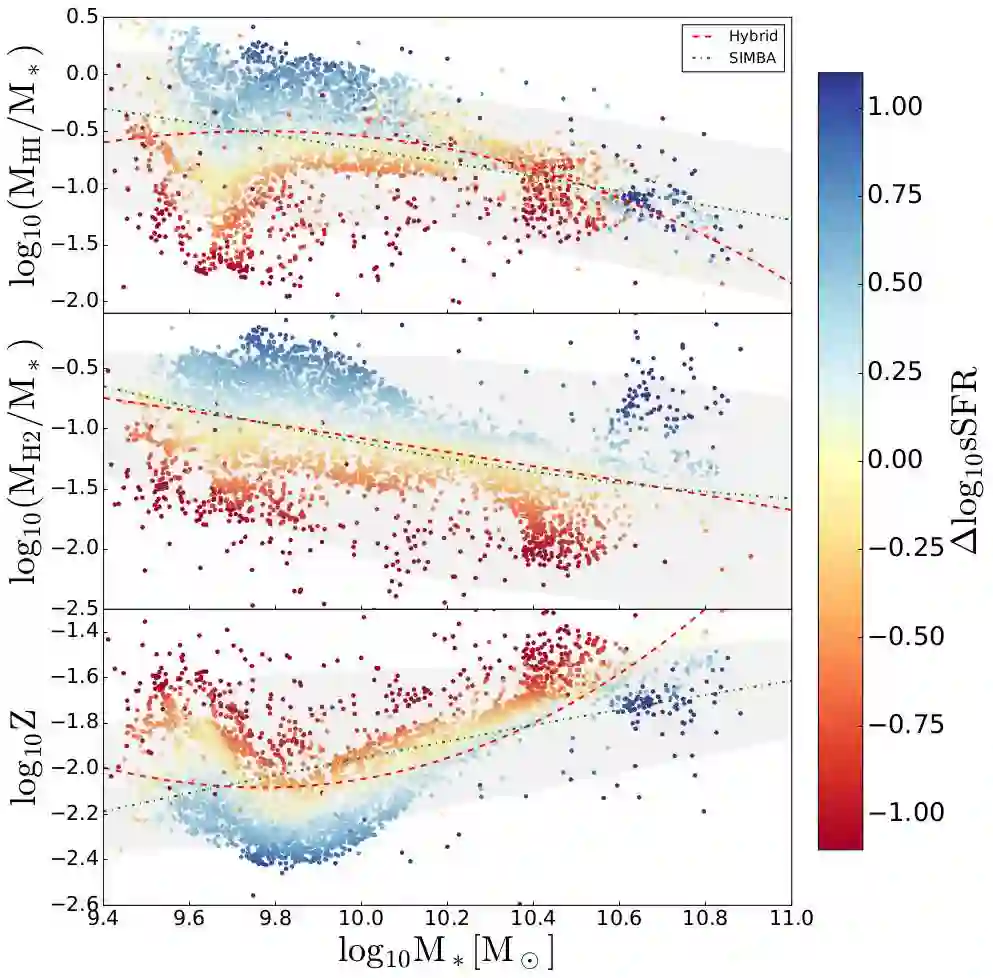
Physics-informed neural networks have emerged as a coherent framework for building predictive models that combine statistical patterns with domain knowledge. The underlying notion is to enrich the optimization loss function with known relationships to constrain the space of possible solutions. Hydrodynamic simulations are a core constituent of modern cosmology, while the required computations are both expensive and time-consuming. At the same time, the comparatively fast simulation of dark matter requires fewer resources, which has led to the emergence of machine learning algorithms for baryon inpainting as an active area of research; here, recreating the scatter found in hydrodynamic simulations is an ongoing challenge. This paper presents the first application of physics-informed neural networks to baryon inpainting by combining advances in neural network architectures with physical constraints, injecting theory on baryon conversion efficiency into the model loss function. We also introduce a punitive prediction comparison based on the Kullback-Leibler divergence, which enforces scatter reproduction. By simultaneously extracting the complete set of baryonic properties for the Simba suite of cosmological simulations, our results demonstrate improved accuracy of baryonic predictions based on dark matter halo properties, successful recovery of the fundamental metallicity relation, and retrieve scatter that traces the target simulation's distribution.
翻译:物理信息神经网络已成为构建预测模型的统一框架,能够将统计模式与领域知识相结合。其核心思想是将已知物理关系融入优化损失函数,以约束可行解空间。流体动力学模拟是现代宇宙学的核心组成部分,但所需计算既昂贵又耗时。相比之下,暗物质模拟因计算资源需求较少而速度较快,这促使基于机器学习算法的重子填补技术成为活跃研究领域;其中,再现流体动力学模拟中的离散分布仍是当前挑战。本文首次将物理信息神经网络应用于重子填补,通过结合神经网络架构的最新进展与物理约束,将重子转换效率理论注入模型损失函数。同时引入基于KL散度的惩罚性预测比较机制,强制实现离散分布的复现。通过对Simba宇宙学模拟套件完整重子属性的同步提取,实验结果表明:基于暗物质晕特性的重子预测精度显著提升,成功恢复了基本金属丰度关系,且生成的离散分布能准确追踪目标模拟的分布特征。




相关内容





 微信扫码咨询专知VIP会员