

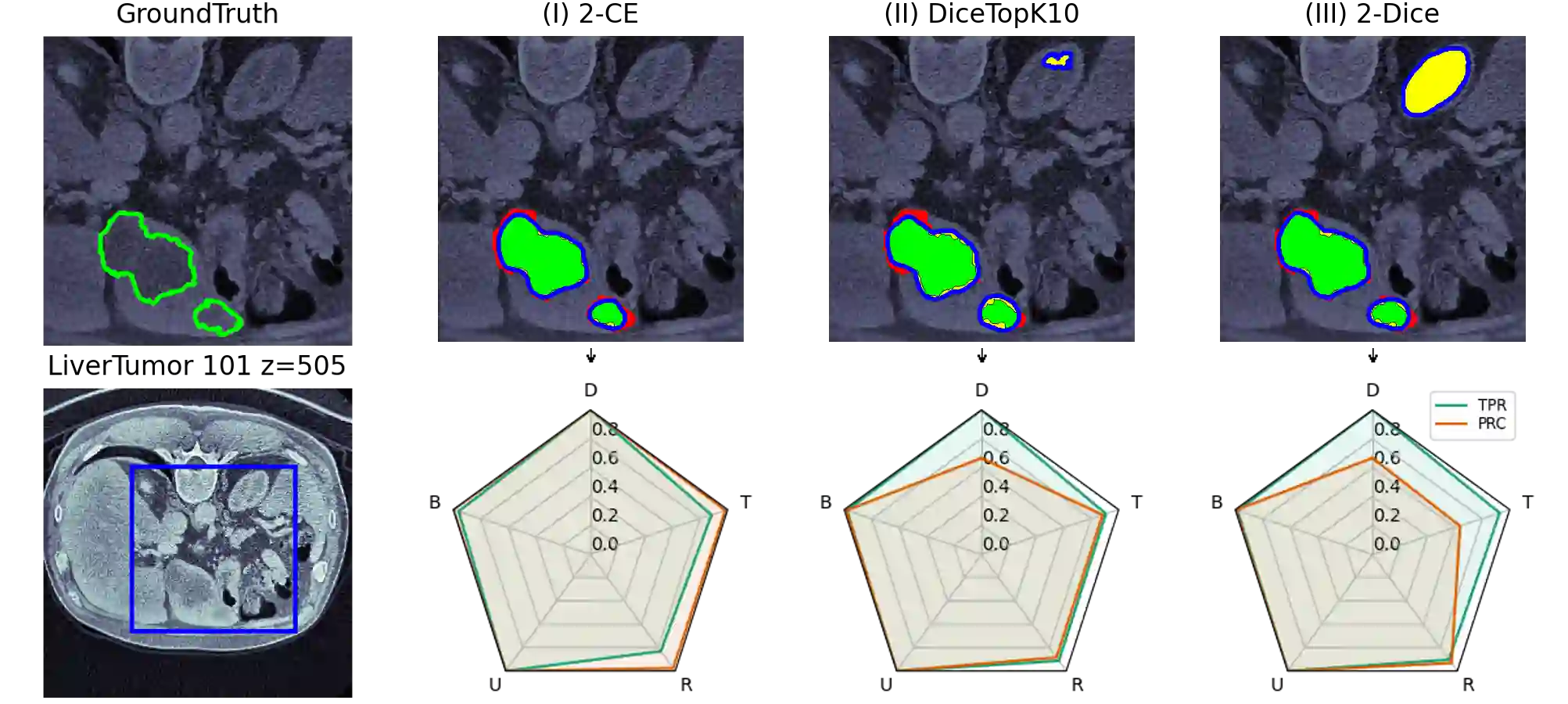
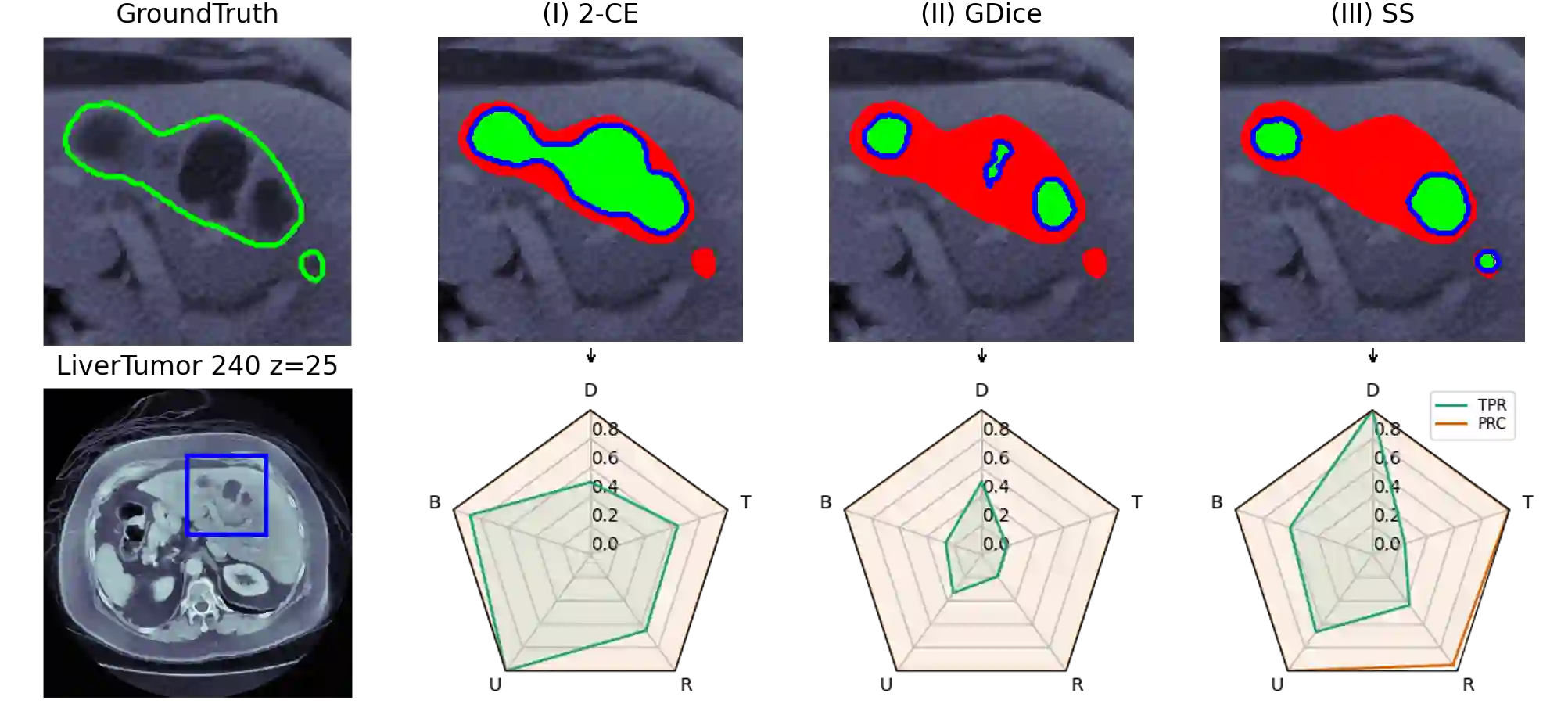
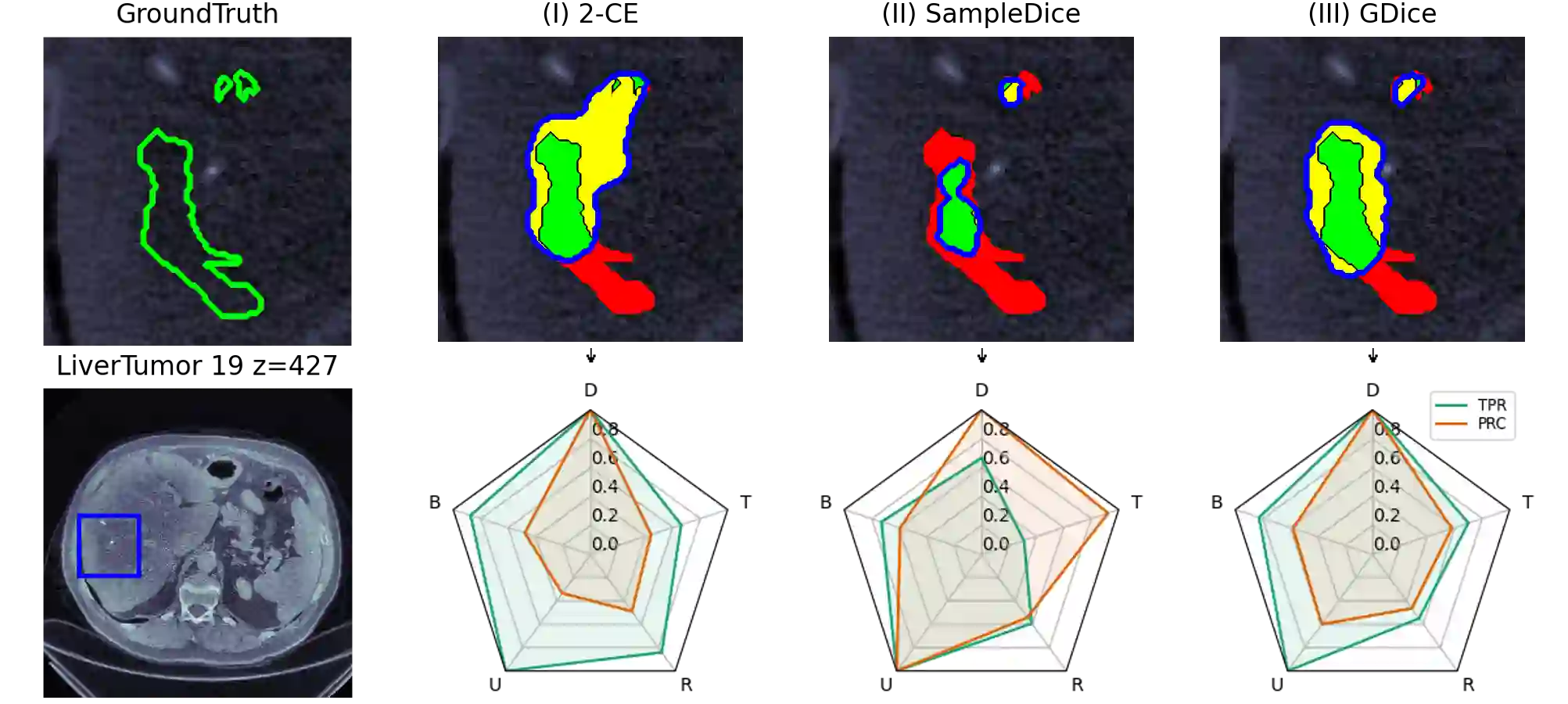
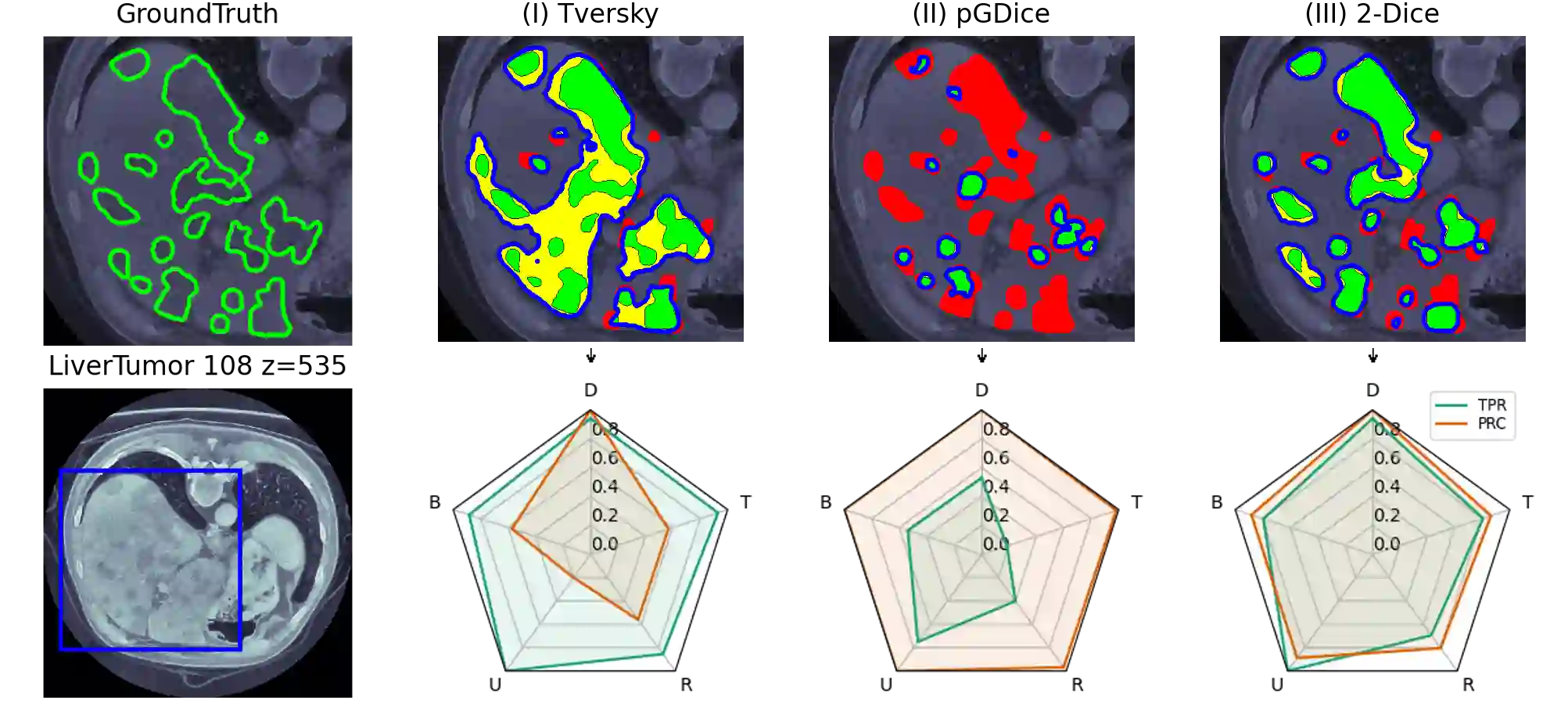
Manual segmentation of medical images (e.g., segmenting tumors in CT scans) is a high-effort task that can be accelerated with machine learning techniques. However, selecting the right segmentation approach depends on the evaluation function, particularly in medical image segmentation where we must deal with dependency between voxels. For instance, in contrast to classical systems where the predictions are either correct or incorrect, predictions in medical image segmentation may be partially correct and incorrect simultaneously. In this paper, we explore this expressiveness to extract the useful properties of these systems and formally define a novel multi-modal evaluation (MME) approach to measure the effectiveness of different segmentation methods. This approach improves the segmentation evaluation by introducing new relevant and interpretable characteristics, including detection property, boundary alignment, uniformity, total volume, and relative volume. Our proposed approach is open-source and publicly available for use. We have conducted several reproducible experiments, including the segmentation of pancreas, liver tumors, and multi-organs datasets, to show the applicability of the proposed approach.
翻译:医学图像的人工分割(如CT扫描中的肿瘤分割)是一项高劳动强度任务,可通过机器学习技术加速。然而,选择合适的分割方法取决于评估函数,特别是在需要处理体素间依赖关系的医学图像分割中。例如,与预测结果非对即错的经典系统不同,医学图像分割中的预测可能同时存在部分正确与部分错误的情况。本文探索了这种表达能力以提取此类系统的有用特性,并正式定义了一种新颖的多模态评估方法,用于衡量不同分割方法的有效性。该方法通过引入新的相关且可解释的特征(包括检测特性、边界对齐度、均匀性、总体积及相对体积)改进了分割评估。我们提出的方法已开源且可公开使用。通过多项可复现实验(涵盖胰腺、肝脏肿瘤及多器官数据集的分割),验证了该方法的适用性。




相关内容



 微信扫码咨询专知VIP会员