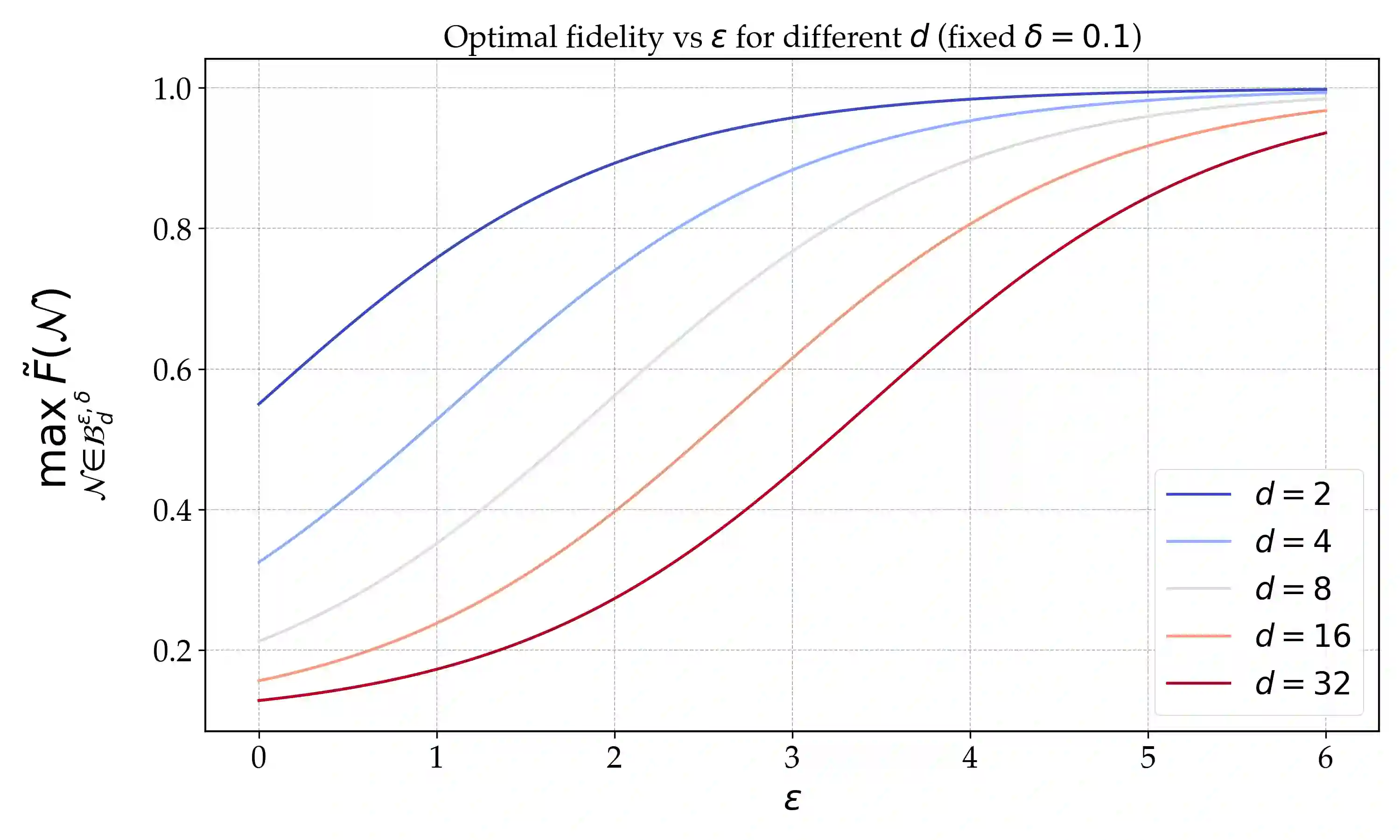
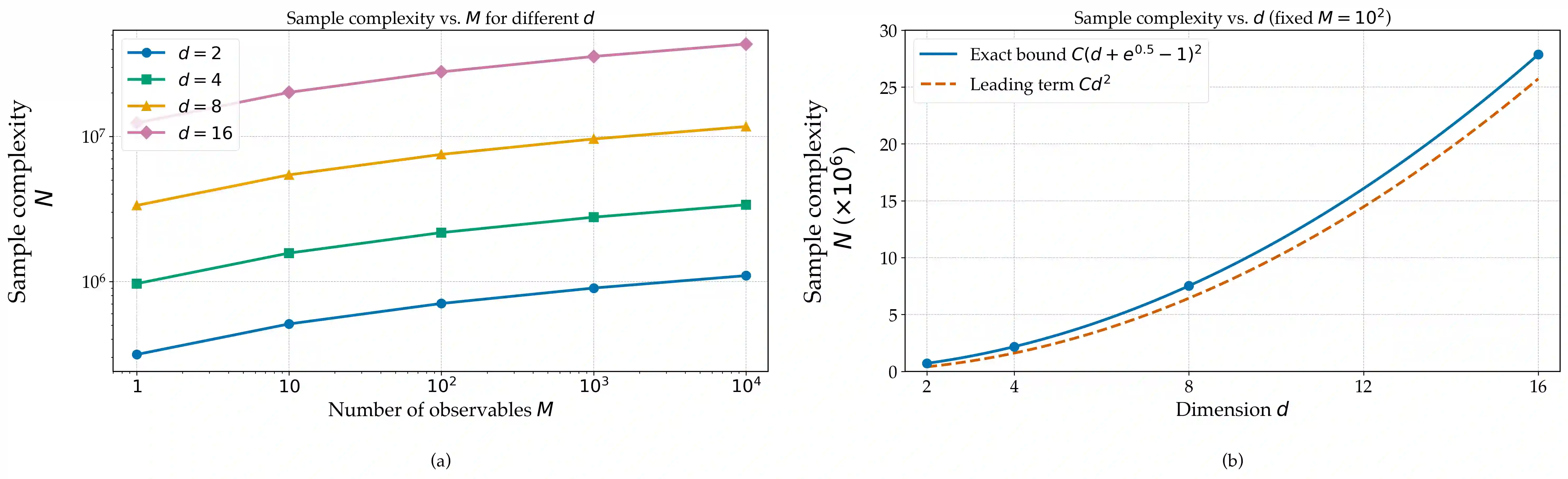
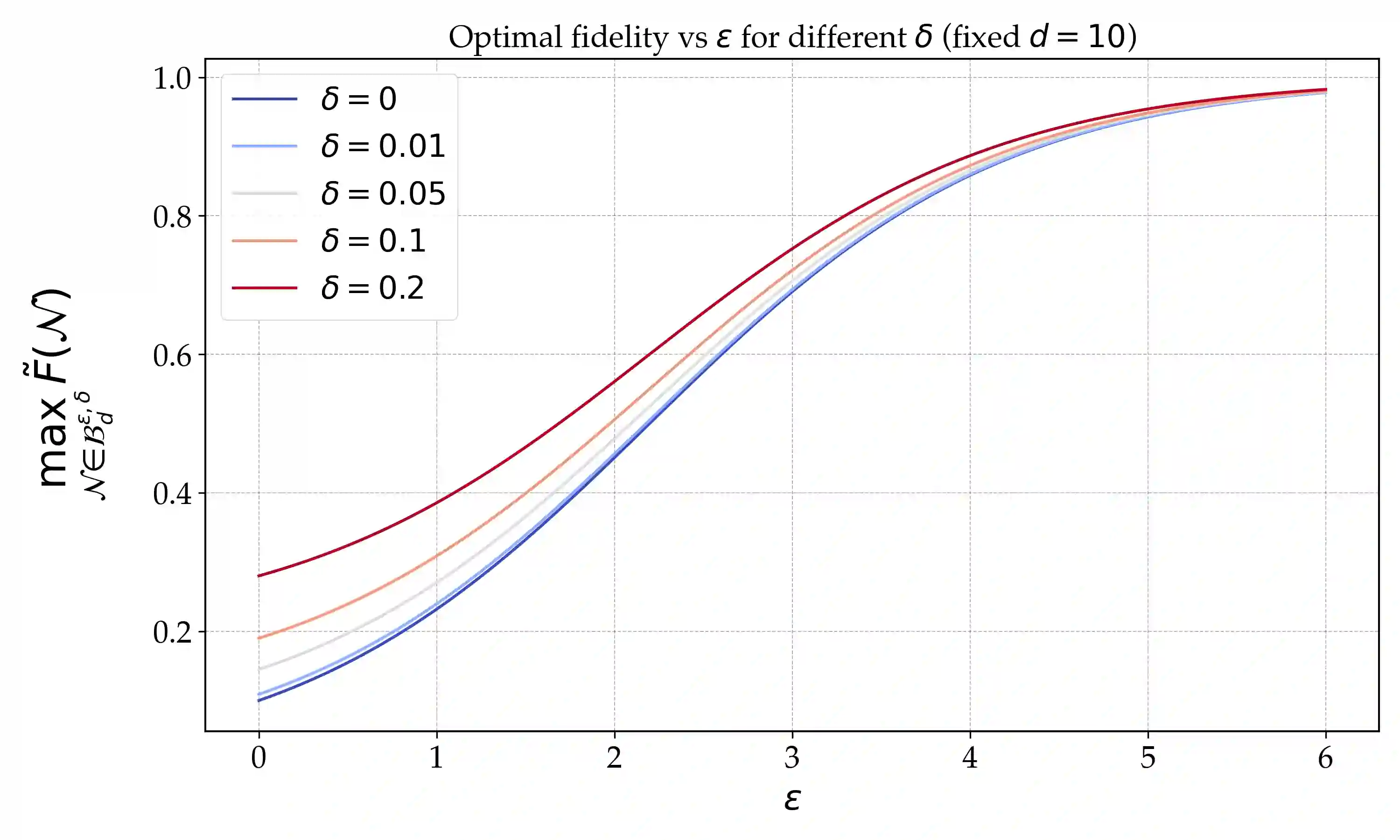
When sensitive information is encoded in data, it is important to ensure the privacy of information when attempting to learn useful information from the data. There is a natural tradeoff whereby increasing privacy requirements may decrease the utility of a learning protocol. In the quantum setting of differential privacy, such tradeoffs between privacy and utility have so far remained largely unexplored. In this work, we study optimal privacy-utility tradeoffs for both generic and application-specific utility metrics when privacy is quantified by $(\varepsilon,δ)$-quantum local differential privacy. In the generic setting, we focus on optimizing fidelity and trace distance between the original state and the privatized state. We show that the depolarizing mechanism achieves the optimal utility for given privacy requirements. We then study the specific application of learning the expectation of an observable with respect to an input state when only given access to privatized states. We derive a lower bound on the number of samples of privatized data required to achieve a fixed accuracy guarantee with high probability. To prove this result, we employ existing lower bounds on private quantum hypothesis testing, thus showcasing the first operational use of them. We also devise private mechanisms that achieve optimal sample complexity with respect to the privacy parameters and accuracy parameters, demonstrating that utility can be significantly improved for specific tasks in contrast to the generic setting. In addition, we show that the number of samples required to privately learn observable expectation values scales as $Θ((\varepsilon β)^{-2})$, where $\varepsilon \in (0,1)$ is the privacy parameter and $β$ is the accuracy tolerance. We conclude by initiating the study of private classical shadows, which promise useful applications for private learning tasks.


翻译:暂无翻译
0
下载
关闭预览

相关内容

【新书】差分隐私,246页pdf
专知会员服务
27+阅读 · 2025年4月5日
图数据上的隐私攻击与防御技术
专知会员服务
28+阅读 · 2022年4月28日
《隐私计算白皮书(2021年)》正式发布(附下载链接)
专知会员服务
96+阅读 · 2021年7月22日
专知会员服务
132+阅读 · 2021年6月18日
专知会员服务
96+阅读 · 2021年5月17日
专知会员服务
52+阅读 · 2021年4月4日
「联邦学习隐私保护 」最新2022研究综述
专知
16+阅读 · 2022年4月1日
联邦学习安全与隐私保护研究综述
专知
12+阅读 · 2020年8月7日
Transferring Knowledge across Learning Processes
CreateAMind
29+阅读 · 2019年5月18日
【专题】美国隐私立法进展的总体分析
蚂蚁金服评论
11+阅读 · 2019年4月25日
区块链隐私保护研究综述——祝烈煌详解
计算机研究与发展
23+阅读 · 2018年11月28日
综述——隐私保护集合交集计算技术研究
计算机研究与发展
22+阅读 · 2017年10月24日
网络安全态势感知浅析
计算机与网络安全
18+阅读 · 2017年10月13日
国家自然科学基金
2+阅读 · 2017年12月31日
国家自然科学基金
2+阅读 · 2017年12月31日
国家自然科学基金
0+阅读 · 2015年12月31日
国家自然科学基金
7+阅读 · 2015年12月31日
国家自然科学基金
20+阅读 · 2015年12月31日
国家自然科学基金
1+阅读 · 2015年12月31日
国家自然科学基金
0+阅读 · 2015年12月31日
国家自然科学基金
0+阅读 · 2014年12月31日
国家自然科学基金
1+阅读 · 2014年12月31日
Arxiv
0+阅读 · 11月12日
VIP会员
最新内容
北约400亿美元反无人机能力投资建设
专知会员服务
6+阅读 · 11月25日
反小型无人机系统方案评估(27页)
专知会员服务
8+阅读 · 11月25日
乌克兰无人机饱和战场中的错误教训
专知会员服务
18+阅读 · 11月17日
面向最后一战术英里:美军无人机创新尝试
专知会员服务
14+阅读 · 11月17日
《美空军2026条令文件:对海压制作战》
专知会员服务
31+阅读 · 11月9日
人工智能与战争的未来
专知会员服务
14+阅读 · 11月8日
《Agent Mosaic:识别智能体LLM系统中的机密泄露》
专知会员服务
14+阅读 · 11月8日
相关VIP内容
【新书】差分隐私,246页pdf
专知会员服务
27+阅读 · 2025年4月5日
图数据上的隐私攻击与防御技术
专知会员服务
28+阅读 · 2022年4月28日
《隐私计算白皮书(2021年)》正式发布(附下载链接)
专知会员服务
96+阅读 · 2021年7月22日
专知会员服务
132+阅读 · 2021年6月18日
专知会员服务
96+阅读 · 2021年5月17日
专知会员服务
52+阅读 · 2021年4月4日
相关资讯
「联邦学习隐私保护 」最新2022研究综述
专知
16+阅读 · 2022年4月1日
联邦学习安全与隐私保护研究综述
专知
12+阅读 · 2020年8月7日
Transferring Knowledge across Learning Processes
CreateAMind
29+阅读 · 2019年5月18日
【专题】美国隐私立法进展的总体分析
蚂蚁金服评论
11+阅读 · 2019年4月25日
区块链隐私保护研究综述——祝烈煌详解
计算机研究与发展
23+阅读 · 2018年11月28日
综述——隐私保护集合交集计算技术研究
计算机研究与发展
22+阅读 · 2017年10月24日
网络安全态势感知浅析
计算机与网络安全
18+阅读 · 2017年10月13日
相关基金
国家自然科学基金
2+阅读 · 2017年12月31日
国家自然科学基金
2+阅读 · 2017年12月31日
国家自然科学基金
0+阅读 · 2015年12月31日
国家自然科学基金
7+阅读 · 2015年12月31日
国家自然科学基金
20+阅读 · 2015年12月31日
国家自然科学基金
1+阅读 · 2015年12月31日
国家自然科学基金
0+阅读 · 2015年12月31日
国家自然科学基金
0+阅读 · 2014年12月31日
国家自然科学基金
1+阅读 · 2014年12月31日
Top
微信扫码咨询专知VIP会员