

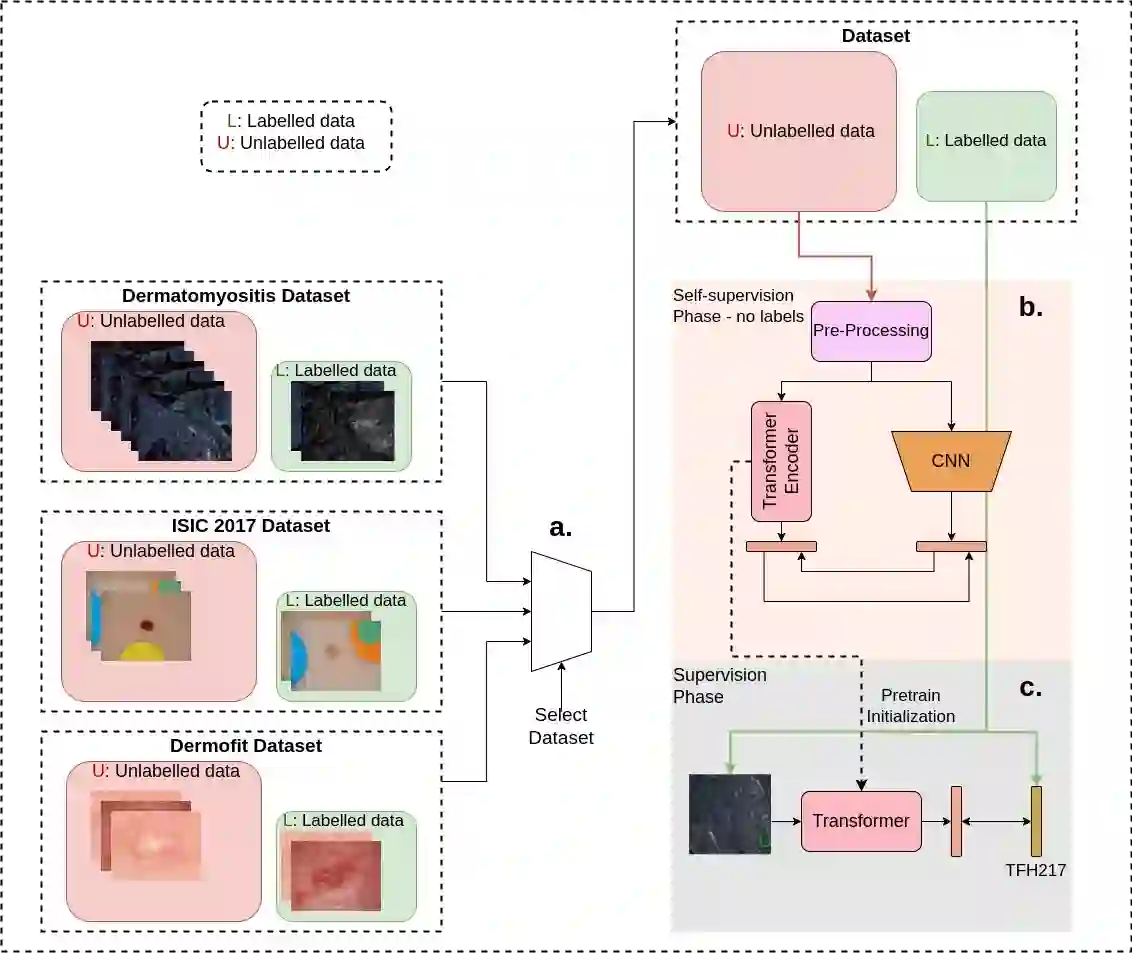
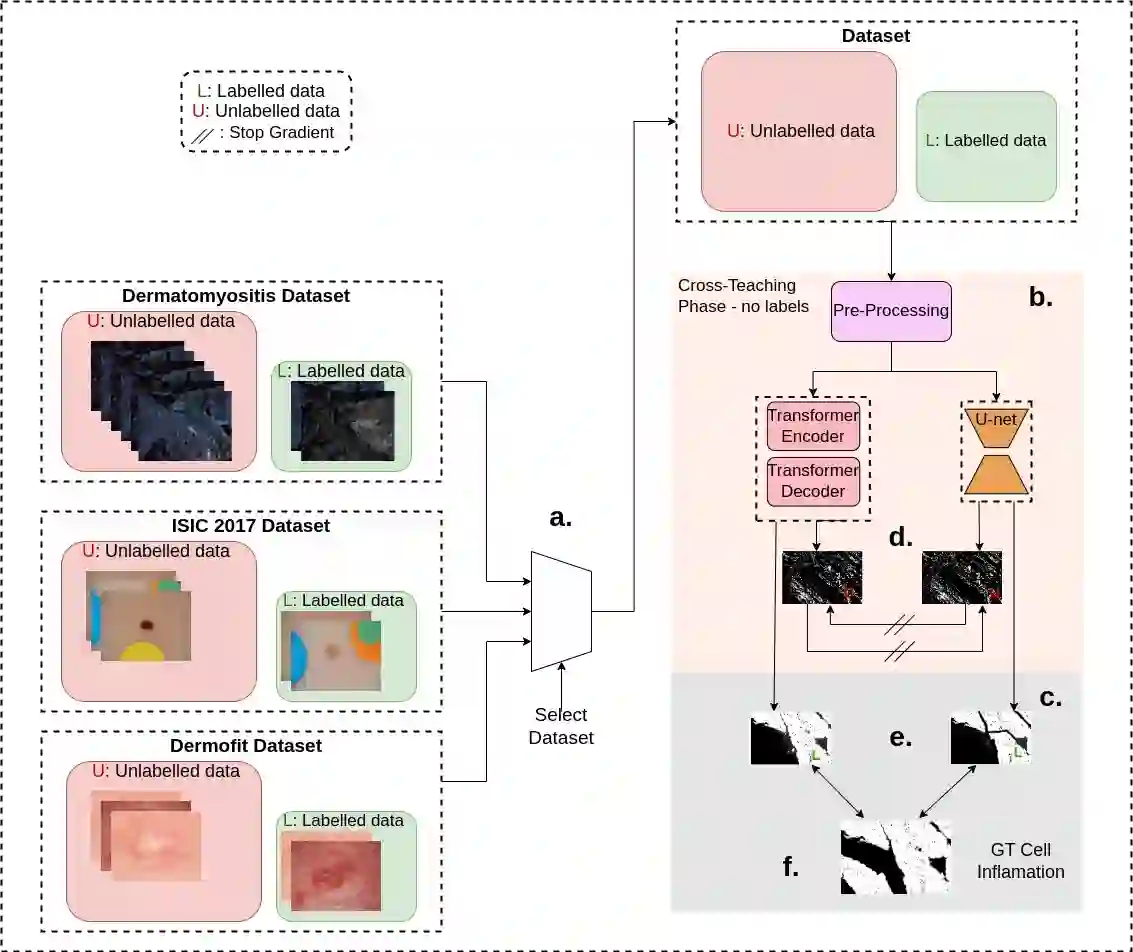
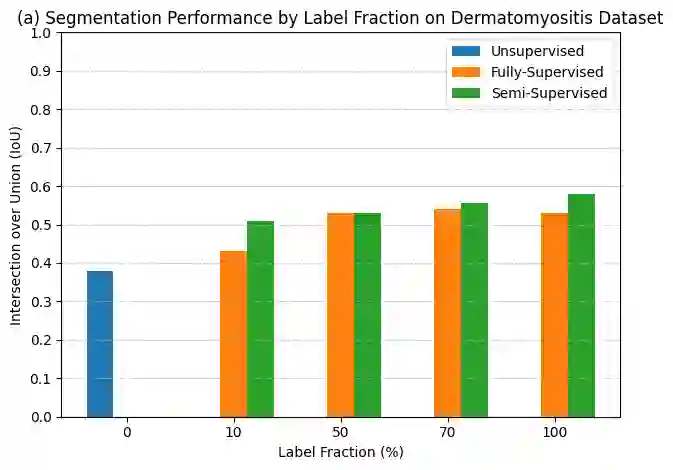
Advancements in clinical treatment are increasingly constrained by the limitations of supervised learning techniques, which depend heavily on large volumes of annotated data. The annotation process is not only costly but also demands substantial time from clinical specialists. Addressing this issue, we introduce the S4MI (Self-Supervision and Semi-Supervision for Medical Imaging) pipeline, a novel approach that leverages advancements in self-supervised and semi-supervised learning. These techniques engage in auxiliary tasks that do not require labeling, thus simplifying the scaling of machine supervision compared to fully-supervised methods. Our study benchmarks these techniques on three distinct medical imaging datasets to evaluate their effectiveness in classification and segmentation tasks. Notably, we observed that self supervised learning significantly surpassed the performance of supervised methods in the classification of all evaluated datasets. Remarkably, the semi-supervised approach demonstrated superior outcomes in segmentation, outperforming fully-supervised methods while using 50% fewer labels across all datasets. In line with our commitment to contributing to the scientific community, we have made the S4MI code openly accessible, allowing for broader application and further development of these methods.
翻译:临床治疗的进步日益受限于监督学习技术的局限性,这类技术严重依赖大规模标注数据。标注过程不仅成本高昂,还需临床专家投入大量时间。针对这一问题,我们提出S4MI(医学影像自监督与半监督)流水线,这是一种创新方法,利用了自监督学习和半监督学习的最新进展。这些技术涉及无需标注的辅助任务,从而较全监督方法更简化了机器监督的规模化。本研究在三个不同的医学影像数据集上对这些技术进行了基准测试,评估其在分类和分割任务中的有效性。值得注意的是,我们观察到自监督学习在所有评估数据集上的分类性能显著超越监督学习方法。尤为引人注目的是,半监督方法在分割任务中展现出更优结果,在所有数据集上使用比全监督方法少50%的标签即取得更佳表现。遵循我们对科学界的贡献承诺,我们公开了S4MI代码,以促进这些方法的广泛应用与进一步发展。




相关内容



 微信扫码咨询专知VIP会员