

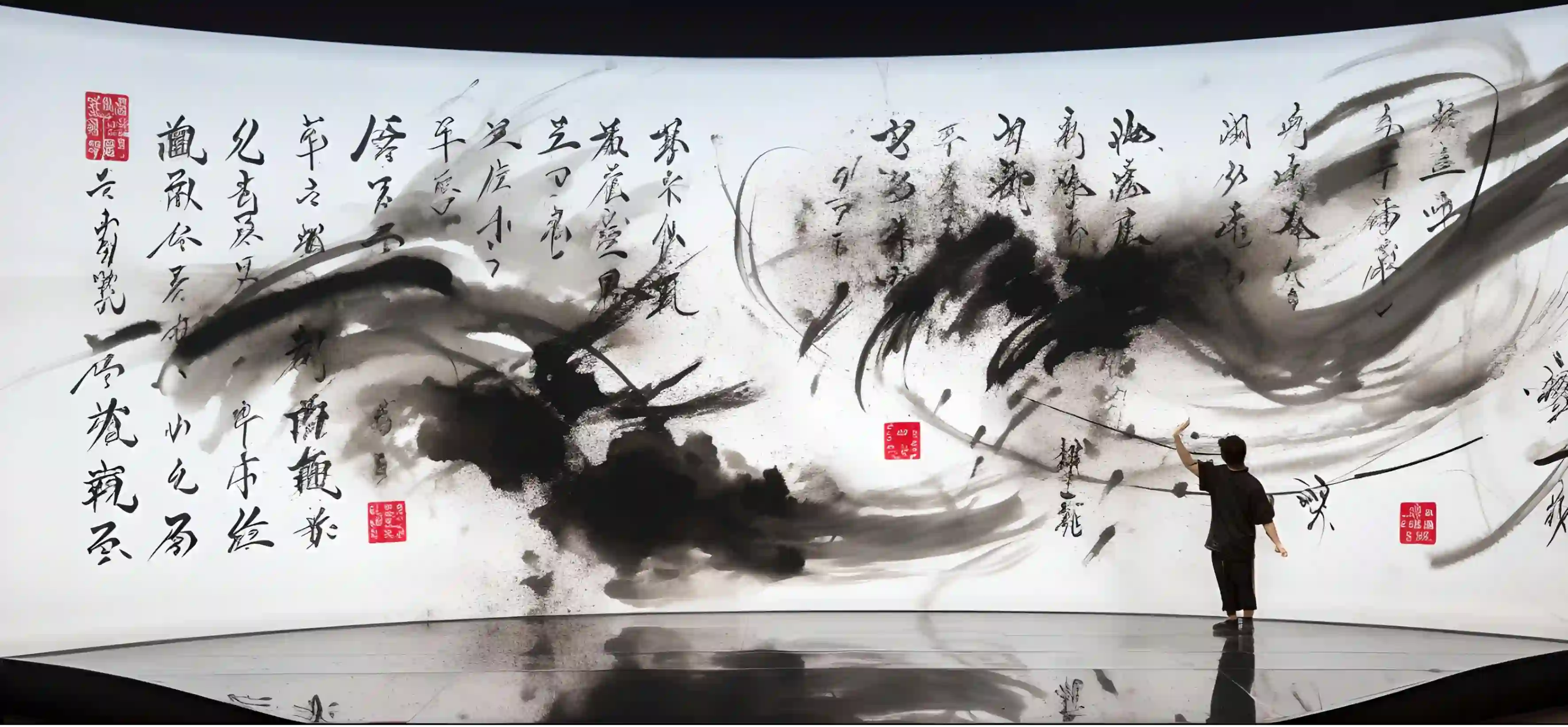
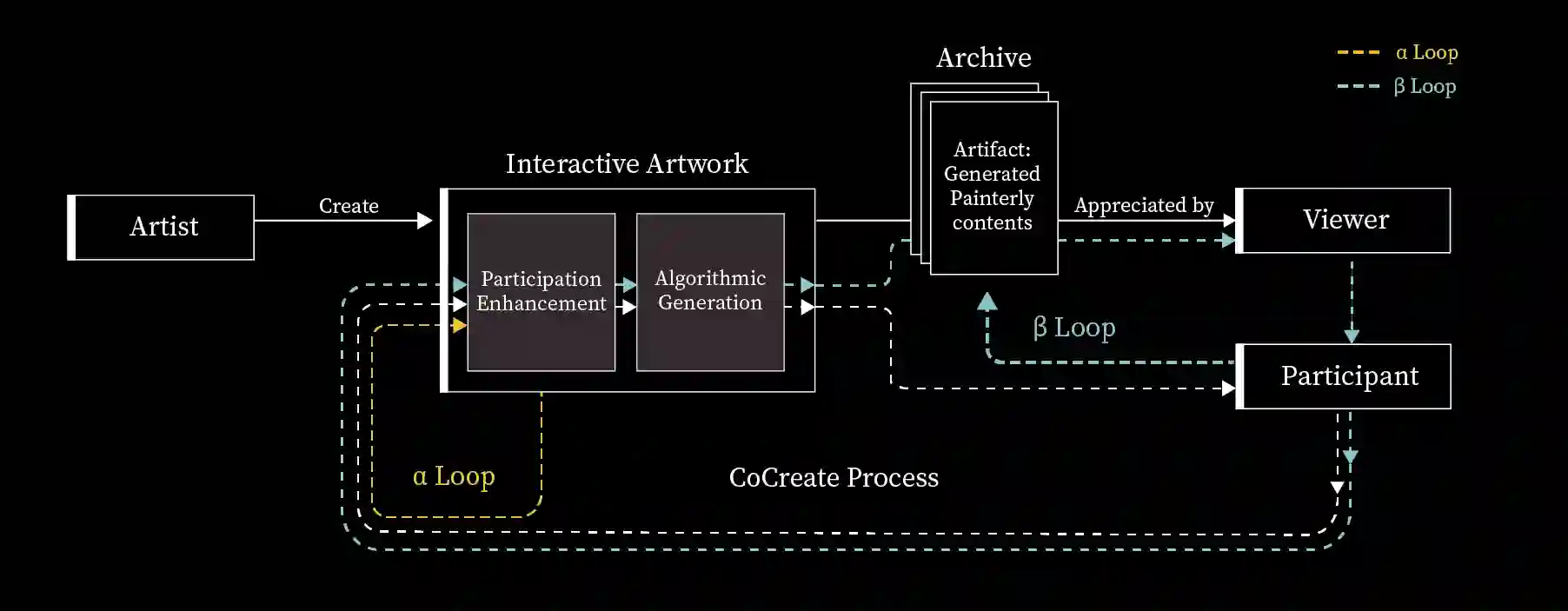
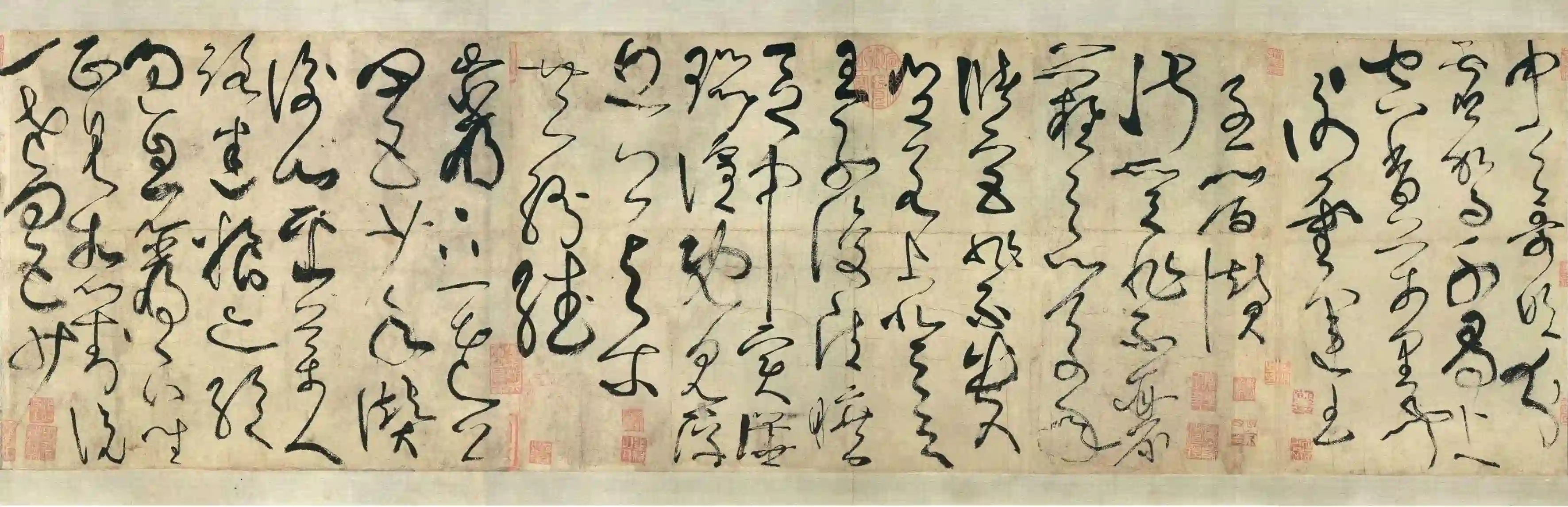
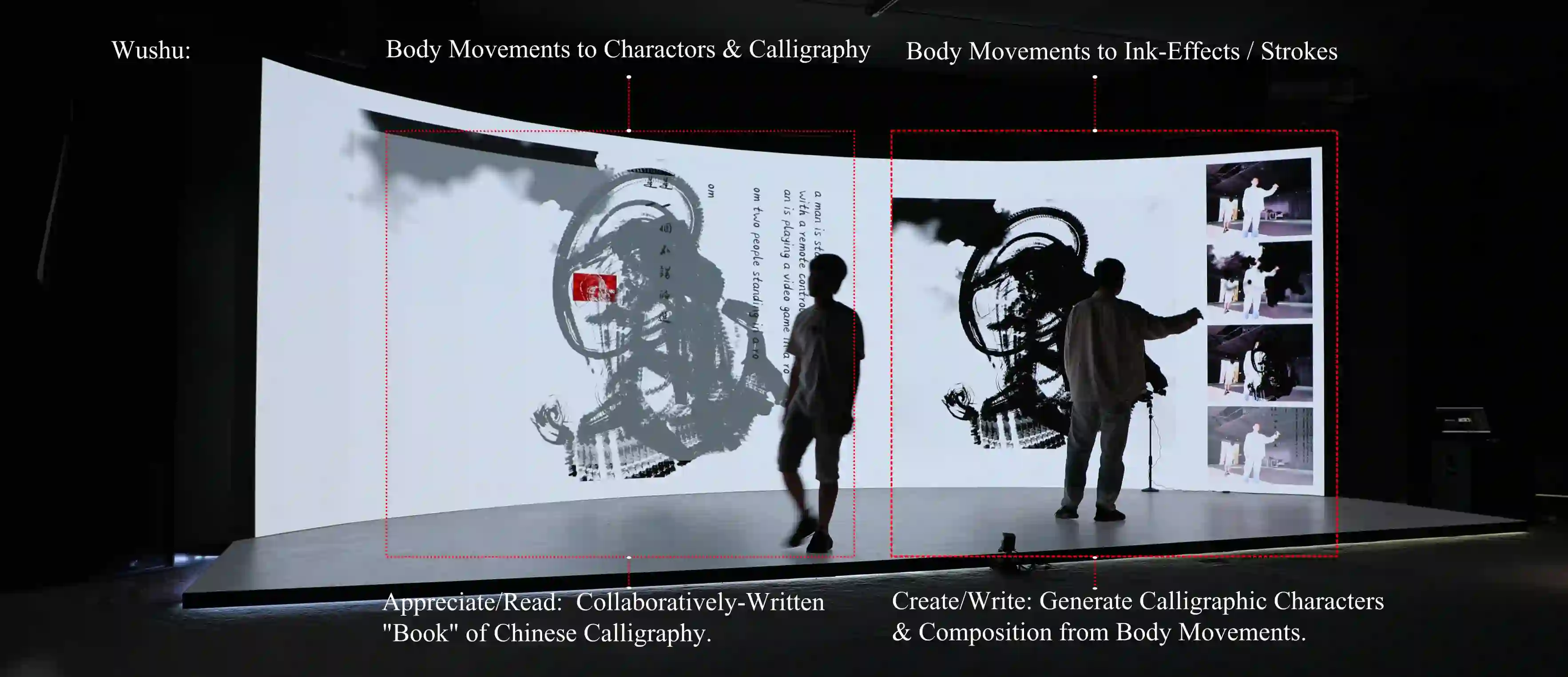
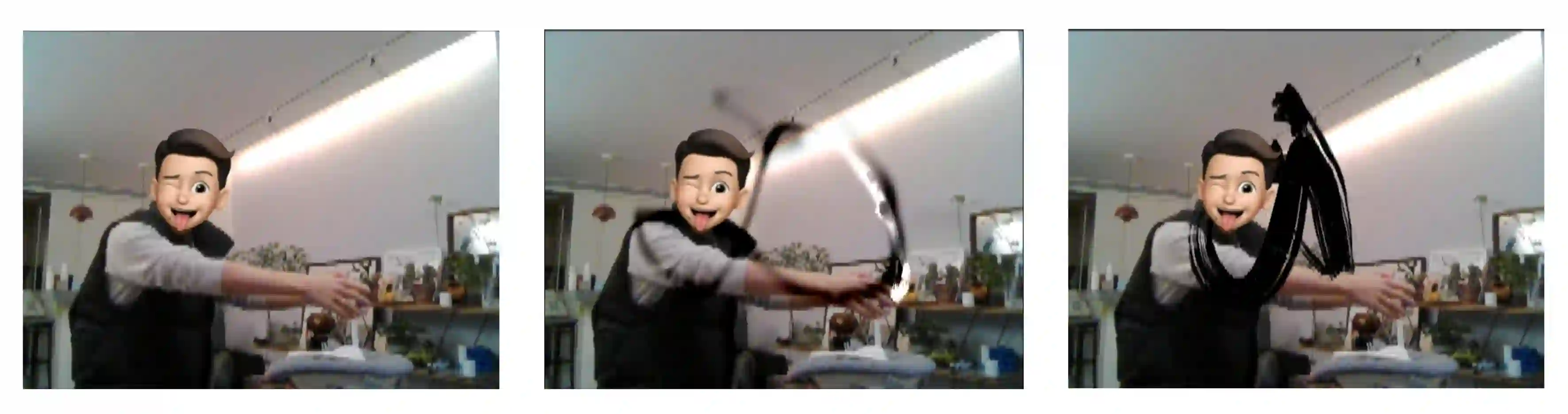
As a communication channel, body movements have been widely explored in behavioral studies and kinesics. Performing and visual arts share the same interests but focus on documenting and representing human body movements, such as for dance notation and visual work creation. This paper investigates body movements in oriental calligraphy and how to apply calligraphy principles to stimulate and archive body movements. Through an artwork (Wushu), the authors experiment with an interactive and generative approach to engage the audience's bodily participation and archive the body movements as a compendium of generated calligraphy. The audience assumes the role of both writers and readers; creating ("writing") and appreciating ("reading") the generated calligraphy becomes a cyclical process within this infinite "Book," which can motivate further attention and discussions concerning Chinese characters and calligraphy.
翻译:摘要:作为沟通渠道,身体动作已在行为学研究和体语学领域得到广泛探索。表演艺术与视觉艺术虽同样关注人体动作,但侧重不同——侧重以舞蹈记谱法和视觉作品创作为载体,对人体动作进行记录与再现。本文探究东方书法中的身体动作特征,以及如何运用书法原理激发并存档身体动作。通过艺术装置《武书》,作者实验了一种交互式生成方法:既引导观众以身体动作参与创作过程,又将这些动作以书法生成集萃的形式予以存档。观众兼具"书写者"与"阅读者"双重身份——对生成书法的创作("书写")与鉴赏("阅读")构成这部无尽之"书"中的循环过程,从而引发对汉字及书法艺术更深层次的关注与讨论。




相关内容




 微信扫码咨询专知VIP会员