

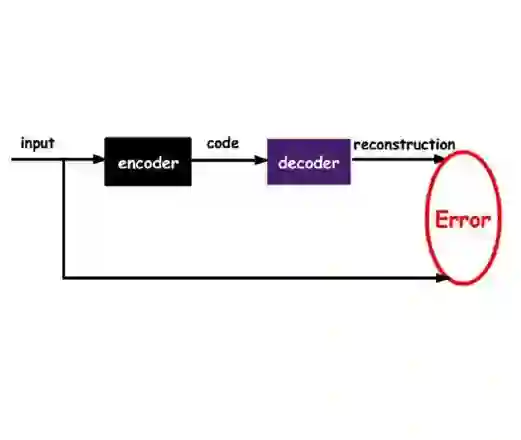
Cooperative perception has been widely used in autonomous driving to alleviate the inherent limitation of single automated vehicle perception. To enable cooperation, vehicle-to-vehicle (V2V) communication plays an indispensable role. This work analyzes the performance of cooperative perception accounting for communications channel impairments. Different fusion methods and channel impairments are evaluated. A new late fusion scheme is proposed to leverage the robustness of intermediate features. In order to compress the data size incurred by cooperation, a convolution neural network-based autoencoder is adopted. Numerical results demonstrate that intermediate fusion is more robust to channel impairments than early fusion and late fusion, when the SNR is greater than 0 dB. Also, the proposed fusion scheme outperforms the conventional late fusion using detection outputs, and autoencoder provides a good compromise between detection accuracy and bandwidth usage.
翻译:协同感知已被广泛应用于自动驾驶领域,以克服单一自动驾驶车辆感知的固有局限性。为支持协同作业,车对车通信(V2V)发挥着不可或缺的作用。本研究分析了考虑通信信道损伤的协同感知性能,评估了不同融合方法与信道损伤情形,并提出了一种新型后融合方案以利用中间特征的鲁棒性。为压缩协同产生的数据量,采用基于卷积神经网络的自动编码器。数值结果表明,当信噪比大于0 dB时,中间融合比前融合和后融合对信道损伤具有更强的鲁棒性。此外,所提出的融合方案优于使用检测输出的传统后融合,且自动编码器在检测精度与带宽使用之间实现了良好折衷。




相关内容




 微信扫码咨询专知VIP会员