

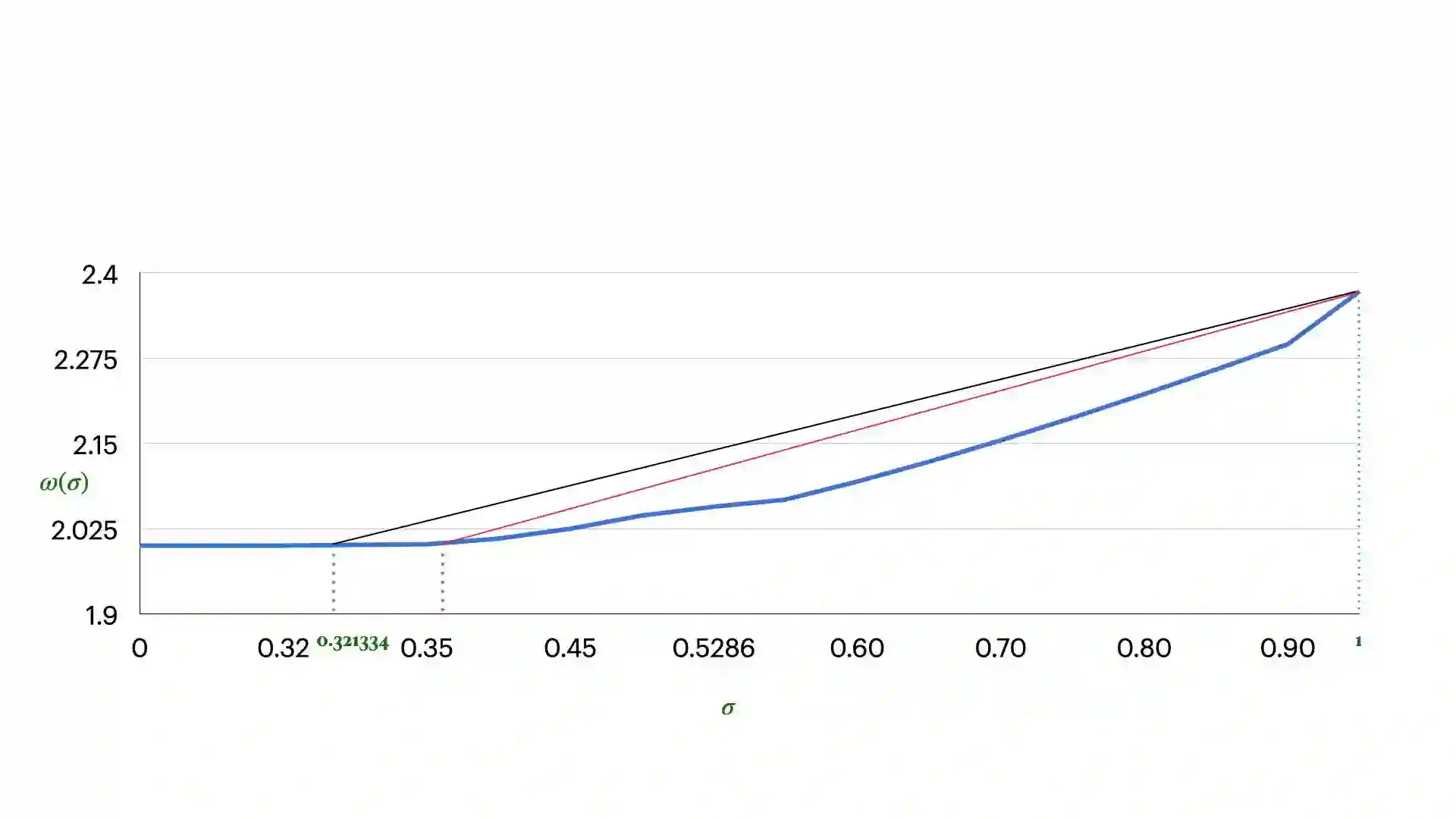
Given an $n$-vertex $m$-edge digraph $G = (V,E)$ and a set $S \subseteq V$, $|S| = n^{\sigma}$ (for some $0 < \sigma \le 1$) of designated sources, the $S \times V$-direachability problem is to compute for every $s \in S$, the set of all the vertices reachable from $s$ in $G$. Known naive algorithms for this problem either run a BFS/DFS separately from every source, and as a result require $O(m \cdot n^{\sigma})$ time, or compute the transitive closure of $G$ in $\tilde O(n^{\omega})$ time, where $\omega < 2.371552\ldots$ is the matrix multiplication exponent. Hence, the current state-of-the-art bound for the problem on graphs with $m = \Theta(n^{\mu})$ edges in $\tilde O(n^{\min \{\mu + \sigma, \omega \}})$. Our first contribution is an algorithm with running time $\tilde O(n^{1 + \tiny{\frac{2}{3}} \omega(\sigma)})$ for this problem, where $\omega(\sigma)$ is the rectangular matrix multiplication exponent. Using current state-of-the-art estimates on $\omega(\sigma)$, our exponent is better than $\min \{2 + \sigma, \omega \}$ for $\tilde \sigma \le \sigma \le 0.53$, where $1/3 < \tilde \sigma < 0.3336$ is a universal constant. Our second contribution is a sequence of algorithms $\mathcal A_0, \mathcal A_1, \mathcal A_2, \ldots$ for the $S \times V$-direachability problem. We argue that under a certain assumption that we introduce, for every $\tilde \sigma \le \sigma < 1$, there exists a sufficiently large index $k = k(\sigma)$ so that $\mathcal A_k$ improves upon the current state-of-the-art bounds for $S \times V$-direachability with $|S| = n^{\sigma}$, in the densest regime $\mu =2$. We show that to prove this assumption, it is sufficient to devise an algorithm that computes a rectangular max-min matrix product roughly as efficiently as ordinary $(+, \cdot)$ matrix product. Our algorithms heavily exploit recent constructions of directed shortcuts by Kogan and Parter.


翻译:给定一个 $n$ 个顶点 $m$ 条边的有向图 $G = (V,E)$ 和一个指定源点集 $S \subseteq V$,$|S| = n^{\sigma}$(其中 $0 < \sigma \le 1$),$S \times V$ 有向可达性问题要求计算每个 $s \in S$ 在 $G$ 中可达的所有顶点集合。已知的朴素算法要么分别从每个源点运行 BFS/DFS,从而需要 $O(m \cdot n^{\sigma})$ 时间,要么在 $\tilde O(n^{\omega})$ 时间内计算 $G$ 的传递闭包,其中 $\omega < 2.371552\ldots$ 是矩阵乘法指数。因此,对于 $m = \Theta(n^{\mu})$ 条边的图,当前该问题的最优边界为 $\tilde O(n^{\min \{\mu + \sigma, \omega \}})$。我们的第一个贡献是针对该问题的算法,运行时间为 $\tilde O(n^{1 + \frac{2}{3} \omega(\sigma)})$,其中 $\omega(\sigma)$ 是矩形矩阵乘法指数。利用当前关于 $\omega(\sigma)$ 的最优估计,对于 $\tilde \sigma \le \sigma \le 0.53$,我们的指数优于 $\min \{2 + \sigma, \omega\}$,其中 $1/3 < \tilde \sigma < 0.3336$ 是一个普适常数。我们的第二个贡献是针对 $S \times V$ 有向可达性问题的算法序列 $\mathcal A_0, \mathcal A_1, \mathcal A_2, \ldots$。我们论证,在我们引入的特定假设下,对于每个 $\tilde \sigma \le \sigma < 1$,存在一个足够大的指标 $k = k(\sigma)$,使得在最稠密的情形 $\mu =2$ 下,$\mathcal A_k$ 改进了具有 $|S| = n^{\sigma}$ 的 $S \times V$ 有向可达性问题的当前最优边界。我们证明,要验证这一假设,只需设计一种能够以大致等同于普通 $(+, \cdot)$ 矩阵乘法的效率计算矩形最大-最小矩阵乘积的算法即可。我们的算法大量利用了 Kogan 和 Parter 近期提出的有向捷径构造。

0
下载
关闭预览

相关内容

FlowQA: Grasping Flow in History for Conversational Machine Comprehension
专知会员服务
34+阅读 · 2019年10月18日
Stabilizing Transformers for Reinforcement Learning
专知会员服务
60+阅读 · 2019年10月17日
《DeepGCNs: Making GCNs Go as Deep as CNNs》
专知会员服务
32+阅读 · 2019年10月17日
Keras François Chollet 《Deep Learning with Python 》, 386页pdf
专知会员服务
164+阅读 · 2019年10月12日
【NeurIPS2019】图变换网络:Graph Transformer Network
Transferring Knowledge across Learning Processes
CreateAMind
29+阅读 · 2019年5月18日
Unsupervised Learning via Meta-Learning
CreateAMind
44+阅读 · 2019年1月3日
meta learning 17年:MAML SNAIL
CreateAMind
11+阅读 · 2019年1月2日
Single-Shot Object Detection with Enriched Semantics
统计学习与视觉计算组
14+阅读 · 2018年8月29日
STRCF for Visual Object Tracking
统计学习与视觉计算组
15+阅读 · 2018年5月29日
Hierarchical Imitation - Reinforcement Learning
CreateAMind
19+阅读 · 2018年5月25日
Focal Loss for Dense Object Detection
统计学习与视觉计算组
12+阅读 · 2018年3月15日
IJCAI | Cascade Dynamics Modeling with Attention-based RNN
KingsGarden
13+阅读 · 2017年7月16日
From Softmax to Sparsemax-ICML16(1)
KingsGarden
74+阅读 · 2016年11月26日
国家自然科学基金
2+阅读 · 2015年12月31日
国家自然科学基金
0+阅读 · 2015年12月31日
国家自然科学基金
0+阅读 · 2015年12月31日
国家自然科学基金
0+阅读 · 2015年12月31日
国家自然科学基金
1+阅读 · 2015年12月31日
国家自然科学基金
2+阅读 · 2015年12月31日
国家自然科学基金
0+阅读 · 2014年12月31日
国家自然科学基金
0+阅读 · 2014年12月31日
国家自然科学基金
0+阅读 · 2014年12月31日
国家自然科学基金
0+阅读 · 2014年12月31日
Arxiv
0+阅读 · 2024年2月24日
Arxiv
0+阅读 · 2024年2月24日
Arxiv
0+阅读 · 2024年2月22日
Arxiv
0+阅读 · 2024年2月22日
Arxiv
0+阅读 · 2024年2月22日
VIP会员
最新内容
超越网格:作战环境对炮兵的影响
专知会员服务
1+阅读 · 今天15:35
KDD 2026 | MixRAGRec:面向LLM推荐的混合专家KG-RAG框架
BES:让语言模型通过双向进化搜索自我改进
专知会员服务
4+阅读 · 5月30日
以色列-美国-伊朗战争中的无人机:关键要点
专知会员服务
4+阅读 · 5月30日
《Palantir任务保障性软件安全标准(MA-S2)》
专知会员服务
14+阅读 · 5月30日
基于声学的无人机检测技术综述
专知会员服务
8+阅读 · 5月30日
《当代混合战争分析框架:俄乌战争经验教训》
相关VIP内容
FlowQA: Grasping Flow in History for Conversational Machine Comprehension
专知会员服务
34+阅读 · 2019年10月18日
Stabilizing Transformers for Reinforcement Learning
专知会员服务
60+阅读 · 2019年10月17日
《DeepGCNs: Making GCNs Go as Deep as CNNs》
专知会员服务
32+阅读 · 2019年10月17日
Keras François Chollet 《Deep Learning with Python 》, 386页pdf
专知会员服务
164+阅读 · 2019年10月12日
相关资讯
【NeurIPS2019】图变换网络:Graph Transformer Network
Transferring Knowledge across Learning Processes
CreateAMind
29+阅读 · 2019年5月18日
Unsupervised Learning via Meta-Learning
CreateAMind
44+阅读 · 2019年1月3日
meta learning 17年:MAML SNAIL
CreateAMind
11+阅读 · 2019年1月2日
Single-Shot Object Detection with Enriched Semantics
统计学习与视觉计算组
14+阅读 · 2018年8月29日
STRCF for Visual Object Tracking
统计学习与视觉计算组
15+阅读 · 2018年5月29日
Hierarchical Imitation - Reinforcement Learning
CreateAMind
19+阅读 · 2018年5月25日
Focal Loss for Dense Object Detection
统计学习与视觉计算组
12+阅读 · 2018年3月15日
IJCAI | Cascade Dynamics Modeling with Attention-based RNN
KingsGarden
13+阅读 · 2017年7月16日
From Softmax to Sparsemax-ICML16(1)
KingsGarden
74+阅读 · 2016年11月26日
相关基金
国家自然科学基金
2+阅读 · 2015年12月31日
国家自然科学基金
0+阅读 · 2015年12月31日
国家自然科学基金
0+阅读 · 2015年12月31日
国家自然科学基金
0+阅读 · 2015年12月31日
国家自然科学基金
1+阅读 · 2015年12月31日
国家自然科学基金
2+阅读 · 2015年12月31日
国家自然科学基金
0+阅读 · 2014年12月31日
国家自然科学基金
0+阅读 · 2014年12月31日
国家自然科学基金
0+阅读 · 2014年12月31日
国家自然科学基金
0+阅读 · 2014年12月31日
Top
微信扫码咨询专知VIP会员



