

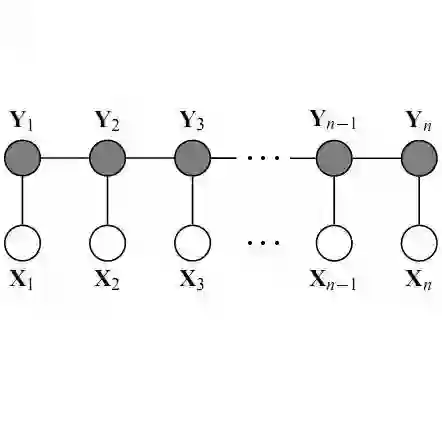
We propose PPEDCRF, a calibrated selective perturbation framework that protects \emph{background-based location privacy} in released video frames against gallery-based retrieval attackers. Even after GPS metadata are stripped, an adversary can geolocate a frame by matching its background visual cues to geo-tagged reference imagery; PPEDCRF mitigates this threat by estimating location-sensitive background regions with a dynamic conditional random field (DCRF), rescaling perturbation strength with a normalized control penalty (NCP), and injecting Gaussian noise only inside the inferred regions via a DP-style calibration rule. On a controlled paired-scene retrieval benchmark with eight attacker backbones and three noise seeds, PPEDCRF reduces ResNet18 Top-1 retrieval accuracy from 0.667 to $0.361\pm0.127$ at $σ_0=8$ while preserving $36.14\,$dB PSNR -- an ${\approx}6\,$dB quality advantage over global Gaussian noise. Transfer across the eight-backbone seed-averaged benchmark is broadly supportive (23 of 24 backbone-gallery cells show negative $Δ$), while appendix-scale confirmation identifies MixVPR as a remaining adverse-transfer exception. Matched-operating-point analysis shows that PPEDCRF and global Gaussian noise converge in Top-1 privacy at equal utility, so the practical benefit is spatially concentrated perturbation that preserves higher visual quality at any given noise scale rather than stronger matched-utility privacy. Code: https://github.com/mabo1215/PPEDCRF
翻译:我们提出PPEDCRF,这是一种经校准的选择性扰动框架,用于保护发布视频帧中基于背景的位置隐私,抵御基于图库的检索攻击者。即使GPS元数据被剥离,攻击者仍可通过将帧中的背景视觉线索与地理标记的参考图像匹配来确定其地理位置;PPEDCRF通过使用动态条件随机场估计位置敏感的背景区域、利用归一化控制惩罚重缩放扰动强度,并仅向推断区域注入遵循差分隐私风格校准规则的高斯噪声来缓解这一威胁。在一个包含八个攻击者主干网络和三种噪声种子的受控配对场景检索基准上,当σ₀=8时,PPEDCRF将ResNet18的Top-1检索精度从0.667降至0.361±0.127,同时保持36.14 dB的PSNR——这比全局高斯噪声具有约6 dB的质量优势。跨八个主干网络种子平均基准的迁移结果普遍支持该方法的有效性(24个主干-图库组合中有23个显示负Δ),而附录规模的确认将MixVPR识别为剩余的不利迁移例外。匹配工作点分析表明,在同等效用条件下,PPEDCRF与全局高斯噪声的Top-1隐私水平收敛,因此实际优势在于空间集中的扰动——在任意给定噪声尺度下保持更高的视觉质量,而非更强的匹配效用隐私。代码链接:https://github.com/mabo1215/PPEDCRF




相关内容



 微信扫码咨询专知VIP会员