

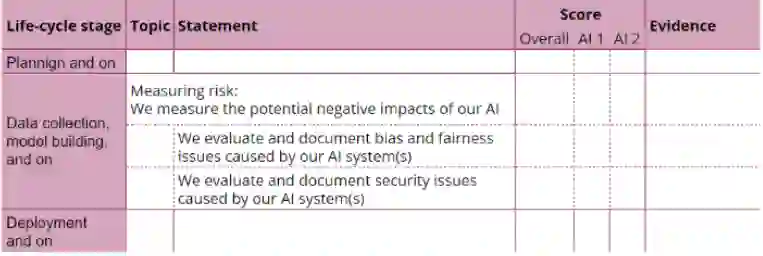
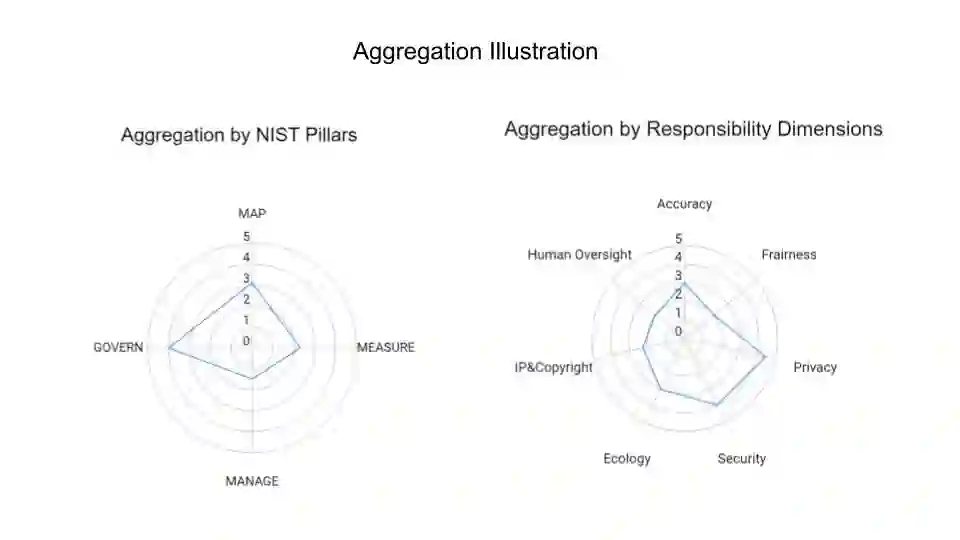
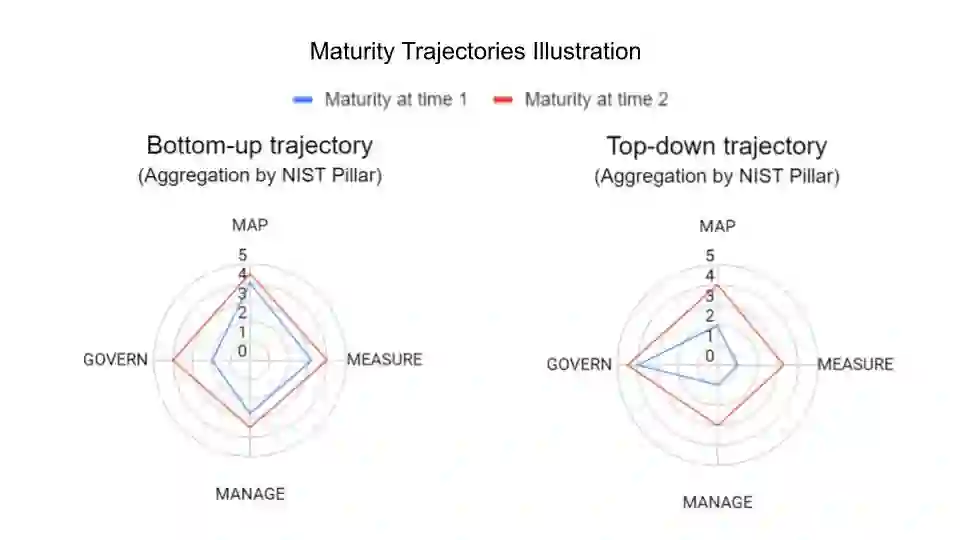
Researchers, government bodies, and organizations have been repeatedly calling for a shift in the responsible AI community from general principles to tangible and operationalizable practices in mitigating the potential sociotechnical harms of AI. Frameworks like the NIST AI RMF embody an emerging consensus on recommended practices in operationalizing sociotechnical harm mitigation. However, private sector organizations currently lag far behind this emerging consensus. Implementation is sporadic and selective at best. At worst, it is ineffective and can risk serving as a misleading veneer of trustworthy processes, providing an appearance of legitimacy to substantively harmful practices. In this paper, we provide a foundation for a framework for evaluating where organizations sit relative to the emerging consensus on sociotechnical harm mitigation best practices: a flexible maturity model based on the NIST AI RMF.
翻译:研究人员、政府机构和组织一再呼吁,负责任的人工智能领域应从一般原则转向具体且可操作化的实践,以减轻人工智能潜在的社会技术危害。诸如NIST AI RMF(美国国家标准与技术研究院人工智能风险管理框架)等框架,体现了在可操作化社会技术危害缓解方面新兴的共识。然而,私营部门组织目前远远落后于这一新兴共识。其实现充其量只是零散且选择性的,最坏情况下则毫无效果,甚至可能沦为一种具有误导性的可信流程面纱,为实质上有害的做法披上合法性的外衣。本文为评估组织相对于社会技术危害缓解最佳实践方面新兴共识的定位,提供了框架基础:一个基于NIST AI RMF的灵活成熟度模型。




相关内容





 微信扫码咨询专知VIP会员