

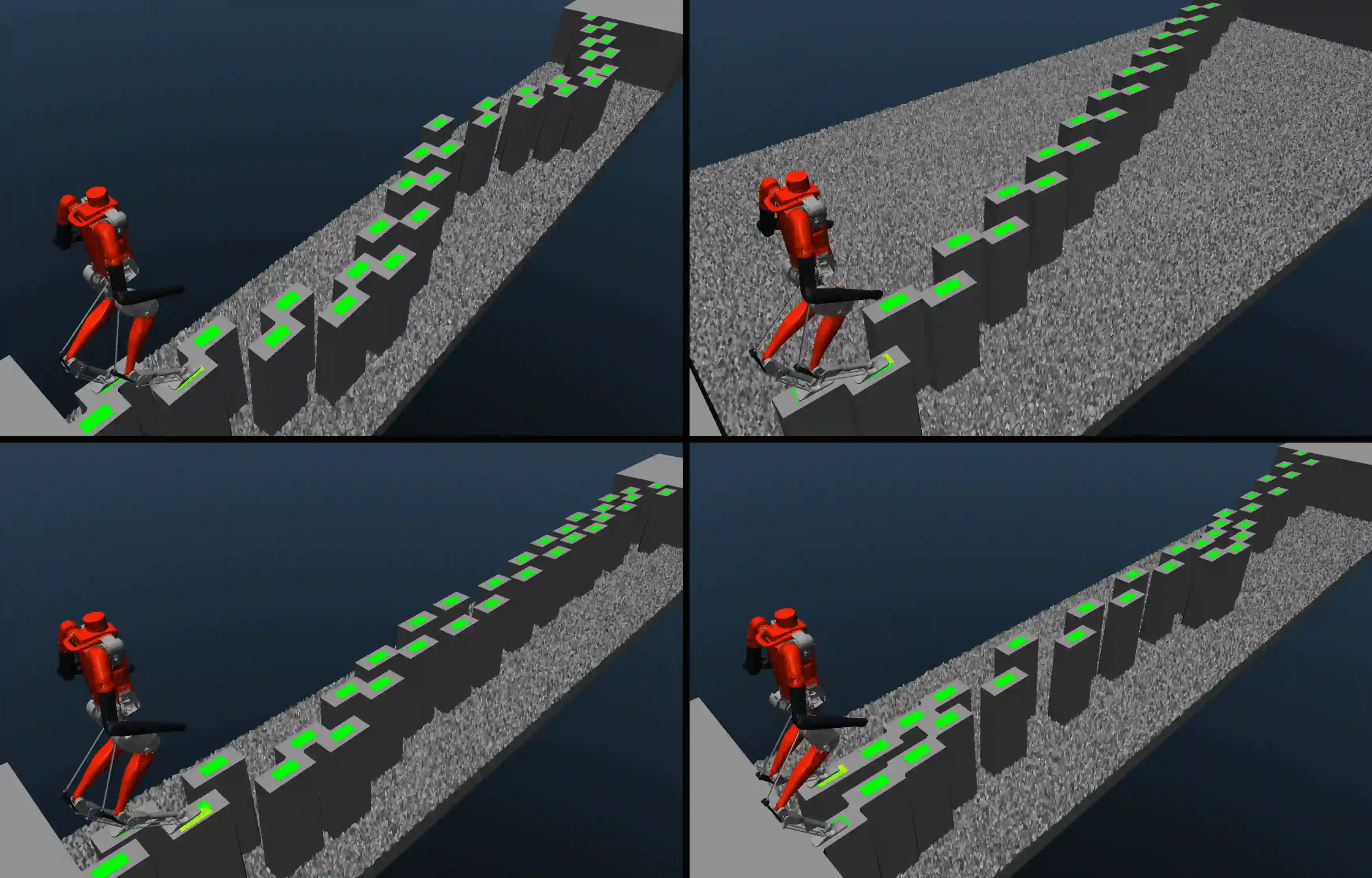
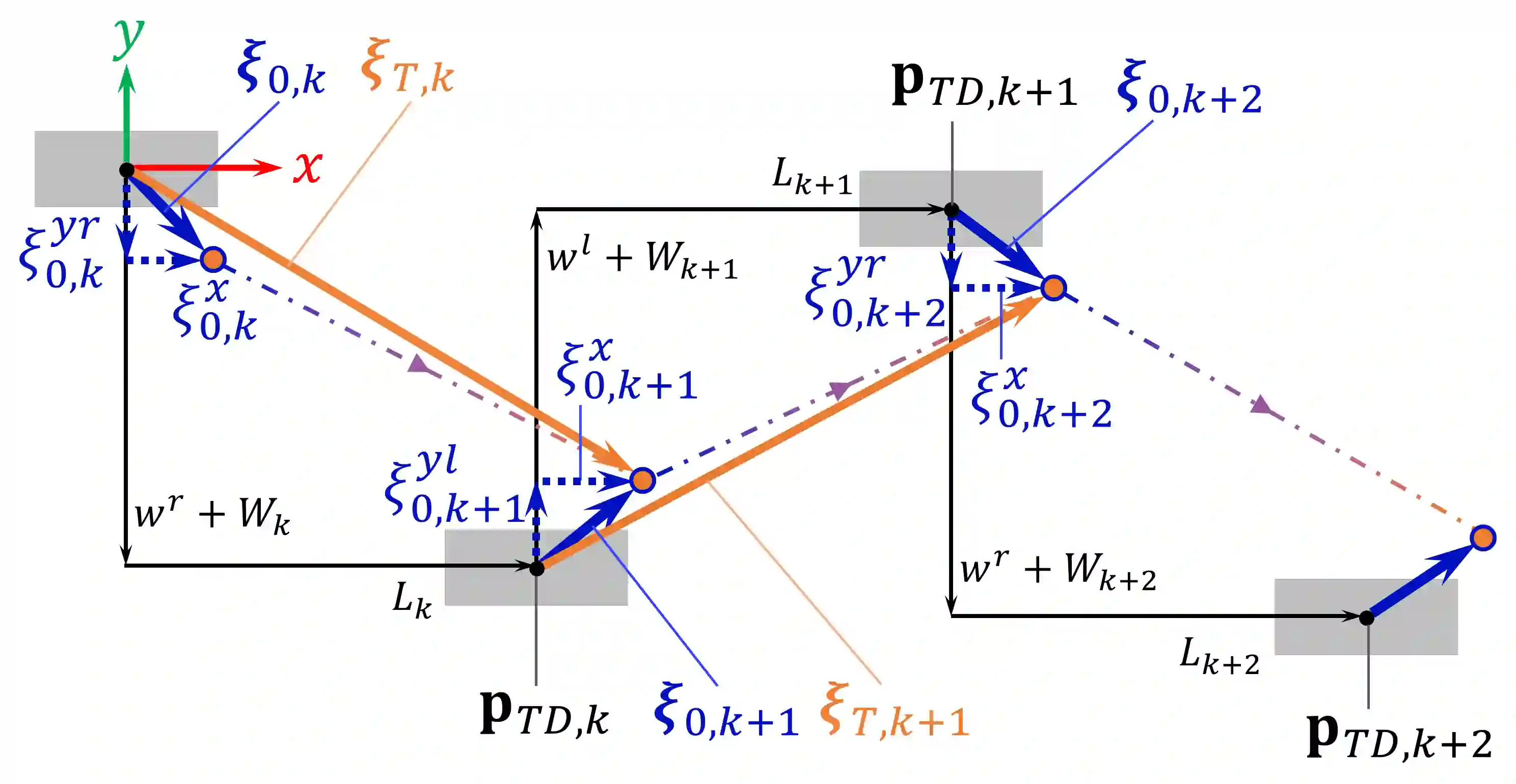
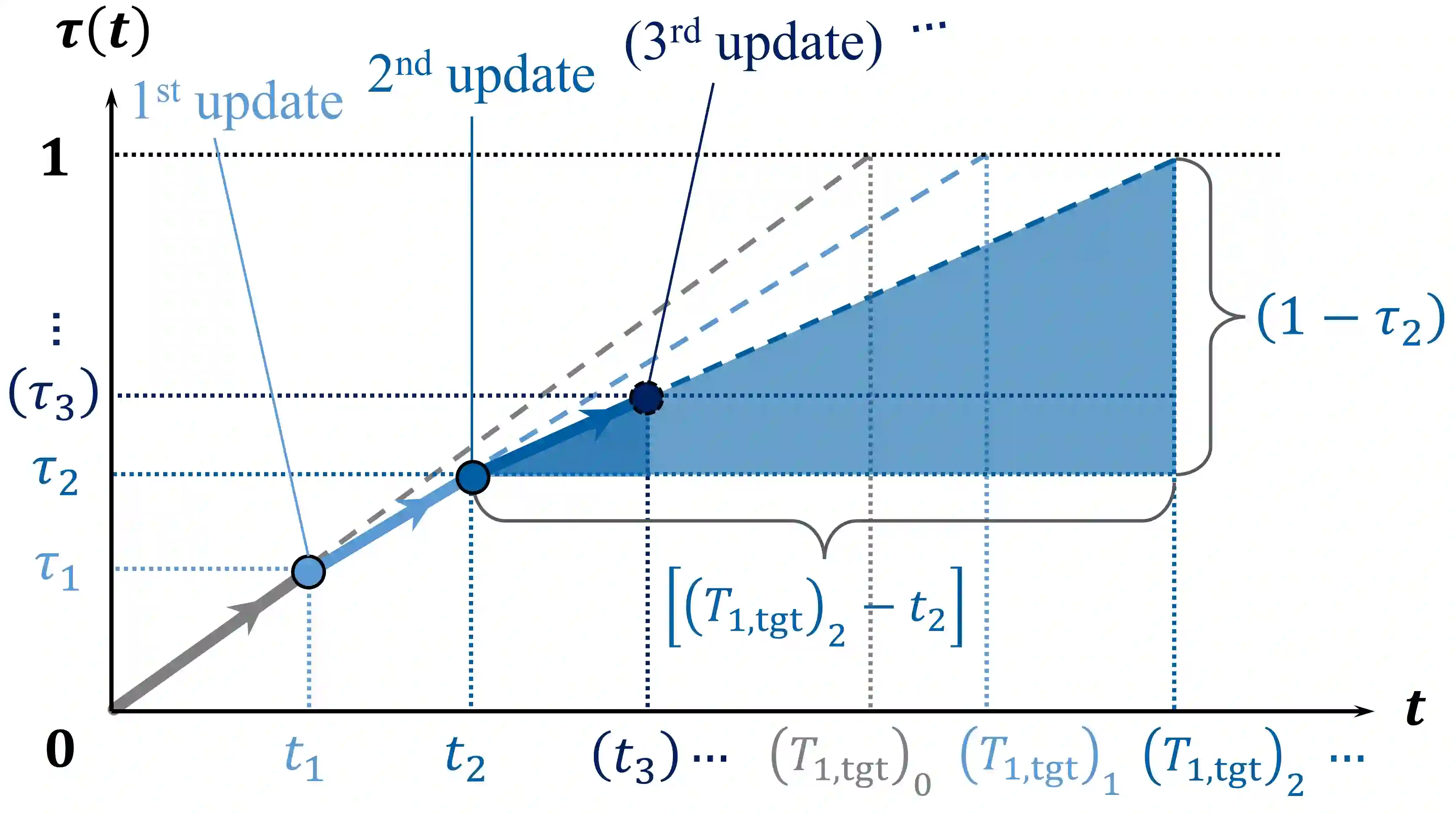
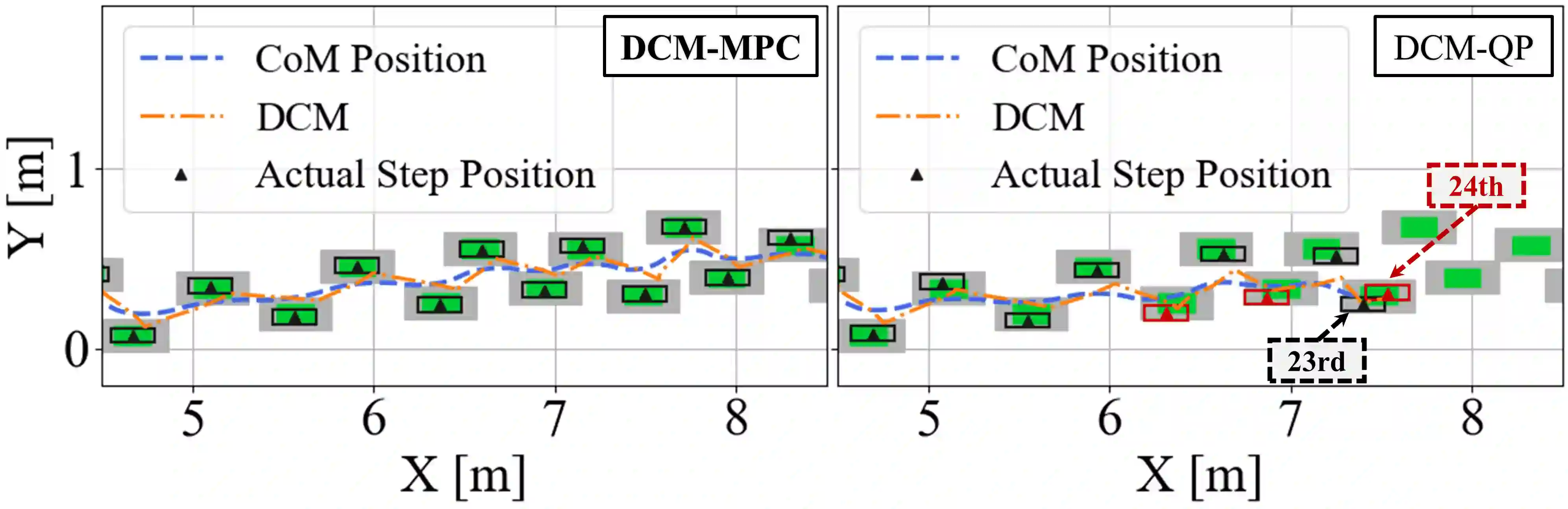
Traditional one-step preview planning algorithms for bipedal locomotion struggle to generate viable gaits when walking across terrains with restricted footholds, such as stepping stones. To overcome such limitations, this paper introduces a novel multi-step preview foot placement planning algorithm based on the step-to-step discrete evolution of the Divergent Component of Motion (DCM) of walking robots. Our proposed approach adaptively changes the step duration and the swing foot trajectory for optimal foot placement under constraints, thereby enhancing the long-term stability of the robot and significantly improving its ability to navigate environments with tight constraints on viable footholds. We demonstrate its effectiveness through various simulation scenarios with complex stepping-stone configurations and external perturbations. These tests underscore its improved performance for navigating foothold-restricted terrains, even with external disturbances.
翻译:传统的单步预览规划算法在跨越受限立足点地形(如踏脚石)时难以生成可行的步态。为克服这一限制,本文基于行走机器人运动发散分量(DCM)的步间离散演化,提出一种新颖的多步预览足部着落规划算法。该方法通过自适应调整步态时长与摆动足轨迹,在约束条件下实现最优足部着落,从而增强机器人的长期稳定性,并显著提升其在可行立足点严格受限环境中的行进能力。我们通过多种复杂踏脚石配置及外部扰动的仿真场景验证了算法的有效性。测试结果表明,即使在外部干扰下,该算法在受限立足点地形导航方面仍表现出显著提升的性能。




相关内容



 微信扫码咨询专知VIP会员