

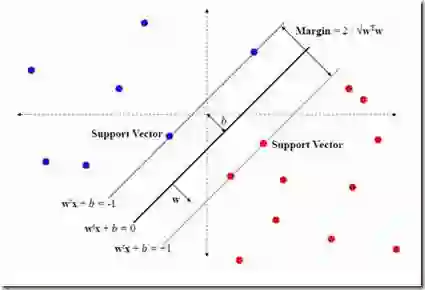
The ever-expanding scale of integrated circuits has brought about a significant rise in the design risks associated with radiation-resistant integrated circuit chips. Traditional single-particle experimental methods, with their iterative design approach, are increasingly ill-suited for the challenges posed by large-scale integrated circuits. In response, this article introduces a novel sensitivity-aware single-particle radiation effects simulation framework tailored for System-on-Chip platforms. Based on SVM algorithm we have implemented fast finding and classification of sensitive circuit nodes. Additionally, the methodology automates soft error analysis across the entire software stack. The study includes practical experiments focusing on RISC-V architecture, encompassing core components, buses, and memory systems. It culminates in the establishment of databases for Single Event Upsets (SEU) and Single Event Transients (SET), showcasing the practical efficacy of the proposed methodology in addressing radiation-induced challenges at the scale of contemporary integrated circuits. Experimental results have shown up to 12.78X speed-up on the basis of achieving 94.58% accuracy.
翻译:集成电路规模的不断扩展导致抗辐射集成电路芯片的设计风险显著上升。传统的单粒子实验方法因其迭代设计模式,已难以适应大规模集成电路带来的挑战。针对这一问题,本文提出了一种新型的、面向系统级芯片(SoC)平台的灵敏度感知单粒子辐射效应仿真框架。我们基于SVM算法实现了敏感电路节点的快速查找与分类。此外,该方法能够自动化完成整个软件栈层面的软错误分析。本研究以RISC-V架构为重点开展了实际实验,涵盖了核心组件、总线和存储系统。最终建立了单粒子翻转(SEU)与单粒子瞬态(SET)数据库,展示了所提方法在应对当代集成电路规模下辐射引发挑战方面的实际效能。实验结果表明,在达到94.58%准确率的基础上,可实现高达12.78倍的加速效果。




相关内容



 微信扫码咨询专知VIP会员