

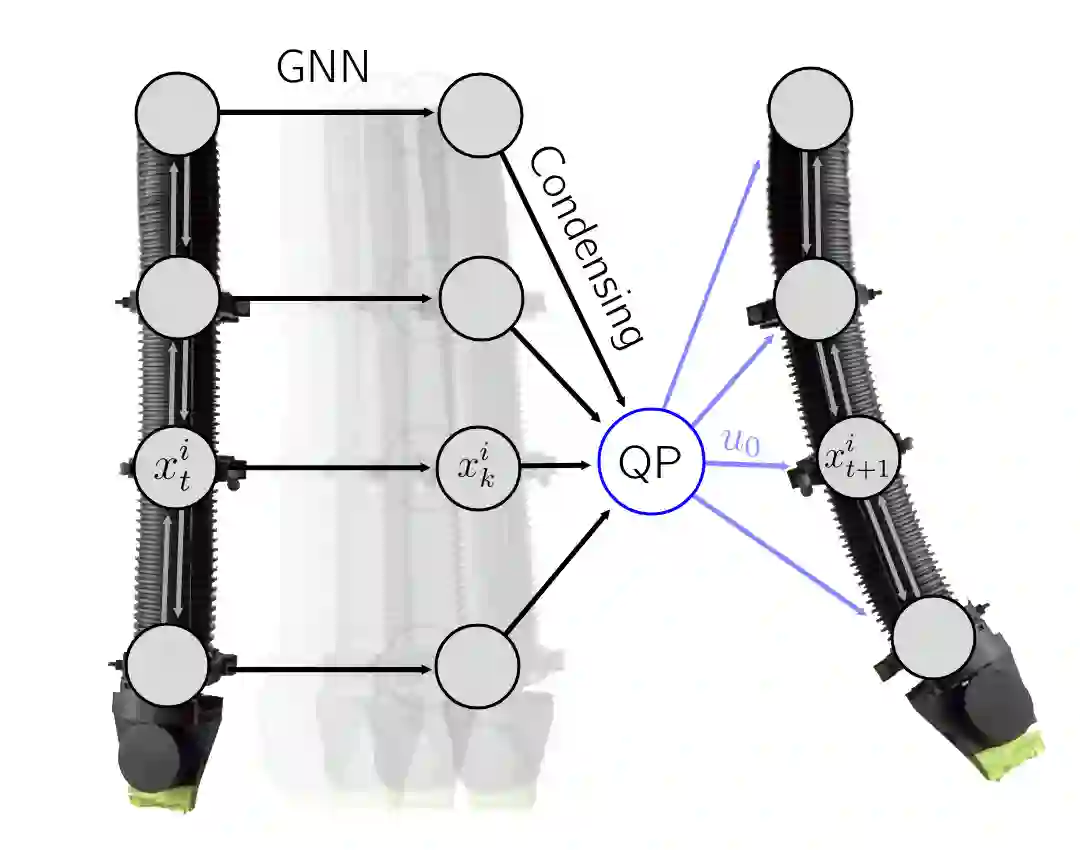
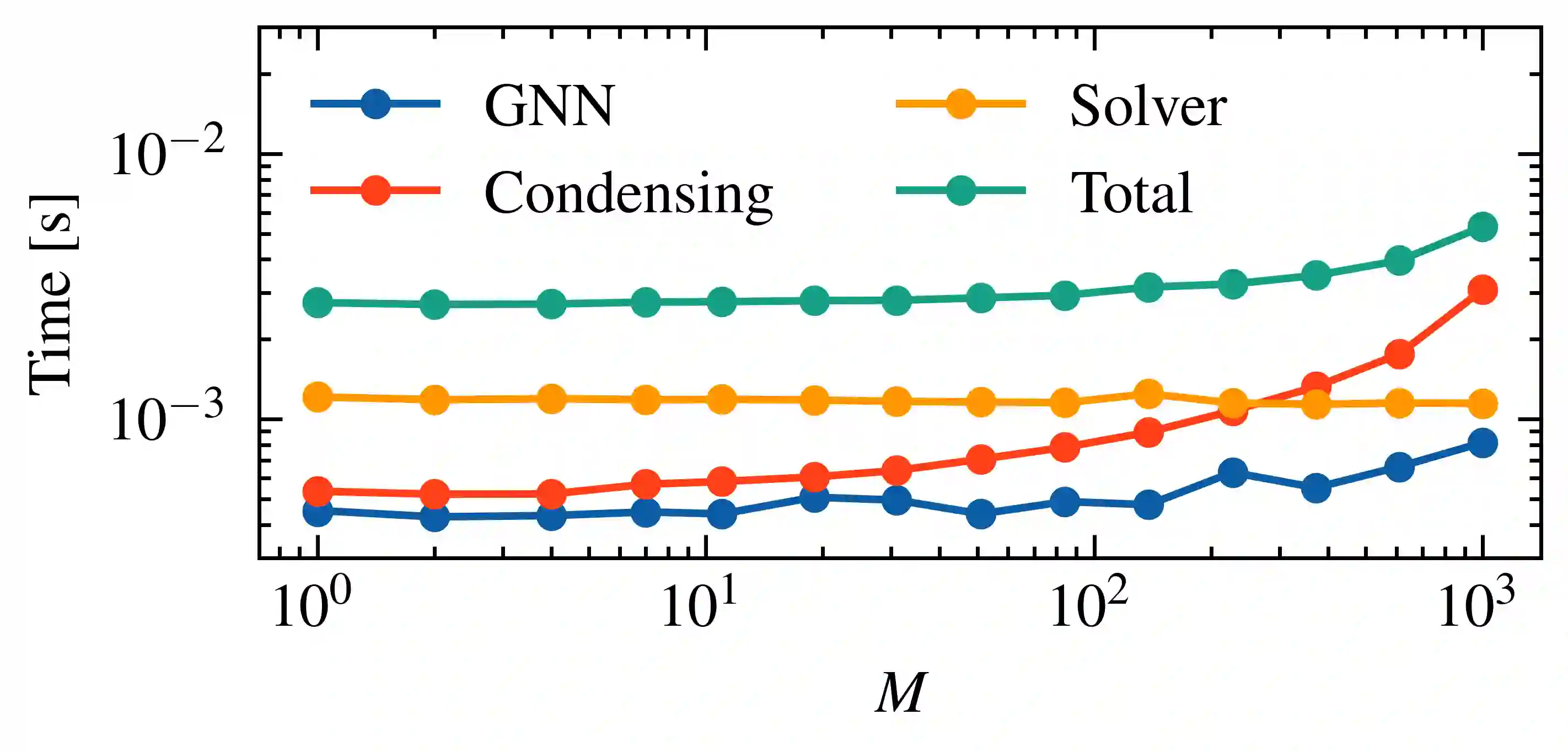
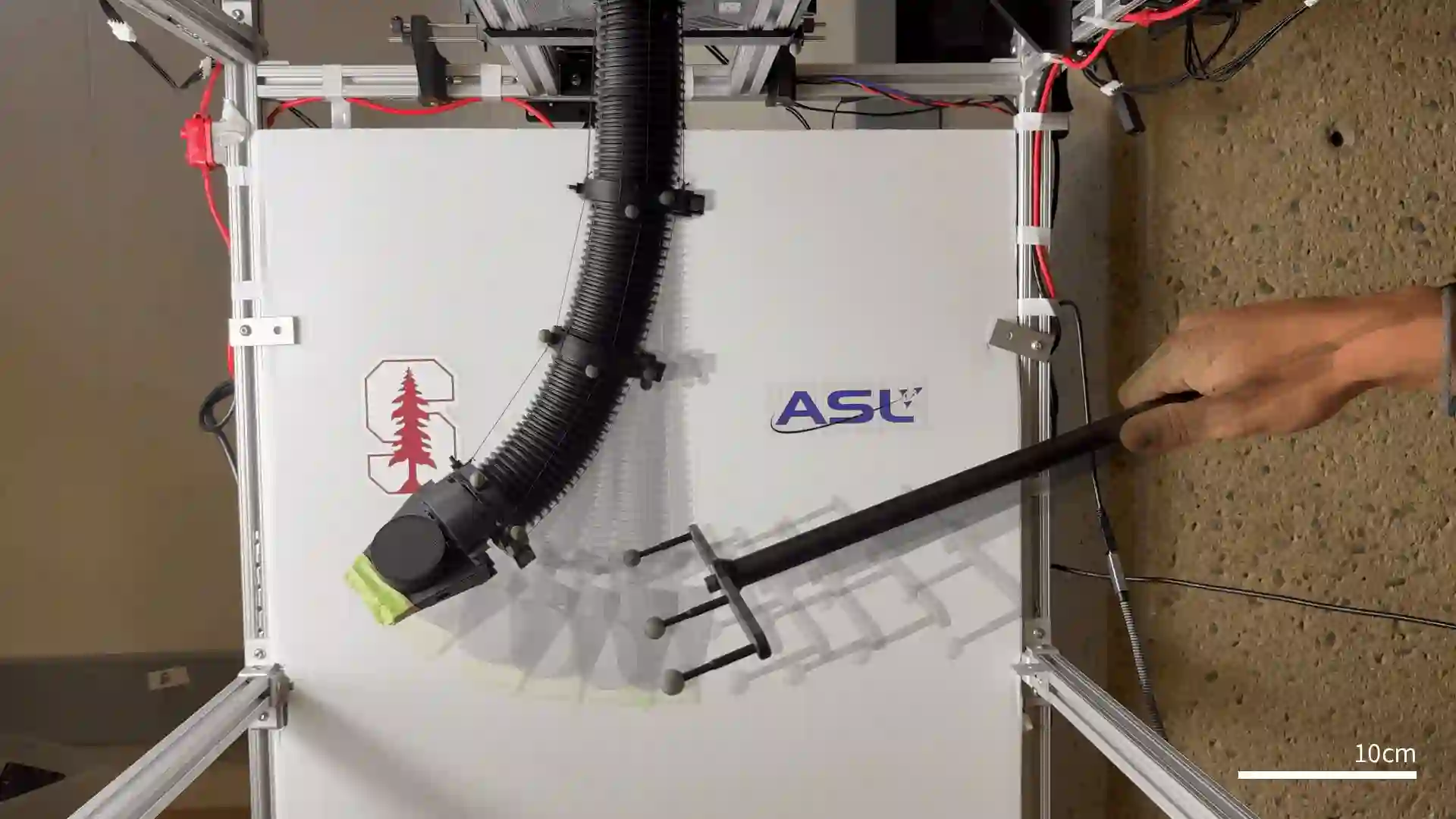
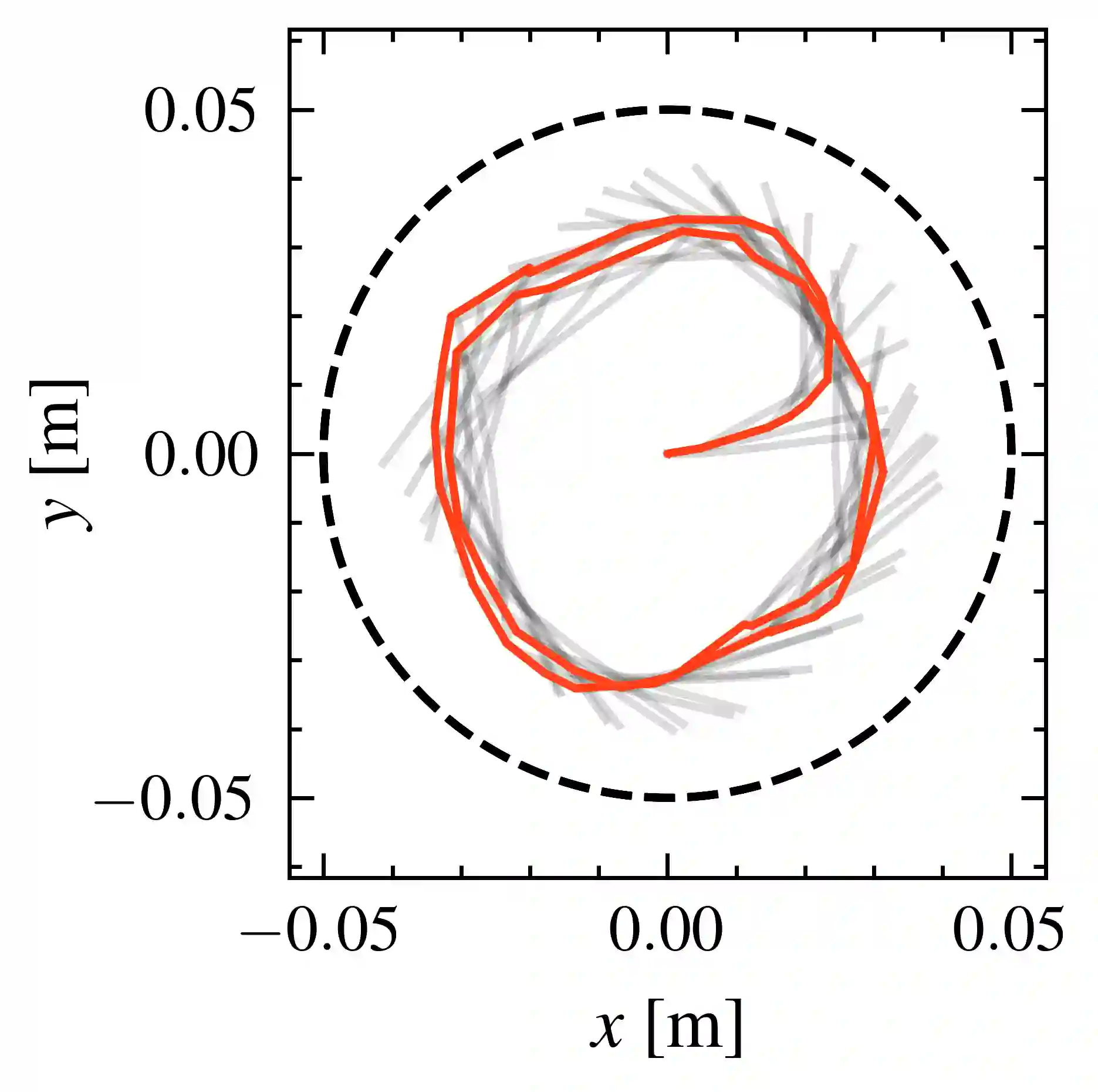
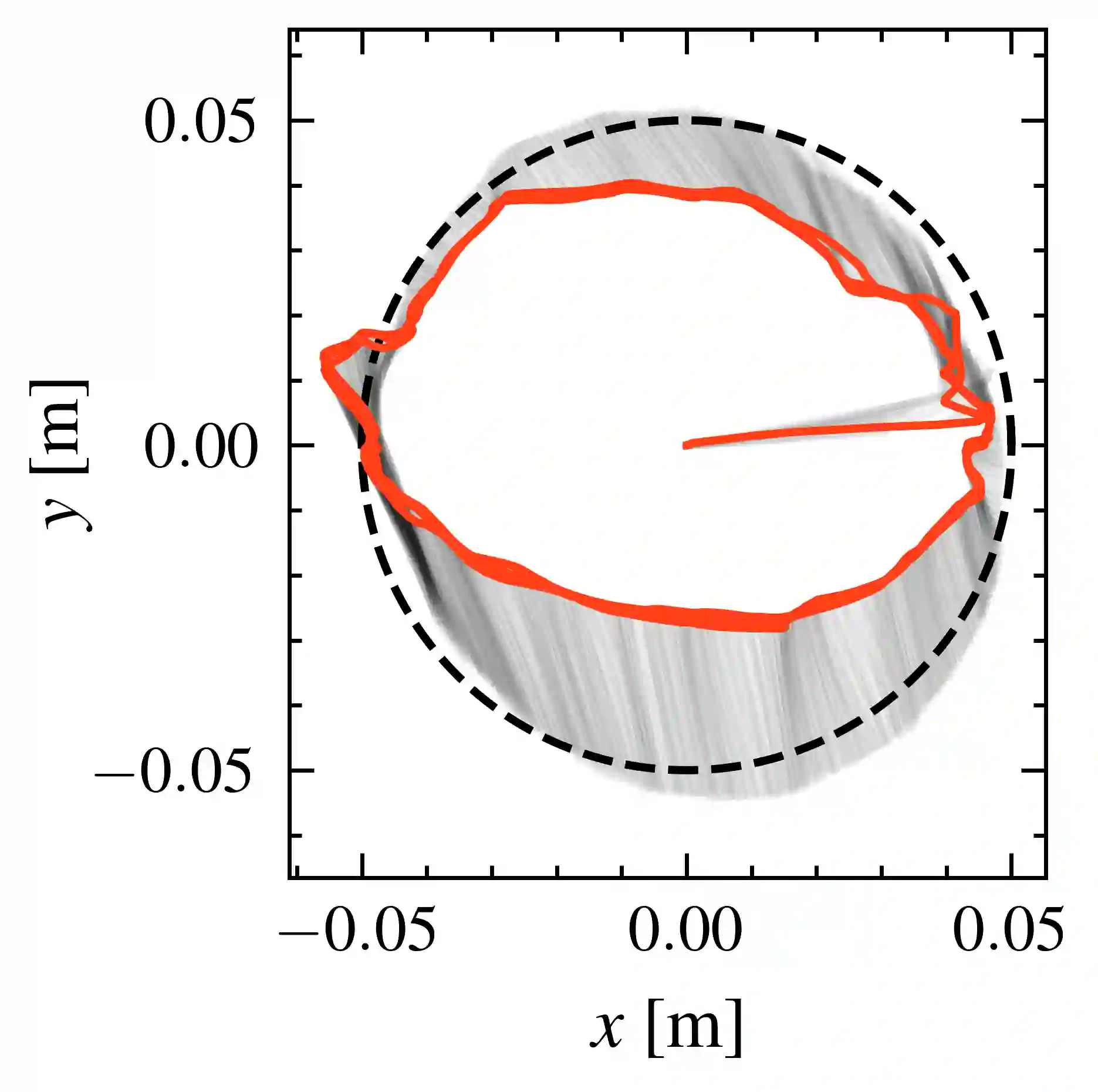
The control of high-dimensional systems, such as soft robots, requires models that faithfully capture complex dynamics while remaining computationally tractable. This work presents a framework that integrates Graph Neural Network (GNN)-based dynamics models with structure-exploiting Model Predictive Control to enable real-time control of high-dimensional systems. By representing the system as a graph with localized interactions, the GNN preserves sparsity, while a tailored condensing algorithm eliminates state variables from the control problem, ensuring efficient computation. The complexity of our condensing algorithm scales linearly with the number of system nodes, and leverages Graphics Processing Unit (GPU) parallelization to achieve real-time performance. The proposed approach is validated in simulation and experimentally on a physical soft robotic trunk. Results show that our method scales to systems with up to 1,000 nodes at 100 Hz in closed-loop, and demonstrates real-time reference tracking on hardware with sub-centimeter accuracy, outperforming baselines by 63.6%. Finally, we show the capability of our method to achieve effective full-body obstacle avoidance.
翻译:对于软体机器人等高维系统的控制,需要既能准确捕捉复杂动力学特性,又能保持计算可行性的模型。本研究提出了一种框架,将基于图神经网络(GNN)的动力学模型与利用系统结构的模型预测控制相结合,以实现高维系统的实时控制。通过将系统表示为具有局部交互作用的图,GNN保持了系统的稀疏性;同时,一种定制的凝聚算法从控制问题中消除了状态变量,从而确保了计算效率。该凝聚算法的复杂度随系统节点数量线性增长,并利用图形处理器(GPU)并行化实现实时性能。所提方法在仿真中及物理软体机器人躯干上进行了实验验证。结果表明,我们的方法可扩展至具有1,000个节点的系统,在闭环控制下达到100 Hz的运行频率,并在硬件上实现了亚厘米精度的实时参考轨迹跟踪,性能优于基线方法63.6%。最后,我们展示了该方法实现有效全身避障的能力。




相关内容


 微信扫码咨询专知VIP会员