

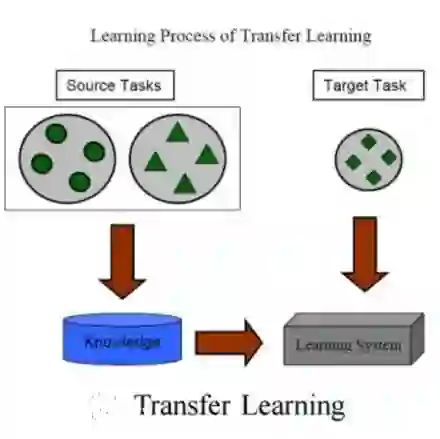
Lesion segmentation of ultrasound medical images based on deep learning techniques is a widely used method for diagnosing diseases. Although there is a large amount of ultrasound image data in medical centers and other places, labeled ultrasound datasets are a scarce resource, and it is likely that no datasets are available for new tissues/organs. Transfer learning provides the possibility to solve this problem, but there are too many features in natural images that are not related to the target domain. As a source domain, redundant features that are not conducive to the task will be extracted. Migration between ultrasound images can avoid this problem, but there are few types of public datasets, and it is difficult to find sufficiently similar source domains. Compared with natural images, ultrasound images have less information, and there are fewer transferable features between different ultrasound images, which may cause negative transfer. To this end, a multi-source adversarial transfer learning network for ultrasound image segmentation is proposed. Specifically, to address the lack of annotations, the idea of adversarial transfer learning is used to adaptively extract common features between a certain pair of source and target domains, which provides the possibility to utilize unlabeled ultrasound data. To alleviate the lack of knowledge in a single source domain, multi-source transfer learning is adopted to fuse knowledge from multiple source domains. In order to ensure the effectiveness of the fusion and maximize the use of precious data, a multi-source domain independent strategy is also proposed to improve the estimation of the target domain data distribution, which further increases the learning ability of the multi-source adversarial migration learning network in multiple domains.
翻译:基于深度学习技术的超声医学图像病灶分割是疾病诊断中的常用方法。尽管医疗机构等场所积累了海量超声图像数据,但带标注的超声数据集仍属稀缺资源,且针对新型组织/器官很可能无法获取可用数据集。迁移学习为解决该问题提供了可能,但自然图像中存在过多与目标领域无关的特征。当自然图像作为源领域时,会提取出不利于任务完成的冗余特征。在超声图像间进行迁移可规避此问题,但公开数据集类型稀少,难以找到足够相似的源领域。与自然图像相比,超声图像信息量更少,不同超声图像间的可迁移特征更少,易导致负迁移。为此,本文提出一种用于超声图像分割的多源对抗迁移学习网络。具体而言,为解决标注缺失问题,采用对抗迁移学习思想自适应提取某对源领域与目标领域的公共特征,这为利用无标注超声数据提供了可能。为缓解单一源领域知识匮乏问题,采用多源迁移学习融合多个源领域的知识。为确保融合有效性并最大化利用珍贵数据,还提出多源领域独立策略以改进目标领域数据分布的估计,从而进一步提升多源对抗迁移学习网络在多领域中的学习能力。




相关内容


 微信扫码咨询专知VIP会员