

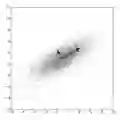
This work focuses on advancing security research in the hardware design space by formally defining the realistic problem of Hardware Trojan (HT) detection. The goal is to model HT detection more closely to the real world, i.e., describing the problem as "The Seeker's Dilemma" (an extension of Hide&Seek on a graph), where a detecting agent is unaware of whether circuits are infected by HTs or not. Using this theoretical problem formulation, we create a benchmark that consists of a mixture of HT-free and HT-infected restructured circuits while preserving their original functionalities. The restructured circuits are randomly infected by HTs, causing a situation where the defender is uncertain if a circuit is infected or not. We believe that our innovative dataset will help the community better judge the detection quality of different methods by comparing their success rates in circuit classification. We use our developed benchmark to evaluate three state-of-the-art HT detection tools to show baseline results for this approach. We use Principal Component Analysis to assess the strength of our benchmark, where we observe that some restructured HT-infected circuits are mapped closely to HT-free circuits, leading to significant label misclassification by detectors.
翻译:本文致力于通过正式定义硬件木马(HT)检测的现实问题,推动硬件设计领域的安全研究进展。目标是将HT检测建模更贴近现实世界,即将该问题描述为"寻觅者困境"(图论中"躲猫猫"问题的扩展),其中检测代理无法知晓电路是否遭受HT感染。基于这一理论问题建模,我们创建了一个包含无HT电路与感染HT重构电路的混合基准数据集,且所有电路均保留原始功能。重构电路被随机注入HT,导致防御者无法确定电路是否感染。我们认为,这一创新数据集将通过比较不同方法在电路分类任务中的成功率,帮助学界更准确地评估检测质量。我们利用所开发的基准对三种先进HT检测工具进行评测,展示了该方法的基线结果。通过主成分分析评估基准强度时发现,部分重构的HT感染电路与无HT电路在特征映射上高度相似,导致检测器出现显著的标签误分类现象。




相关内容

- Today (iOS and OS X): widgets for the Today view of Notification Center
- Share (iOS and OS X): post content to web services or share content with others
- Actions (iOS and OS X): app extensions to view or manipulate inside another app
- Photo Editing (iOS): edit a photo or video in Apple's Photos app with extensions from a third-party apps
- Finder Sync (OS X): remote file storage in the Finder with support for Finder content annotation
- Storage Provider (iOS): an interface between files inside an app and other apps on a user's device
- Custom Keyboard (iOS): system-wide alternative keyboards
Source: iOS 8 Extensions: Apple’s Plan for a Powerful App Ecosystem


 微信扫码咨询专知VIP会员