

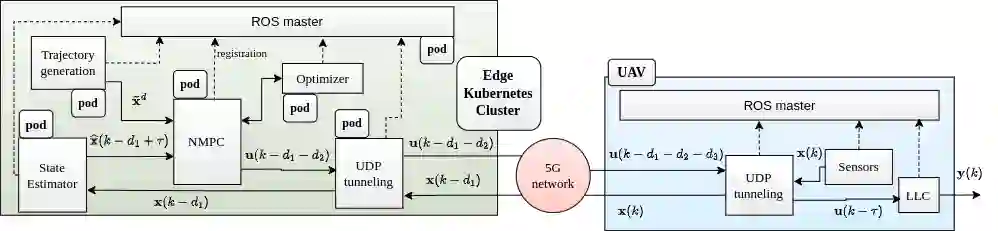
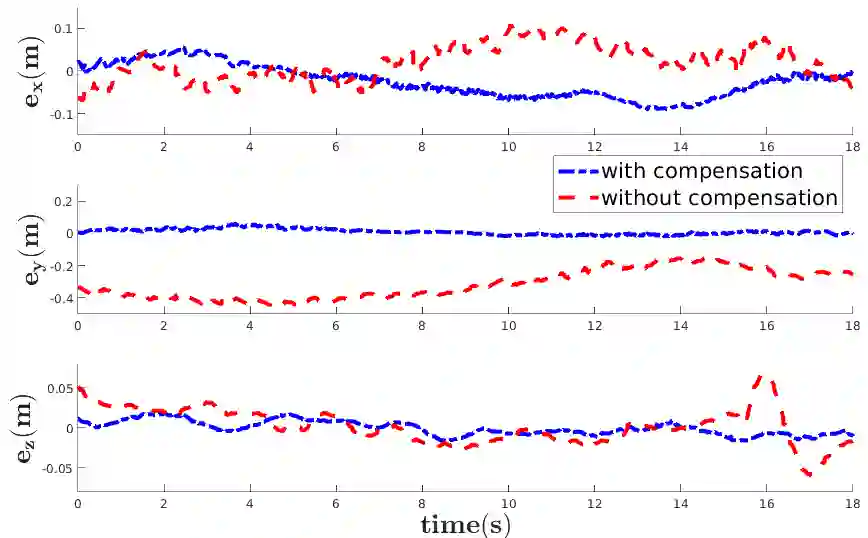
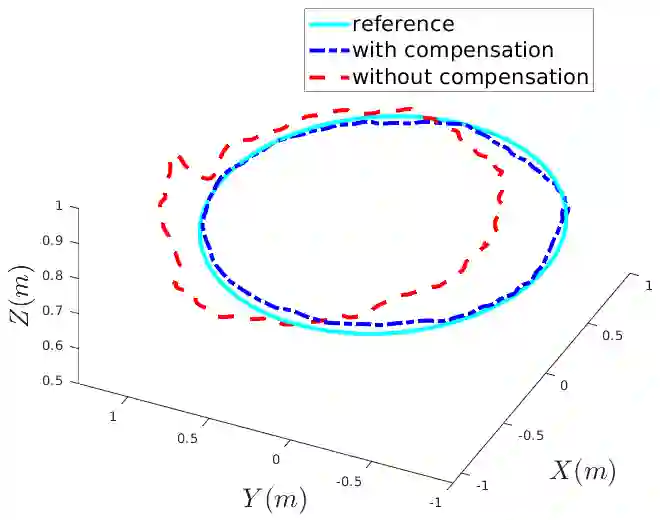
With the advent of technologies such as Edge computing, the horizons of remote computational applications have broadened multidimensionally. Autonomous Unmanned Aerial Vehicle (UAV) mission is a vital application to utilize remote computation to catalyze its performance. However, offloading computational complexity to a remote system increases the latency in the system. Though technologies such as 5G networking minimize communication latency, the effects of latency on the control of UAVs are inevitable and may destabilize the system. Hence, it is essential to consider the delays in the system and compensate for them in the control design. Therefore, we propose a novel Edge-based predictive control architecture enabled by 5G networking, PACED-5G (Predictive Autonomous Control using Edge for Drones over 5G). In the proposed control architecture, we have designed a state estimator for estimating the current states based on the available knowledge of the time-varying delays, devised a Model Predictive controller (MPC) for the UAV to track the reference trajectory while avoiding obstacles, and provided an interface to offload the high-level tasks over Edge systems. The proposed architecture is validated in two experimental test cases using a quadrotor UAV.
翻译:随着边缘计算等技术的出现,远程计算应用的范围已多维度拓展。自主无人飞行器(UAV)任务是利用远程计算提升性能的关键应用。然而,将计算复杂性卸载到远程系统会增加系统延迟。尽管5G网络等技术最大限度地减少了通信延迟,但延迟对无人机控制的影响不可避免,可能导致系统失稳。因此,必须考虑系统中的延迟并在控制设计中对其进行补偿。为此,我们提出一种基于5G网络的新型边缘预测控制架构——PACED-5G(基于5G的边缘预测自主无人机控制)。在该控制架构中,我们设计了一个状态估计器,基于时变延迟的已知信息估计当前状态;开发了一个模型预测控制器(MPC),使无人机在跟踪参考轨迹的同时避开障碍物;并提供了将高层次任务卸载到边缘系统的接口。通过四旋翼无人机的两组实验案例验证了所提架构的有效性。





相关内容


 微信扫码咨询专知VIP会员