

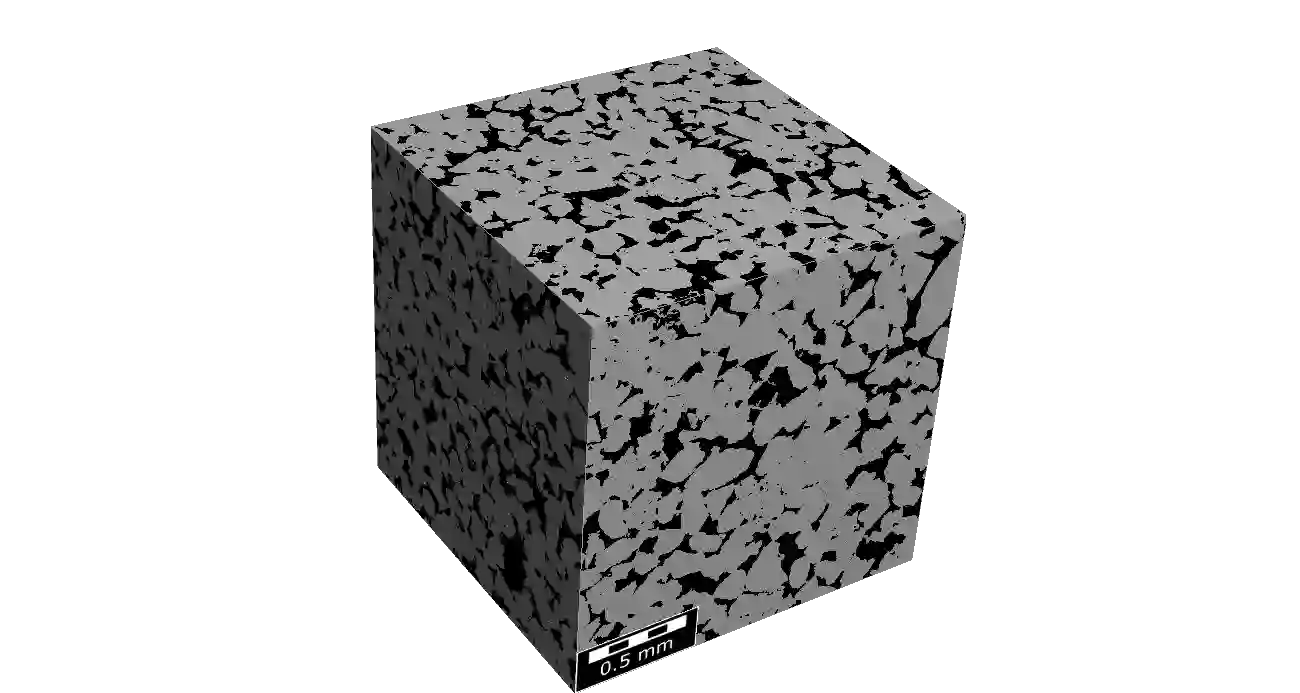
This study presents a Graph Neural Networks (GNNs)-based approach for predicting the effective elastic moduli of rocks from their digital CT-scan images. We use the Mapper algorithm to transform 3D digital rock images into graph datasets, encapsulating essential geometrical information. These graphs, after training, prove effective in predicting elastic moduli. Our GNN model shows robust predictive capabilities across various graph sizes derived from various subcube dimensions. Not only does it perform well on the test dataset, but it also maintains high prediction accuracy for unseen rocks and unexplored subcube sizes. Comparative analysis with Convolutional Neural Networks (CNNs) reveals the superior performance of GNNs in predicting unseen rock properties. Moreover, the graph representation of microstructures significantly reduces GPU memory requirements (compared to the grid representation for CNNs), enabling greater flexibility in the batch size selection. This work demonstrates the potential of GNN models in enhancing the prediction accuracy of rock properties and boosting the efficiency of digital rock analysis.
翻译:本研究提出了一种基于图神经网络(GNNs)的方法,用于通过岩石的数字CT扫描图像预测其有效弹性模量。我们采用Mapper算法将三维数字岩石图像转化为图数据集,以封装关键的几何信息。经过训练后,这些图在预测弹性模量方面表现出有效性。我们的GNN模型在来自不同子立方体尺寸的多种图规模下均展现出稳健的预测能力。该模型不仅在测试数据集上表现良好,还能对未见过的岩石及未探索的子立方体尺寸保持高预测精度。与卷积神经网络(CNNs)的对比分析表明,GNN在预测未见岩石属性方面具有更优性能。此外,微结构的图表示可显著降低GPU内存需求(相较于CNNs的网格表示),从而在批量大小选择上赋予更大灵活性。本研究展示了GNN模型在提升岩石属性预测精度及提高数字岩石分析效率方面的潜力。




相关内容




 微信扫码咨询专知VIP会员