AI-driven medical history-taking is an important component in symptom checking, automated patient intake, triage, and other AI virtual care applications. As history-taking is extremely varied, machine learning models require a significant amount of data to train. To overcome this challenge, existing systems are developed using indirect data or expert knowledge. This leads to a training-inference gap as models are trained on different kinds of data than what they observe at inference time. In this work, we present a two-stage re-ranking approach that helps close the training-inference gap by re-ranking the first-stage question candidates using a dialogue-contextualized model. For this, we propose a new model, global re-ranker, which cross-encodes the dialogue with all questions simultaneously, and compare it with several existing neural baselines. We test both transformer and S4-based language model backbones. We find that relative to the expert system, the best performance is achieved by our proposed global re-ranker with a transformer backbone, resulting in a 30% higher normalized discount cumulative gain (nDCG) and a 77% higher mean average precision (mAP).


翻译:AI驱动的医疗病史采集是症状检查、自动患者分诊、预检及其他AI虚拟医疗应用中至关重要的组成部分。由于病史采集过程高度多样化,机器学习模型需要大量数据进行训练。为应对这一挑战,现有系统通常采用间接数据或专家知识进行开发,这导致训练与推理阶段存在偏差——模型在训练时所使用的数据类型与推理时实际观测到的数据不一致。本研究提出一种两阶段重排序方法,通过使用对话情境化模型对第一阶段的候选问题重新排序,有效缩小训练-推理差距。为此,我们提出新型全局重排序模型,该模型将对话内容与所有问题同时进行交叉编码,并与多种现有神经基线模型进行对比。实验分别采用基于Transformer和S4的语言模型主干架构。结果表明,相较于专家系统,基于Transformer主干的全局重排序模型取得了最优性能,其归一化折损累积增益(nDCG)提升30%,平均精度均值(mAP)提升77%。


0
下载
关闭预览

相关内容

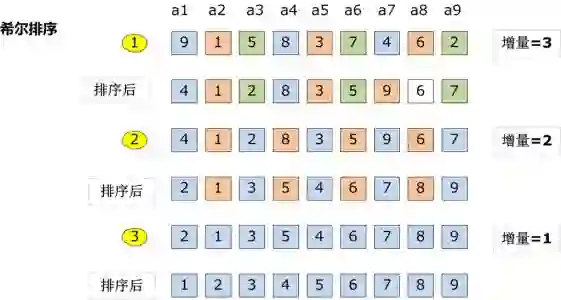
排序是计算机内经常进行的一种操作,其目的是将一组“无序”的记录序列调整为“有序”的记录序列。分内部排序和外部排序。若整个排序过程不需要访问外存便能完成,则称此类排序问题为内部排序。反之,若参加排序的记录数量很大,整个序列的排序过程不可能在内存中完成,则称此类排序问题为外部排序。内部排序的过程是一个逐步扩大记录的有序序列长度的过程。
【RecSys22教程】多阶段推荐系统的神经重排序,90页ppt
专知会员服务
27+阅读 · 2022年9月30日
【2022新书】高效深度学习,Efficient Deep Learning Book
专知会员服务
128+阅读 · 2022年4月21日
专知会员服务
124+阅读 · 2020年9月8日
FlowQA: Grasping Flow in History for Conversational Machine Comprehension
专知会员服务
35+阅读 · 2019年10月18日
机器学习入门的经验与建议
专知会员服务
94+阅读 · 2019年10月10日
【哈佛大学商学院课程Fall 2019】机器学习可解释性
专知会员服务
106+阅读 · 2019年10月9日
RecSys2022 | 多阶段推荐系统的神经重排序教程
机器学习与推荐算法
0+阅读 · 2022年10月12日
Hierarchically Structured Meta-learning
CreateAMind
27+阅读 · 2019年5月22日
强化学习的Unsupervised Meta-Learning
CreateAMind
18+阅读 · 2019年1月7日
无监督元学习表示学习
CreateAMind
27+阅读 · 2019年1月4日
Unsupervised Learning via Meta-Learning
CreateAMind
44+阅读 · 2019年1月3日
年度必读:2018最具突破性人工智能论文Top 10
机器学习算法与Python学习
11+阅读 · 2018年12月2日
disentangled-representation-papers
CreateAMind
26+阅读 · 2018年9月12日
国家自然科学基金
2+阅读 · 2015年12月31日
国家自然科学基金
0+阅读 · 2014年12月31日
国家自然科学基金
1+阅读 · 2014年12月31日
国家自然科学基金
0+阅读 · 2013年12月31日
国家自然科学基金
3+阅读 · 2013年12月31日
国家自然科学基金
0+阅读 · 2012年12月31日
国家自然科学基金
0+阅读 · 2012年12月31日
国家自然科学基金
0+阅读 · 2009年12月31日
国家自然科学基金
2+阅读 · 2009年12月31日
Arxiv
0+阅读 · 2023年5月22日
Arxiv
0+阅读 · 2023年5月19日
VIP会员
最新内容
印度精确打击与指挥架构的断层
专知会员服务
4+阅读 · 7月20日
美空军AI完成F-16战斗机自主空战历史性试飞
专知会员服务
6+阅读 · 7月20日
深入Project Maven:为何人工智能在战场上依然失灵
锻造未来士兵:外骨骼、基因工程与赛博格
专知会员服务
7+阅读 · 7月19日
《无人机蜂群通信技术研究》50页
专知会员服务
11+阅读 · 7月19日
相关基金
国家自然科学基金
2+阅读 · 2015年12月31日
国家自然科学基金
0+阅读 · 2014年12月31日
国家自然科学基金
1+阅读 · 2014年12月31日
国家自然科学基金
0+阅读 · 2013年12月31日
国家自然科学基金
3+阅读 · 2013年12月31日
国家自然科学基金
0+阅读 · 2012年12月31日
国家自然科学基金
0+阅读 · 2012年12月31日
国家自然科学基金
0+阅读 · 2009年12月31日
国家自然科学基金
2+阅读 · 2009年12月31日
Top
微信扫码咨询专知VIP会员