

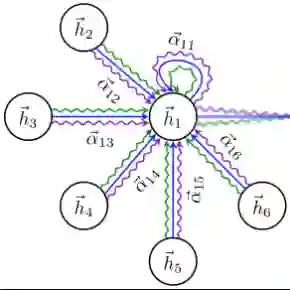
The growing demand for wireless connectivity, combined with limited spectrum resources, calls for more efficient spectrum management. Spectrum sharing is a promising approach; however, regulators need accurate methods to characterize demand dynamics and guide allocation decisions. This paper builds and validates a spectrum demand proxy from public deployment records and uses a graph attention network in a hierarchical, multi-resolution setup (HR-GAT) to estimate spectrum demand at fine spatial scales. The model captures both neighborhood effects and cross-scale patterns, reducing spatial autocorrelation and improving generalization. Evaluated across five Canadian cities and against eight competitive baselines, HR-GAT reduces median RMSE by roughly 21% relative to the best alternative and lowers residual spatial bias. The resulting demand maps are regulator-accessible and support spectrum sharing and spectrum allocation in wireless networks.
翻译:无线连接需求的日益增长与有限的频谱资源之间的矛盾,要求实现更高效的频谱管理。频谱共享是一种前景广阔的方法;然而,监管机构需要准确的方法来表征需求动态并指导分配决策。本文基于公共部署记录构建并验证了一个频谱需求代理,并在一个分层、多分辨率的设置中使用图注意力网络(HR-GAT)来估计精细空间尺度上的频谱需求。该模型同时捕捉了邻近效应和跨尺度模式,减少了空间自相关并提高了泛化能力。在加拿大五个城市进行评估,并与八个竞争性基线模型对比,HR-GAT相对于最佳替代方案将中位数RMSE降低了约21%,并降低了残差空间偏差。由此产生的需求地图便于监管机构使用,并支持无线网络中的频谱共享与频谱分配。




相关内容


 微信扫码咨询专知VIP会员