

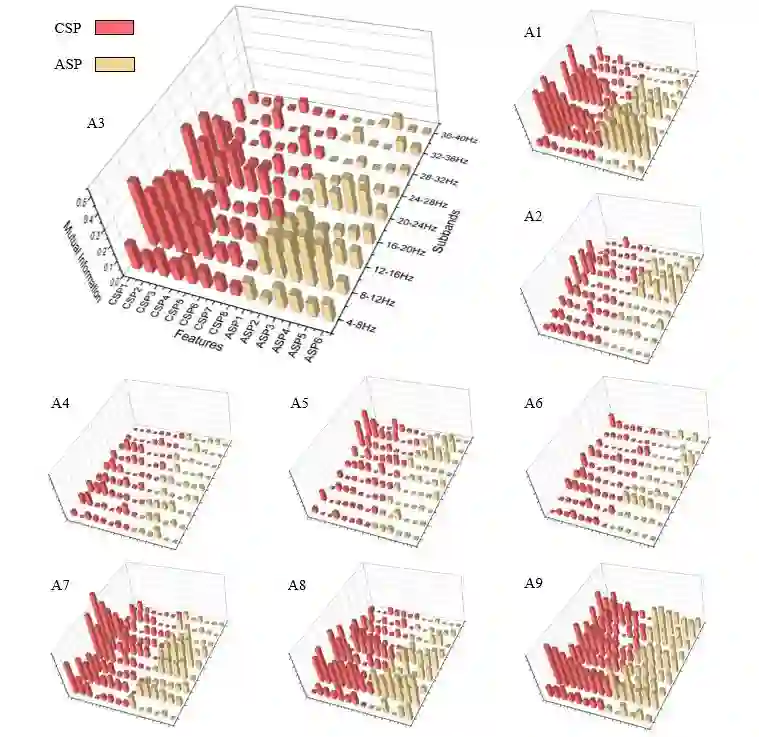
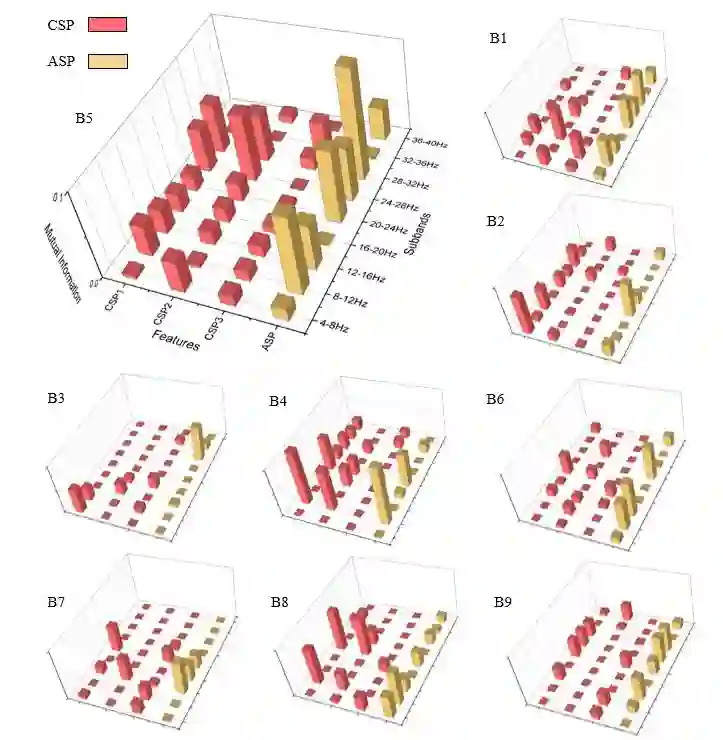
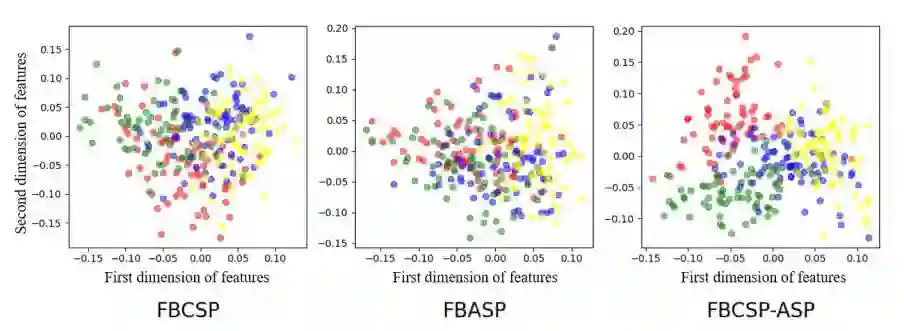
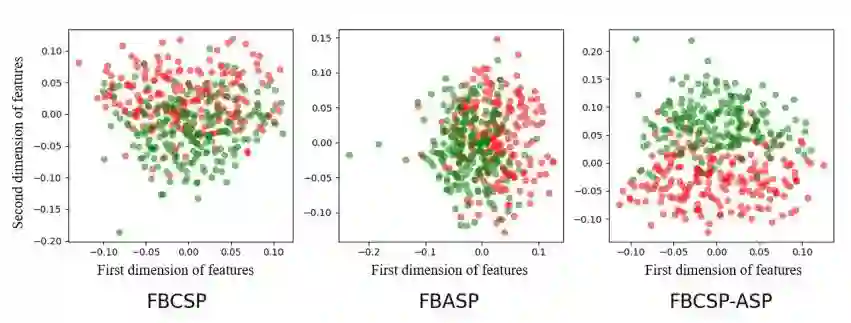
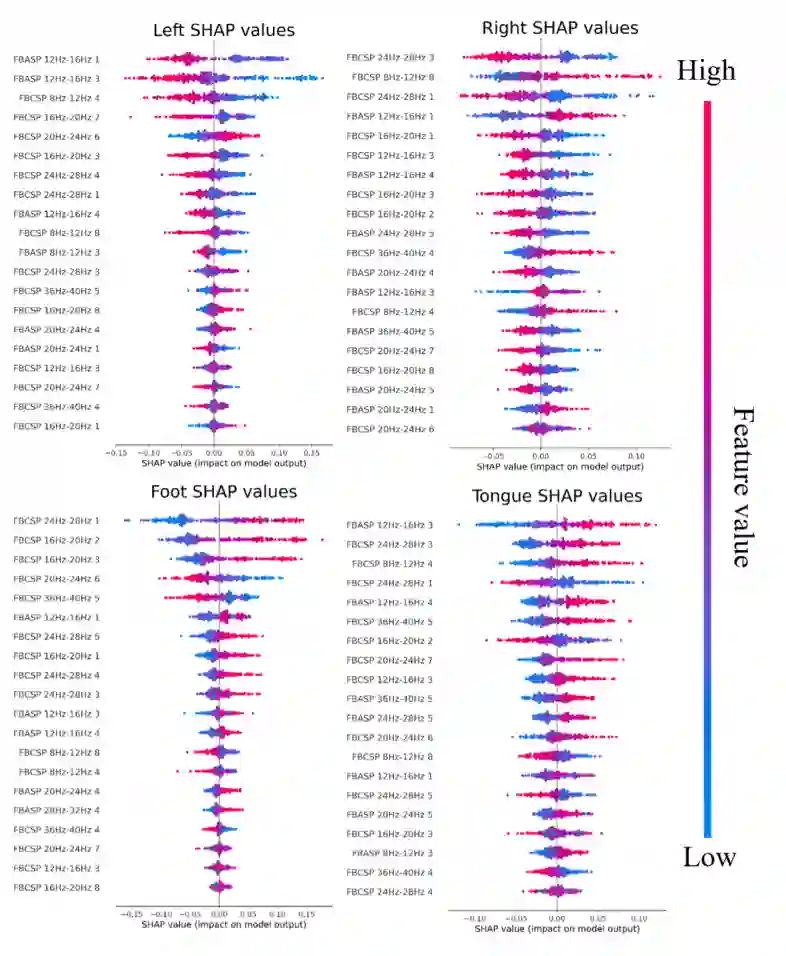
As a typical self-paced brain-computer interface (BCI) system, the motor imagery (MI) BCI has been widely applied in fields such as robot control, stroke rehabilitation, and assistance for patients with stroke or spinal cord injury. Many studies have focused on the traditional spatial filters obtained through the common spatial pattern (CSP) method. However, the CSP method can only obtain fixed spatial filters for specific input signals. Besides, CSP method only focuses on the variance difference of two types of electroencephalogram (EEG) signals, so the decoding ability of EEG signals is limited. To obtain more effective spatial filters for better extraction of spatial features that can improve classification to MI-EEG, this paper proposes an adaptive spatial filter solving method based on particle swarm optimization algorithm (PSO). A training and testing framework based on filter bank and spatial filters (FBCSP-ASP) is designed for MI EEG signal classification. Comparative experiments are conducted on two public datasets (2a and 2b) from BCI competition IV, which show the outstanding average recognition accuracy of FBCSP-ASP. The proposed method has achieved significant performance improvement on MI-BCI. The classification accuracy of the proposed method has reached 74.61% and 81.19% on datasets 2a and 2b, respectively. Compared with the baseline algorithm (FBCSP), the proposed algorithm improves 11.44% and 7.11% on two datasets respectively. Furthermore, the analysis based on mutual information, t-SNE and Shapley values further proves that ASP features have excellent decoding ability for MI-EEG signals, and explains the improvement of classification performance by the introduction of ASP features.
翻译:作为一种典型的自步态脑机接口(BCI)系统,运动意象(MI)BCI已广泛应用于机器人控制、中风康复以及辅助中风或脊髓损伤患者等领域。许多研究聚焦于通过共空间模式(CSP)方法获得的传统空间滤波器。然而,CSP方法只能为特定的输入信号获取固定的空间滤波器。此外,CSP方法仅关注两类脑电图(EEG)信号的方差差异,因此对EEG信号的解码能力有限。为获得更有效的空间滤波器以更好地提取能够改进MI-EEG分类的空间特征,本文提出了一种基于粒子群优化算法(PSO)的自适应空间滤波器求解方法。设计了一种基于滤波器组与空间滤波器的训练和测试框架(FBCSP-ASP),用于MI EEG信号分类。在BCI竞赛IV的两个公开数据集(2a和2b)上进行了对比实验,结果显示FBCSP-ASP具有卓越的平均识别准确率。所提方法在MI-BCI上取得了显著的性能提升。该方法在数据集2a和2b上的分类准确率分别达到74.61%和81.19%。与基线算法(FBCSP)相比,所提算法在两个数据集上分别提升了11.44%和7.11%。此外,基于互信息、t-SNE和Shapley值的分析进一步证明,ASP特征对MI-EEG信号具有优异的解码能力,并解释了引入ASP特征对分类性能的改进机制。




相关内容


 微信扫码咨询专知VIP会员