

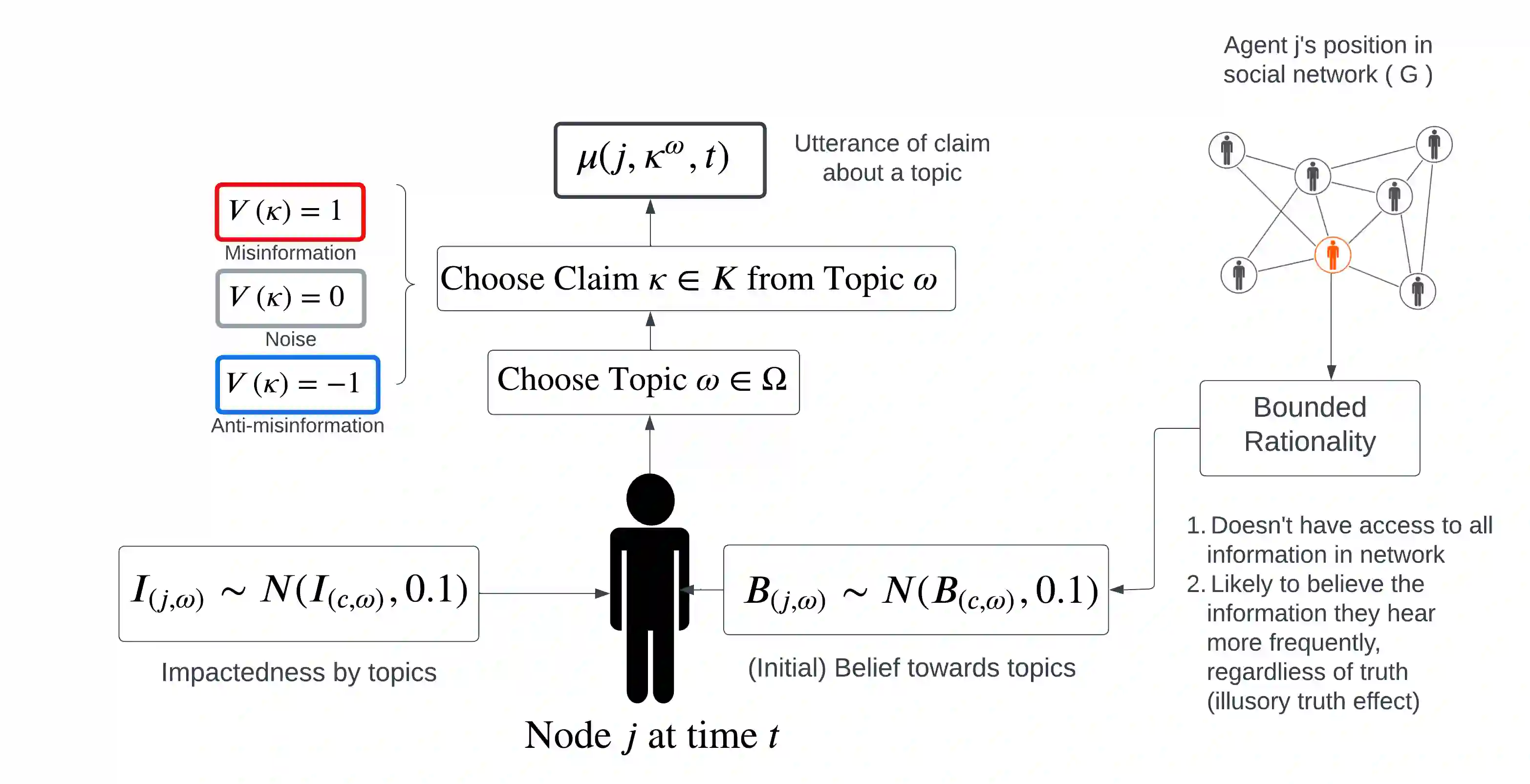
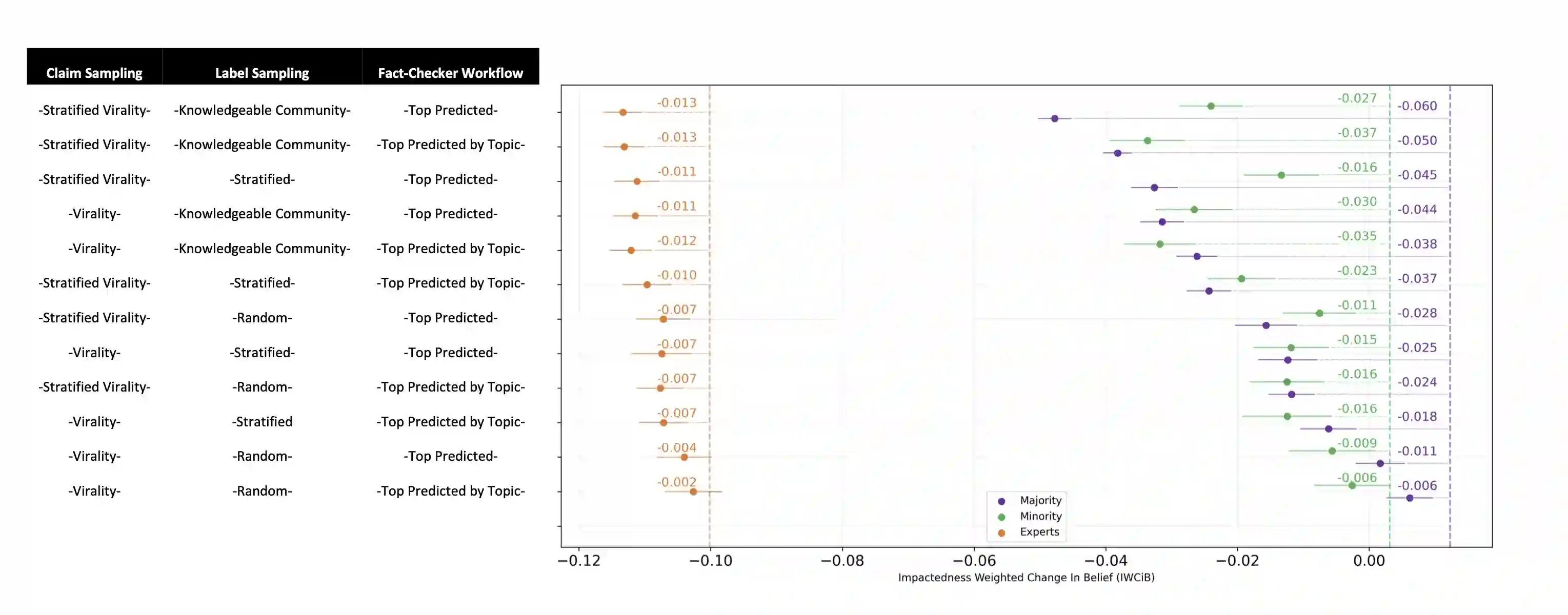
In recent years, algorithms have been incorporated into fact-checking pipelines. They are used not only to flag previously fact-checked misinformation, but also to provide suggestions about which trending claims should be prioritized for fact-checking - a paradigm called `check-worthiness.' While several studies have examined the accuracy of these algorithms, none have investigated how the benefits from these algorithms (via reduction in exposure to misinformation) are distributed amongst various online communities. In this paper, we investigate how diverse representation across multiple stages of the AI development pipeline affects the distribution of benefits from AI-assisted fact-checking for different online communities. We simulate information propagation through the network using our novel Topic-Aware, Community-Impacted Twitter (TACIT) simulator on a large Twitter followers network, tuned to produce realistic cascades of true and false information across multiple topics. Finally, using simulated data as a test bed, we implement numerous algorithmic fact-checking interventions that explicitly account for notions of diversity. We find that both representative and egalitarian methods for sampling and labeling check-worthiness model training data can lead to network-wide benefit concentrated in majority communities, while incorporating diversity into how fact-checkers use algorithmic recommendations can actively reduce inequalities in benefits between majority and minority communities. These findings contribute to an important conversation around the responsible implementation of AI-assisted fact-checking by social media platforms and fact-checking organizations.
翻译:近年来,算法已被纳入事实核查流程。它们不仅用于标记先前已核查的虚假信息,还用于提供哪些热门言论应优先进行事实核查的建议——这一范式被称为“核查价值”。尽管已有研究考察了这些算法的准确性,但尚未有研究探讨这些算法带来的收益(通过减少虚假信息的曝光)如何在不同网络社区之间分配。本文研究了人工智能开发管道的多个阶段中多样化表征如何影响不同网络社区从人工智能辅助事实核查中获得的收益分布。我们利用新型的主题感知社区影响推特(TACIT)模拟器,在大型推特粉丝网络中模拟信息传播,该模拟器经调优可生成跨多个主题的真实与虚假信息的现实级联。最后,以模拟数据为测试平台,我们实施了多种明确考虑多样性概念的算法事实核查干预措施。我们发现,用于采样和标注核查价值模型训练数据的代表性方法和均等方法均可能导致网络范围内的收益集中在多数社区,而将多样性融入事实核查员如何使用算法建议的过程中,则可主动减少多数与少数社区之间的收益不平等。这些发现为社交媒体平台和事实核查机构负责任地实施人工智能辅助事实核查的重要讨论提供了参考。







相关内容





 微信扫码咨询专知VIP会员