

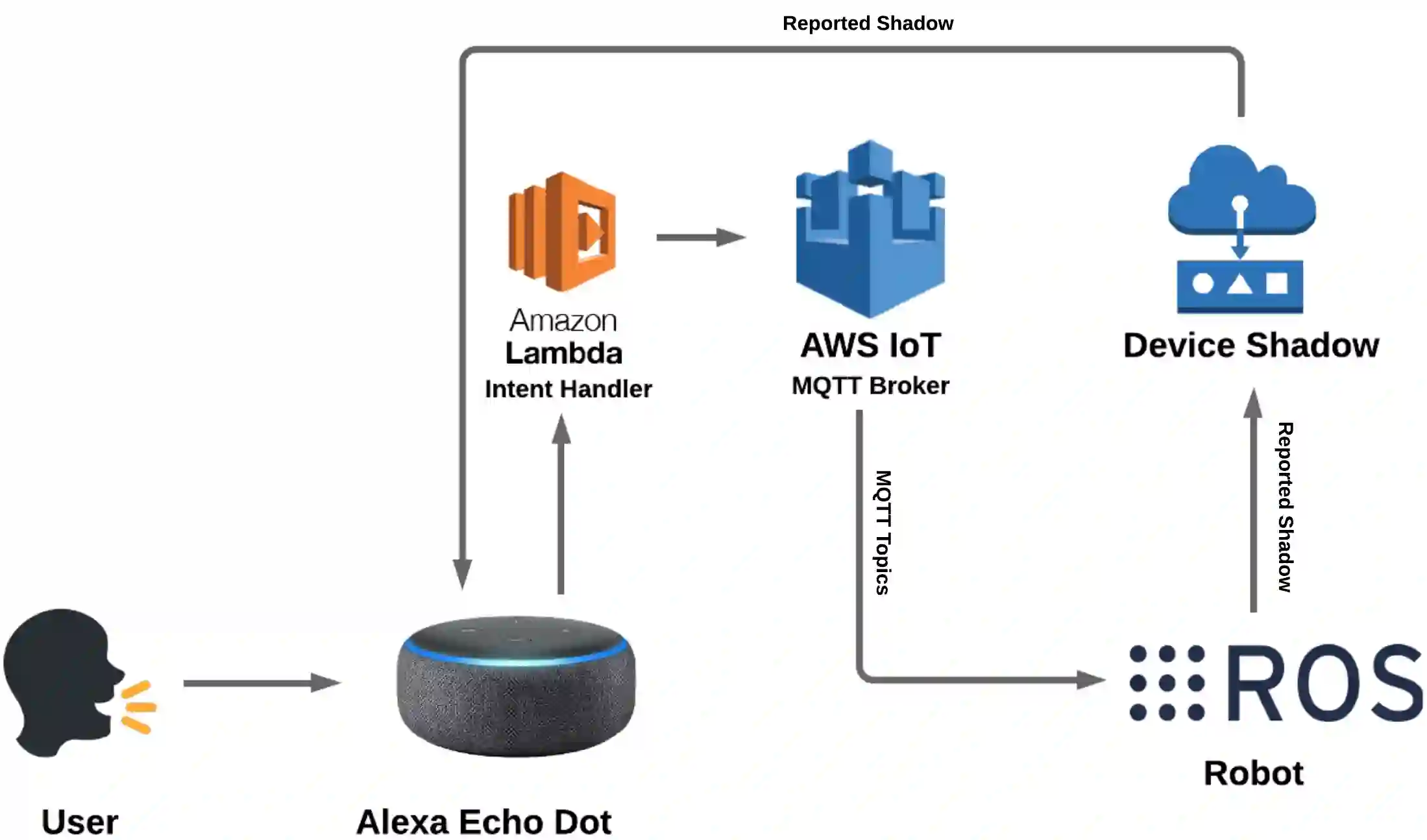
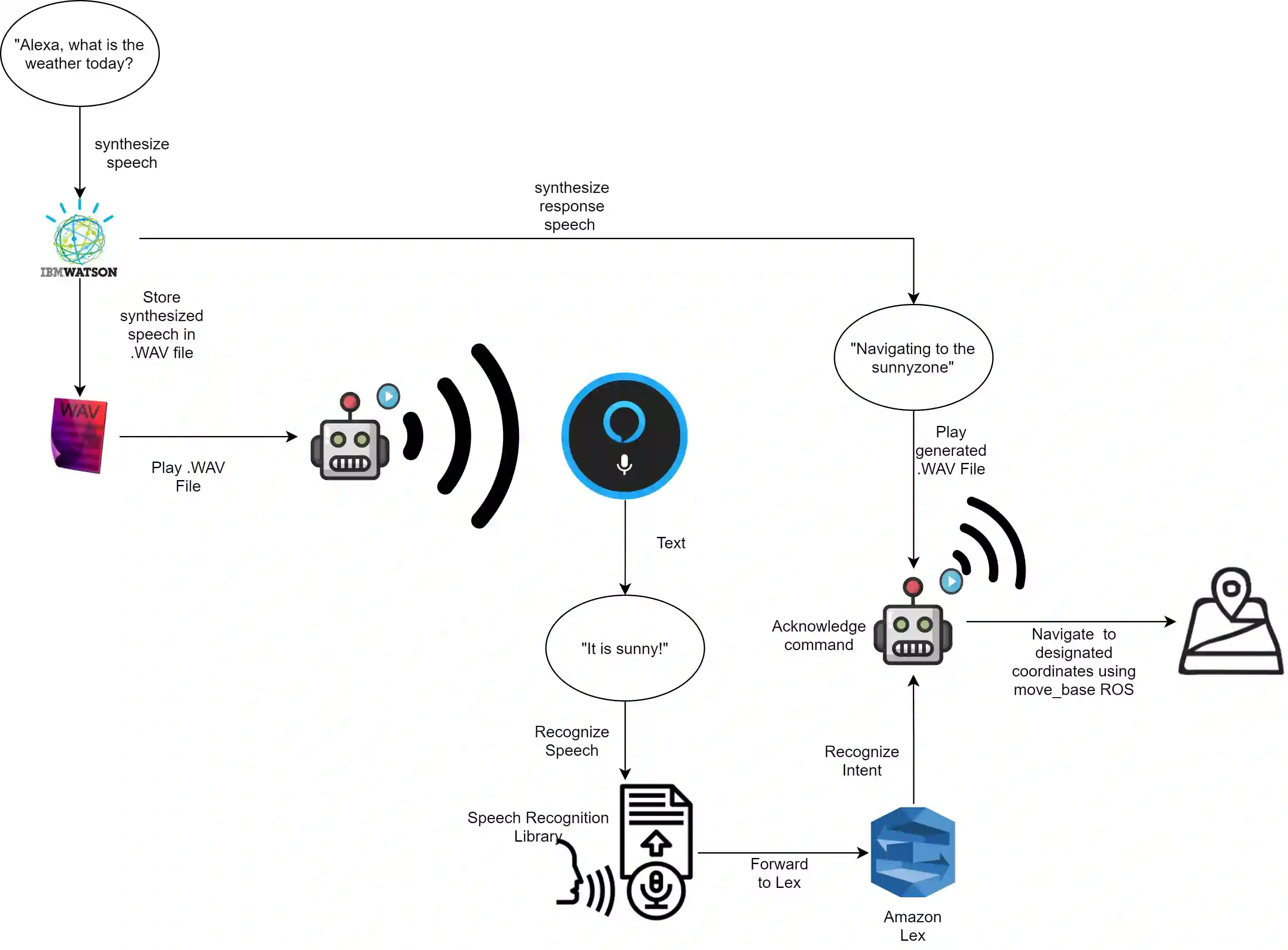
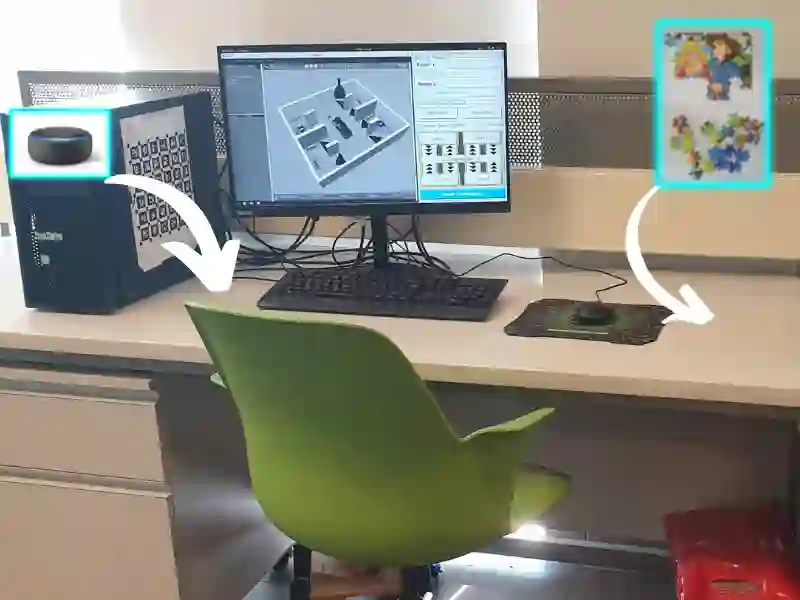
Robots have become ubiquitous tools in various industries and households, highlighting the importance of human-robot interaction (HRI). This has increased the need for easy and accessible communication between humans and robots. Recent research has focused on the intersection of virtual assistant technology, such as Amazon's Alexa, with robots and its effect on HRI. This paper presents the Virtual Assistant, Human, and Robots in the loop (VAHR) system, which utilizes bidirectional communication to control multiple robots through Alexa. VAHR's performance was evaluated through a human-subjects experiment, comparing objective and subjective metrics of traditional keyboard and mouse interfaces to VAHR. The results showed that VAHR required 41% less Robot Attention Demand and ensured 91% more Fan-out time compared to the standard method. Additionally, VAHR led to a 62.5% improvement in multi-tasking, highlighting the potential for efficient human-robot interaction in physically- and mentally-demanding scenarios. However, subjective metrics revealed a need for human operators to build confidence and trust with this new method of operation.
翻译:机器人已广泛应用于各类行业和家庭场景,凸显了人机交互(HRI)的重要性,也增加了对人类与机器人之间便捷、易用通信方式的需求。近期研究聚焦于亚马逊Alexa等虚拟助手技术与机器人的交叉领域及其对HRI的影响。本文提出了一种闭环虚拟助手、人与机器人协同系统(VAHR),该系统利用双向通信通过Alexa控制多台机器人。通过人类受试者实验,从客观指标与主观指标两个维度,将传统键盘与鼠标界面与VAHR系统进行了对比评估。结果表明,相较于传统方法,VAHR系统可将机器人注意力需求降低41%,并提升91%的扇出时间(Fan-out time)。此外,VAHR使多任务处理能力提升62.5%,展现了其在体力和脑力高负荷场景下实现高效人机交互的潜力。不过,主观指标显示,操作者需通过实践逐步建立对该新型操控方法的信心与信任。




相关内容



 微信扫码咨询专知VIP会员