

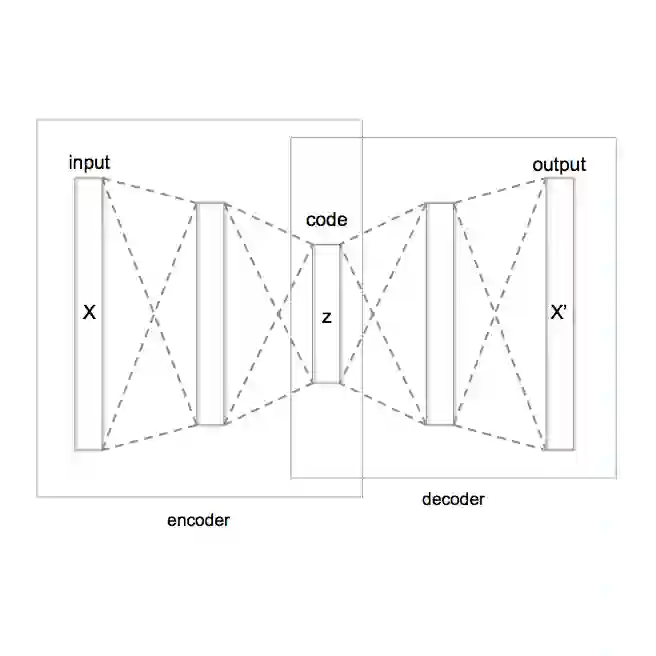
The brain interprets visual information through learned regularities, a computation formalized as probabilistic inference under a prior. The visual cortex establishes priors for this inference, some delivered through established top-down connections that inform low-level cortices about statistics represented at higher levels in the cortical hierarchy. While evidence shows that adaptation leads to priors reflecting the structure of natural images, it remains unclear whether similar priors can be flexibly acquired when learning a specific task. To investigate this, we built a generative model of V1 optimized for a simple discrimination task and analyzed it together with large-scale recordings from mice performing an analogous task. In line with recent approaches, we assumed that neuronal activity in V1 corresponds to latent posteriors in the generative model, enabling investigation of task-related priors in neuronal responses. To obtain a flexible test bed, we extended the VAE formalism so that a task can be acquired efficiently by reusing previously learned representations. Task-specific priors learned by this Task-Amortized VAE were used to investigate biases in mice and model when presenting stimuli that violated trained task statistics. Mismatch between learned task statistics and incoming sensory evidence produced signatures of uncertainty in stimulus category in the TAVAE posterior, reflecting properties of bimodal response profiles in V1 recordings. The task-optimized generative model accounted for key characteristics of V1 population activity, including within-day updates to population responses. Our results confirm that flexible task-specific contextual priors can be learned on demand by the visual system and deployed as early as the entry level of visual cortex.
翻译:大脑通过习得的规律性解释视觉信息,这一计算过程被形式化为在先验下的概率推断。视觉皮层为此推断建立先验,其中部分通过既定的自上而下连接传递,这些连接将高层皮层表征的统计信息传递给低层皮层。虽然有证据表明适应过程会产生反映自然图像结构的先验,但尚不清楚在学习特定任务时能否灵活习得类似先验。为探究此问题,我们构建了一个针对简单辨别任务优化的V1生成模型,并将其与执行类似任务的小鼠大规模记录数据一同分析。根据近期研究方法,我们假设V1中的神经元活动对应于生成模型中的潜在后验分布,从而能够从神经元响应中研究任务相关先验。为获得灵活的测试平台,我们扩展了VAE框架,使得任务能够通过复用先前习得的表征而高效获取。利用这种任务摊销变分自编码器习得的任务特定先验,我们研究了当呈现违反训练任务统计规律的刺激时,小鼠和模型中出现的偏差。习得的任务统计规律与传入感官证据之间的不匹配,在TAVAE后验中产生了刺激类别不确定性的特征信号,这反映了V1记录中双峰响应曲线的特性。该任务优化的生成模型能够解释V1群体活动的关键特征,包括群体响应在单日内的更新。我们的结果证实,视觉系统能够按需习得灵活的任务特定上下文先验,并可在视觉皮层入口层级就进行部署。




相关内容

 微信扫码咨询专知VIP会员