

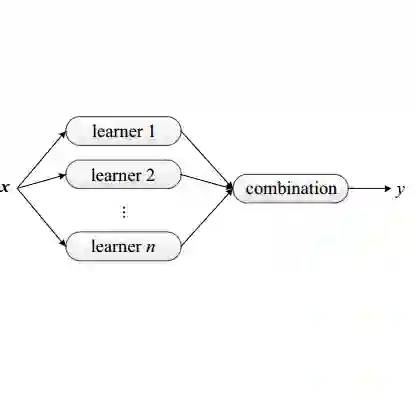
Traffic flow forecasting is a crucial task in intelligent transport systems. Deep learning offers an effective solution, capturing complex patterns in time-series traffic flow data to enable the accurate prediction. However, deep learning models are prone to overfitting the intricate details of flow data, leading to poor generalisation. Recent studies suggest that decomposition-based deep ensemble learning methods may address this issue by breaking down a time series into multiple simpler signals, upon which deep learning models are built and ensembled to generate the final prediction. However, few studies have compared the performance of decomposition-based ensemble methods with non-decomposition-based ones which directly utilise raw time-series data. This work compares several decomposition-based and non-decomposition-based deep ensemble learning methods. Experimental results on three traffic datasets demonstrate the superiority of decomposition-based ensemble methods, while also revealing their sensitivity to aggregation strategies and forecasting horizons.
翻译:交通流预测是智能交通系统中的关键任务。深度学习提供了一种有效的解决方案,能够捕捉时序交通流数据中的复杂模式,从而实现精确预测。然而,深度学习模型容易过度拟合流数据的复杂细节,导致泛化能力较差。近期研究表明,基于分解的深度集成学习方法可能通过将时间序列分解为多个更简单的信号来解决这一问题,在这些信号上构建并集成深度学习模型以生成最终预测。然而,很少有研究比较基于分解的集成方法与直接利用原始时序数据的非分解方法之间的性能。本研究比较了多种基于分解和非基于分解的深度集成学习方法。在三个交通数据集上的实验结果表明,基于分解的集成方法具有优越性,同时也揭示了它们对聚合策略和预测时域的敏感性。




相关内容




 微信扫码咨询专知VIP会员