

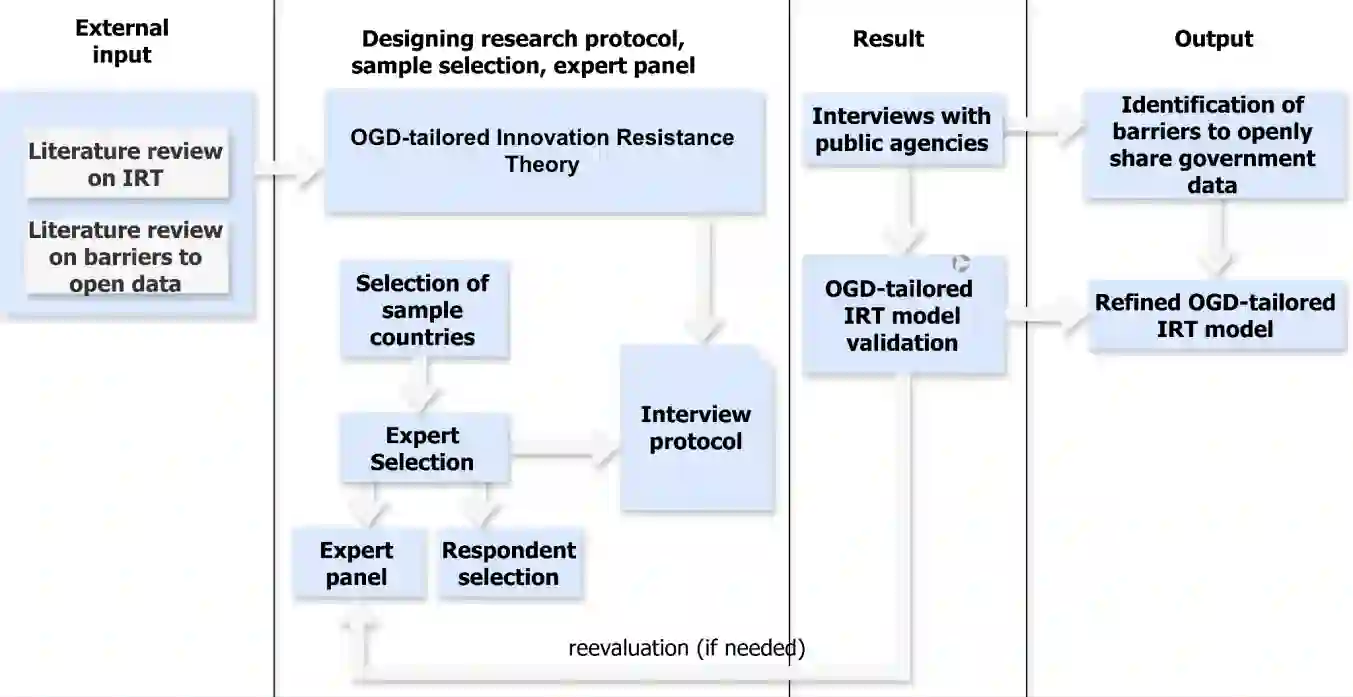
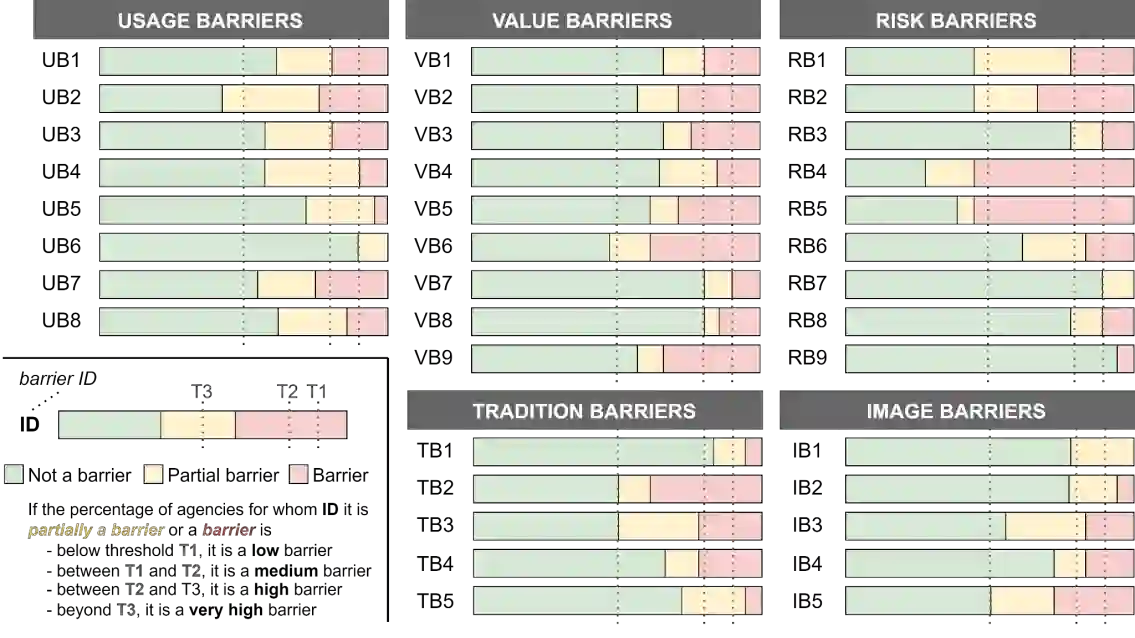
Open Government Data (OGD) plays a pivotal role in fostering data-driven innovation and sustainability across various sectors. Despite its potential, many public organizations are reluctant to share their data openly. While existing research has explored factors impacting the public organizations intention to share OGD, there is a paucity of research applying theoretical models to investigate the resistance by public organizations to making government data publicly available. This study addresses the gap by developing an Innovation Resistance Theory (IRT) model tailored to OGD that allows identifying predictors of resistance among public agencies. We develop an initial model based on literature and refine it through interviews with 21 public agencies across six countries. The final model describes 39 barriers related to usage, value, risks, tradition, and image. The findings contribute to the literature by adapting IRT to the context of OGD, an area where its application has been notably limited. As such, this study addresses the growing demand for novel theoretical frameworks to examine OGD adoption barriers. Practical insights are provided to support policymakers in creating data ecosystems that encourage data openness and address challenges in OGD adoption.
翻译:开放政府数据(OGD)在推动各领域数据驱动创新与可持续发展方面发挥着关键作用。尽管潜力巨大,许多公共组织仍不愿公开共享其数据。现有研究虽已探讨影响公共组织共享OGD意愿的因素,但运用理论模型探究公共组织对政府数据公开化抵制的学术研究仍显不足。本研究通过构建适用于OGD的创新抵制理论(IRT)模型来填补这一空白,该模型能够识别公共机构数据共享阻力的预测因子。我们基于文献梳理建立初始模型,并通过跨国访谈六个国家的21家公共机构进行模型优化。最终模型系统阐释了涉及使用性、价值性、风险性、传统性与形象性五个维度的39项障碍因素。本研究通过将IRT理论创新应用于OGD这一既往研究明显不足的领域,为相关学术文献作出重要贡献。由此,该研究回应了学术界对新型理论框架解析OGD采纳障碍的迫切需求。研究成果为政策制定者构建鼓励数据开放、应对OGD采纳挑战的数据生态系统提供了实践启示。




相关内容





 微信扫码咨询专知VIP会员