

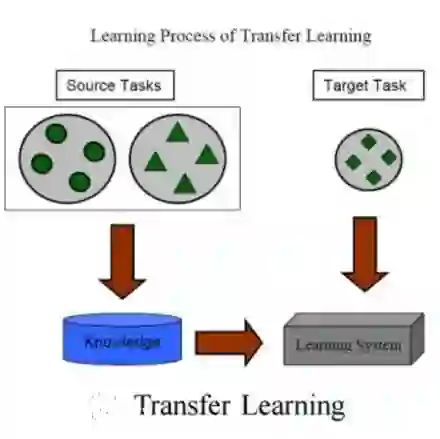
Early diagnosis of Alzheimer's disease (AD) is essential in preventing the disease's progression. Therefore, detecting AD from neuroimaging data such as structural magnetic resonance imaging (sMRI) has been a topic of intense investigation in recent years. Deep learning has gained considerable attention in Alzheimer's detection. However, training a convolutional neural network from scratch is challenging since it demands more computational time and a significant amount of annotated data. By transferring knowledge learned from other image recognition tasks to medical image classification, transfer learning can provide a promising and effective solution. Irregularities in the dataset distribution present another difficulty. Class decomposition can tackle this issue by simplifying learning a dataset's class boundaries. Motivated by these approaches, this paper proposes a transfer learning method using class decomposition to detect Alzheimer's disease from sMRI images. We use two ImageNet-trained architectures: VGG19 and ResNet50, and an entropy-based technique to determine the most informative images. The proposed model achieved state-of-the-art performance in the Alzheimer's disease (AD) vs mild cognitive impairment (MCI) vs cognitively normal (CN) classification task with a 3\% increase in accuracy from what is reported in the literature.
翻译:阿尔茨海默病(AD)的早期诊断对于预防疾病进展至关重要。因此,利用结构磁共振成像(sMRI)等神经影像数据检测AD已成为近年来的研究热点。深度学习在阿尔茨海默病检测中备受关注。然而,从头训练卷积神经网络具有挑战性,因为它需要更多的计算时间和大量标注数据。通过将其他图像识别任务中学到的知识迁移至医学图像分类,迁移学习提供了一种有前景且有效的解决方案。数据集分布的不规则性是另一难点,而类别分解可通过简化数据类别边界的学习来解决这一问题。受这些方法的启发,本文提出了一种利用类别分解的迁移学习方法,用于从sMRI图像中检测阿尔茨海默病。我们使用了两种基于ImageNet训练的架构:VGG19和ResNet50,并采用基于熵的技术筛选最具信息量的图像。所提模型在阿尔茨海默病(AD)与轻度认知障碍(MCI)及认知正常(CN)的分类任务中达到了最先进性能,准确率较文献报道提高了3%。




相关内容




 微信扫码咨询专知VIP会员