

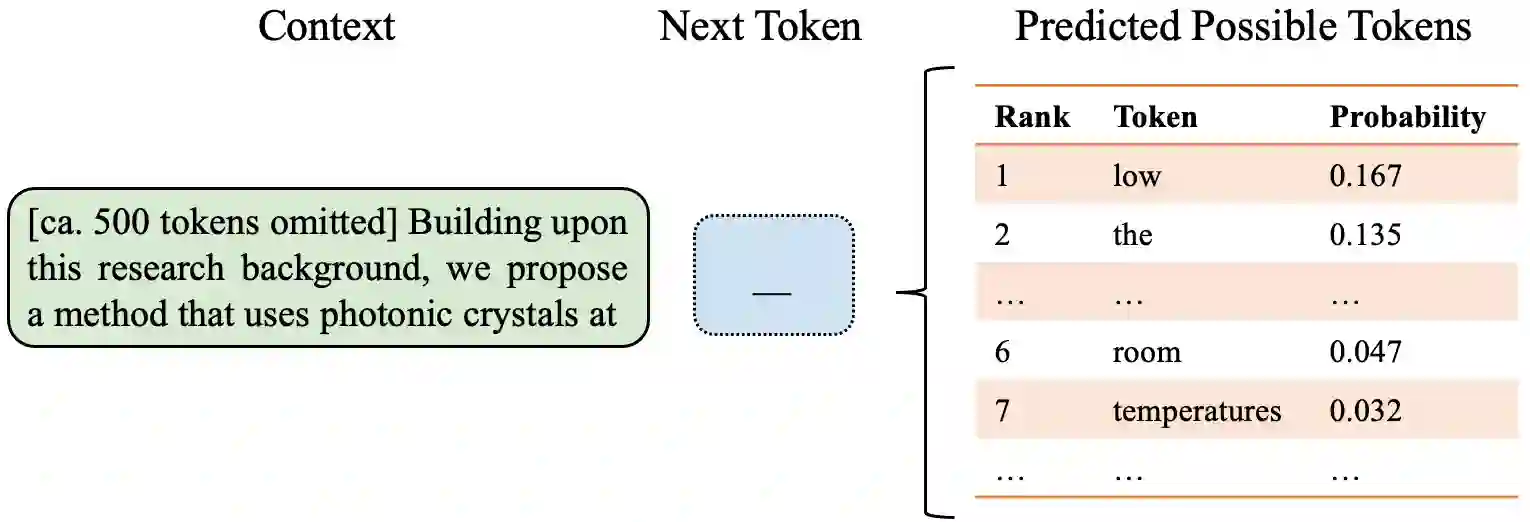
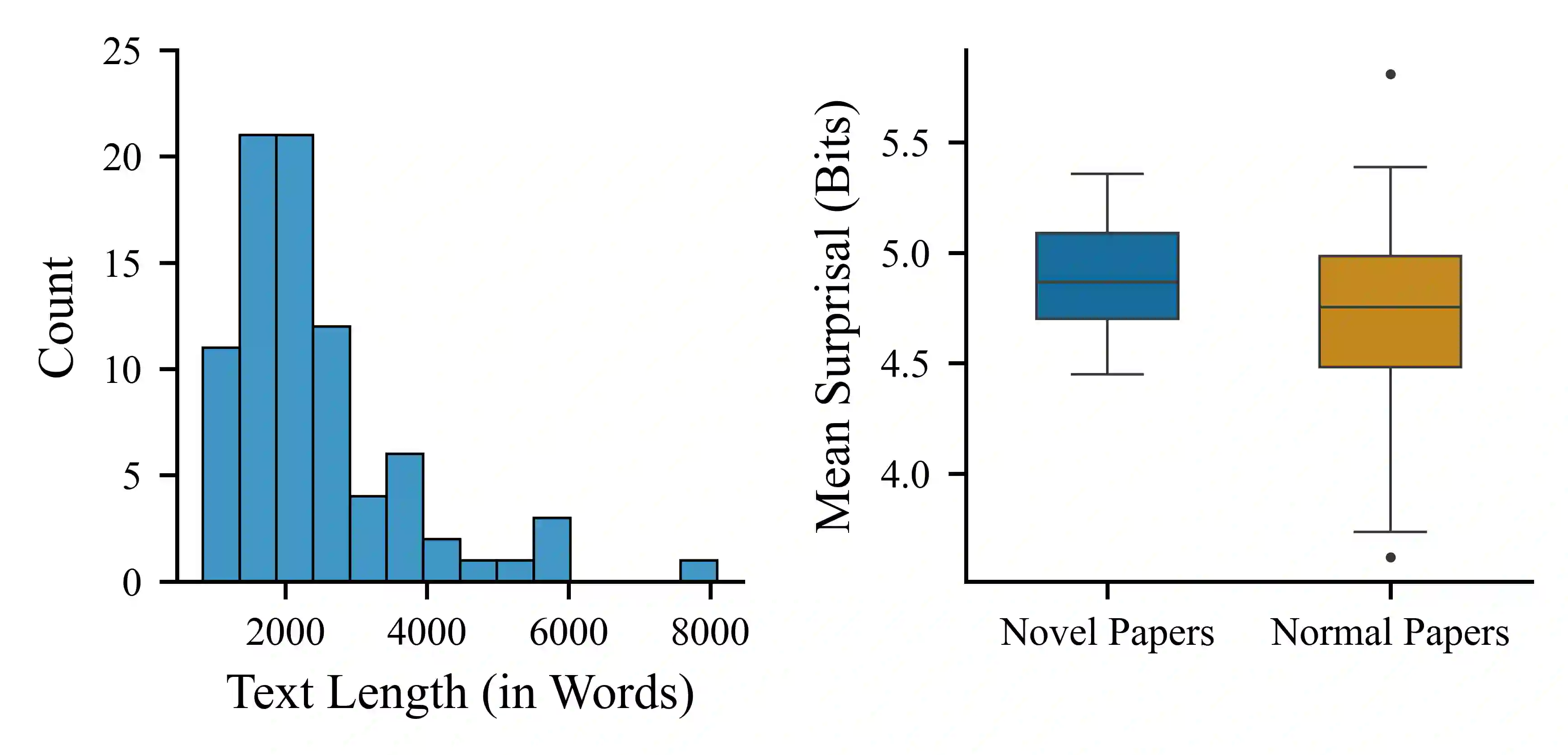
Novelty, akin to gene mutation in evolution, opens possibilities for scholarly advancement. Although peer review remains the gold standard for evaluating novelty in scholarly communication and resource allocation, the vast volume of submissions necessitates an automated measure of scholarly novelty. Adopting a perspective that views novelty as the atypical combination of existing knowledge, we introduce an information-theoretic measure of novelty in scholarly publications. This measure quantifies the degree of 'surprise' perceived by a language model that represents the word distribution of scholarly discourse. The proposed measure is accompanied by face and construct validity evidence; the former demonstrates correspondence to scientific common sense, and the latter is endorsed through alignment with novelty evaluations from a select panel of domain experts. Additionally, characterized by its interpretability, fine granularity, and accessibility, this measure addresses gaps prevalent in existing methods. We believe this measure holds great potential to benefit editors, stakeholders, and policymakers, and it provides a reliable lens for examining the relationship between novelty and academic dynamics such as creativity, interdisciplinarity, and scientific advances.
翻译:新颖性,类似于进化中的基因突变,为学术进步开辟了可能性。尽管同行评审仍然是评估学术交流和资源配置中新颖性的黄金标准,但海量的投稿量使得自动化衡量学术新颖性成为必要。我们将新颖性视为现有知识的非典型组合,引入了一种基于信息论的学术出版物新颖性度量方法。该方法量化了代表学术语篇词汇分布的语言模型所感知的“惊奇”程度。该度量方法附有表面效度和结构效度证据:前者证明了其与科学常识的一致性,后者则通过与遴选专家小组的新颖性评估相吻合而得到证实。此外,该度量方法具有可解释性、细粒度及易获取性,弥补了现有方法中普遍存在的不足。我们相信,该度量方法在惠及编辑、利益相关者和政策制定者方面具有巨大潜力,并为考察新颖性与创造力、跨学科性及科学进步等学术动态之间的关系提供了可靠的视角。




相关内容




 微信扫码咨询专知VIP会员