

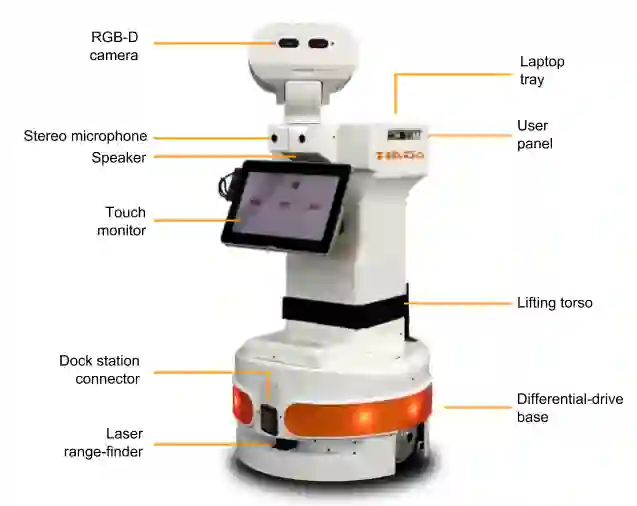
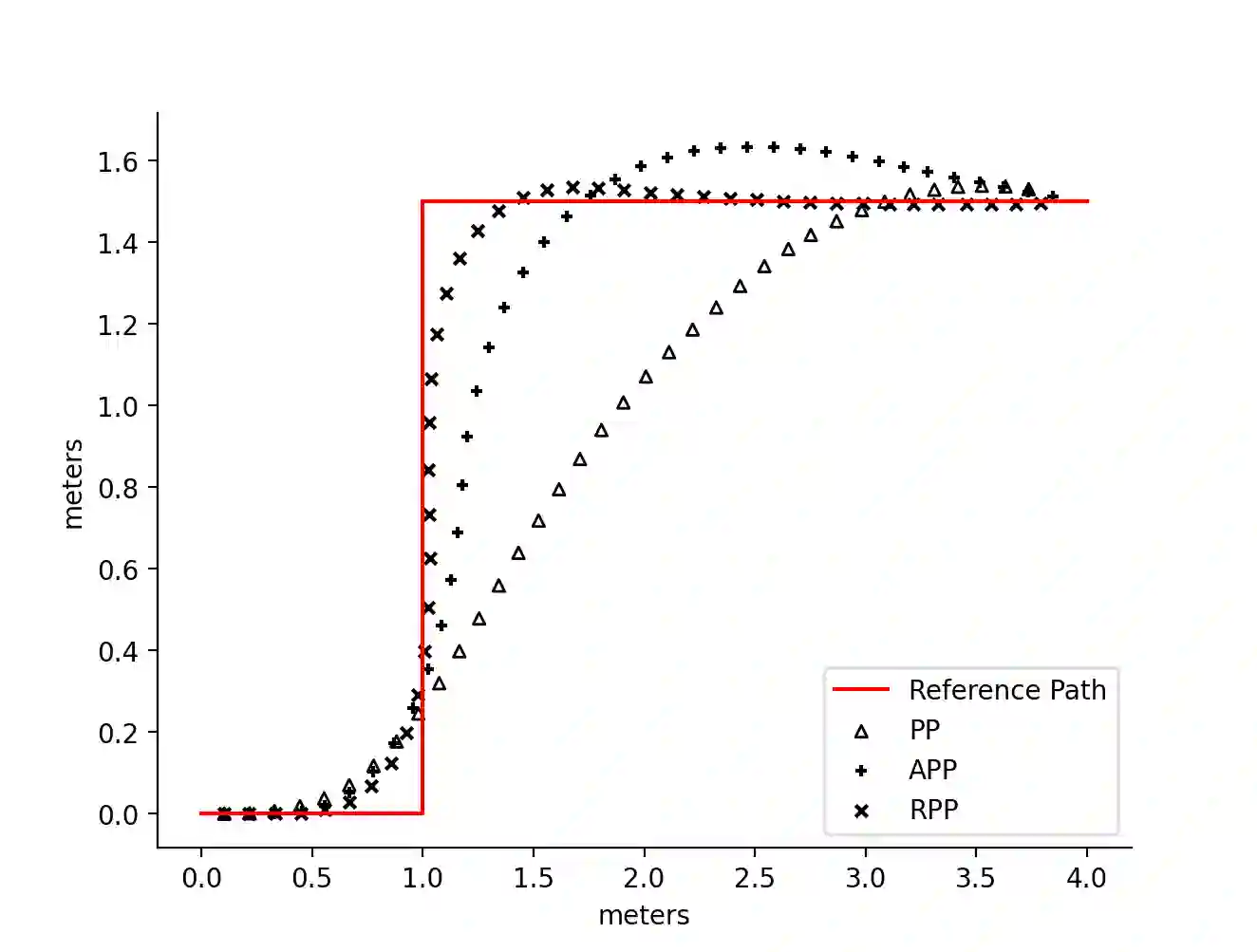
The accelerated deployment of service robots have spawned a number of algorithm variations to better handle real-world conditions. Many local trajectory planning techniques have been deployed on practical robot systems successfully. While most formulations of Dynamic Window Approach and Model Predictive Control can progress along paths and optimize for additional criteria, the use of pure path tracking algorithms is still commonplace. Decades later, Pure Pursuit and its variants continues to be one of the most commonly utilized classes of local trajectory planners. However, few Pure Pursuit variants have been proposed with schema for variable linear velocities - they either assume a constant velocity or fails to address the point at all. This paper presents a variant of Pure Pursuit designed with additional heuristics to regulate linear velocities, built atop the existing Adaptive variant. The Regulated Pure Pursuit algorithm makes incremental improvements on state of the art by adjusting linear velocities with particular focus on safety in constrained and partially observable spaces commonly negotiated by deployed robots. We present experiments with the Regulated Pure Pursuit algorithm on industrial-grade service robots. We also provide a high-quality reference implementation that is freely included ROS 2 Nav2 framework at https://github.com/ros-planning/navigation2 for fast evaluation.
翻译:服务机器人的快速部署催生了诸多算法变体,以更好地适应真实环境条件。许多局部轨迹规划技术已成功应用于实际机器人系统。尽管动态窗口法与模型预测控制的大多数实现方法能够沿路径推进并优化附加准则,纯路径跟踪算法的使用仍然普遍存在。数十年后,纯追踪法及其变体仍是应用最广泛的局部轨迹规划器之一。然而,现有纯追踪法变体极少提出可变线速度方案——它们要么假设恒定速度,要么根本未涉及该问题。本文提出一种基于现有自适应变体、通过附加启发式规则来调节线速度的纯追踪法变体。有调节的纯追踪算法通过调整线速度实现了渐进式改进,特别关注部署机器人在常见受限和部分可观测空间中的安全性。我们展示了工业级服务机器人上采用有调节纯追踪算法的实验结果,并提供了高质量参考实现,该实现已免费集成于ROS 2 Nav2框架(https://github.com/ros-planning/navigation2),便于快速评估。






相关内容




 微信扫码咨询专知VIP会员