

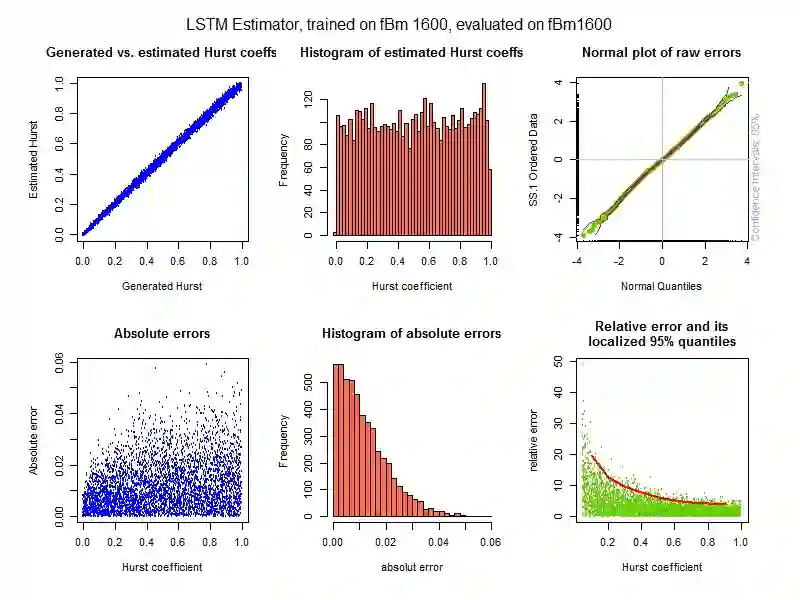
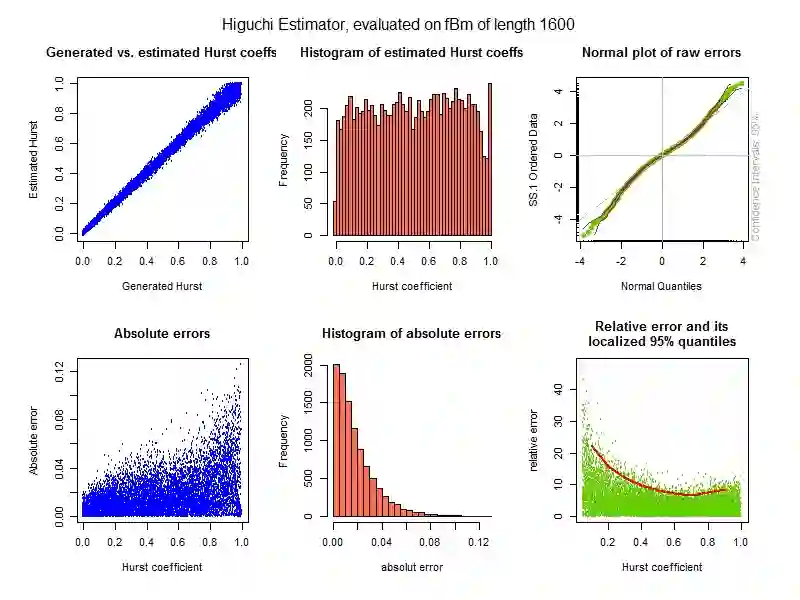
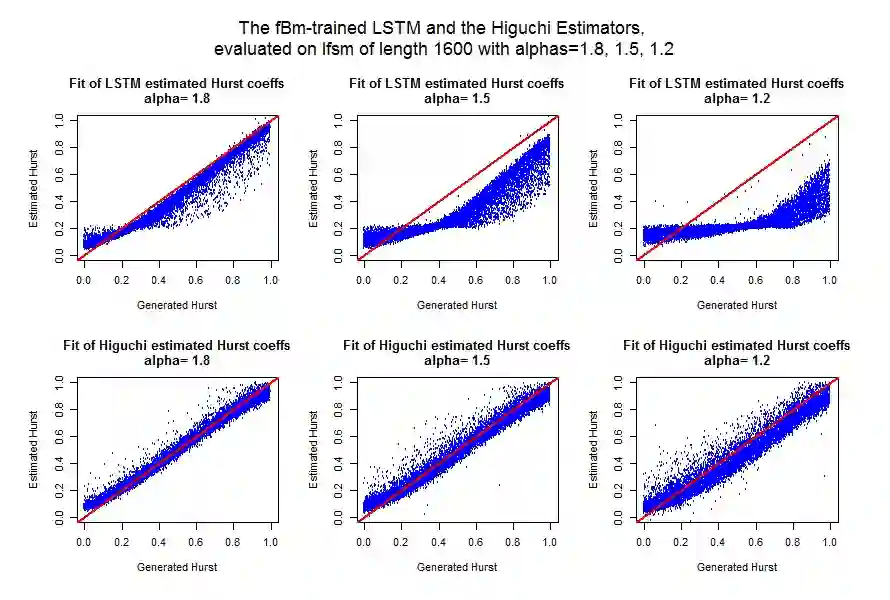
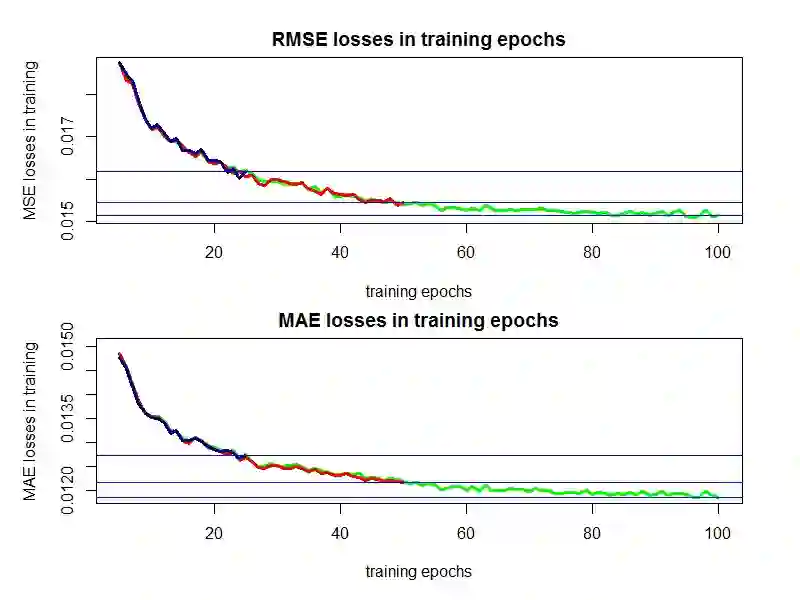
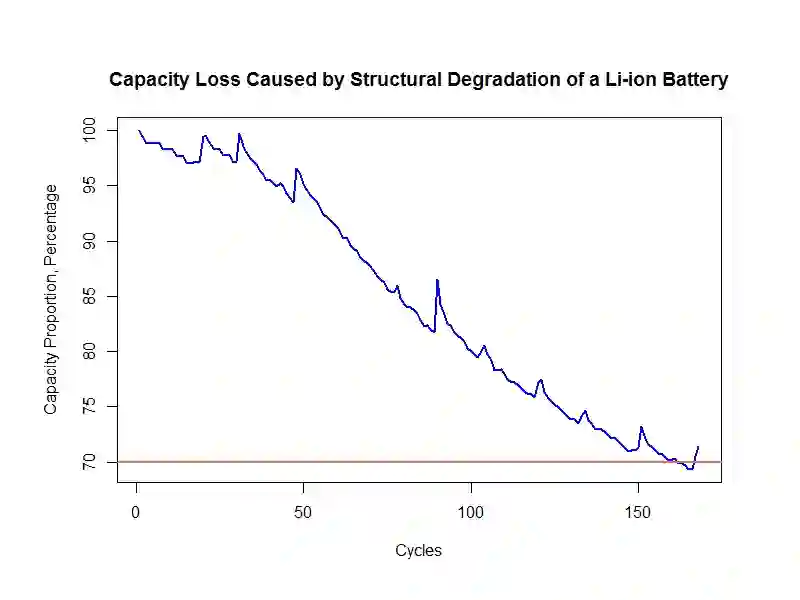
This research explores the reliability of deep learning, specifically Long Short-Term Memory (LSTM) networks, for estimating the Hurst parameter in fractional stochastic processes. The study focuses on three types of processes: fractional Brownian motion (fBm), fractional Ornstein-Uhlenbeck (fOU) process, and linear fractional stable motions (lfsm). The work involves a fast generation of extensive datasets for fBm and fOU to train the LSTM network on a large volume of data in a feasible time. The study analyses the accuracy of the LSTM network's Hurst parameter estimation regarding various performance measures like RMSE, MAE, MRE, and quantiles of the absolute and relative errors. It finds that LSTM outperforms the traditional statistical methods in the case of fBm and fOU processes; however, it has limited accuracy on lfsm processes. The research also delves into the implications of training length and valuation sequence length on the LSTM's performance. The methodology is applied by estimating the Hurst parameter in Li-ion battery degradation data and obtaining confidence bounds for the estimation. The study concludes that while deep learning methods show promise in parameter estimation of fractional processes, their effectiveness is contingent on the process type and the quality of training data.
翻译:本研究探讨了深度学习(特别是长短期记忆网络)在估计分数随机过程赫斯特参数时的可靠性。研究聚焦于三类过程:分数布朗运动、分数奥恩斯坦-乌伦贝克过程以及线性分数稳定运动。研究工作包括快速生成分数布朗运动和分数奥恩斯坦-乌伦贝克过程的大规模数据集,以便在可行时间内用大量数据训练长短期记忆网络。本研究通过均方根误差、平均绝对误差、平均相对误差以及绝对误差和相对误差的分位数等多种性能指标,分析了长短期记忆网络赫斯特参数估计的准确性。研究发现,对于分数布朗运动和分数奥恩斯坦-乌伦贝克过程,长短期记忆网络的表现优于传统统计方法;然而,对于线性分数稳定运动过程,其准确性有限。研究还探讨了训练长度和估值序列长度对长短期记忆网络性能的影响。该方法被应用于估计锂离子电池退化数据中的赫斯特参数,并获得了估计的置信区间。本研究得出结论:虽然深度学习方法在分数过程参数估计中展现出潜力,但其有效性取决于过程类型和训练数据的质量。




相关内容





 微信扫码咨询专知VIP会员