

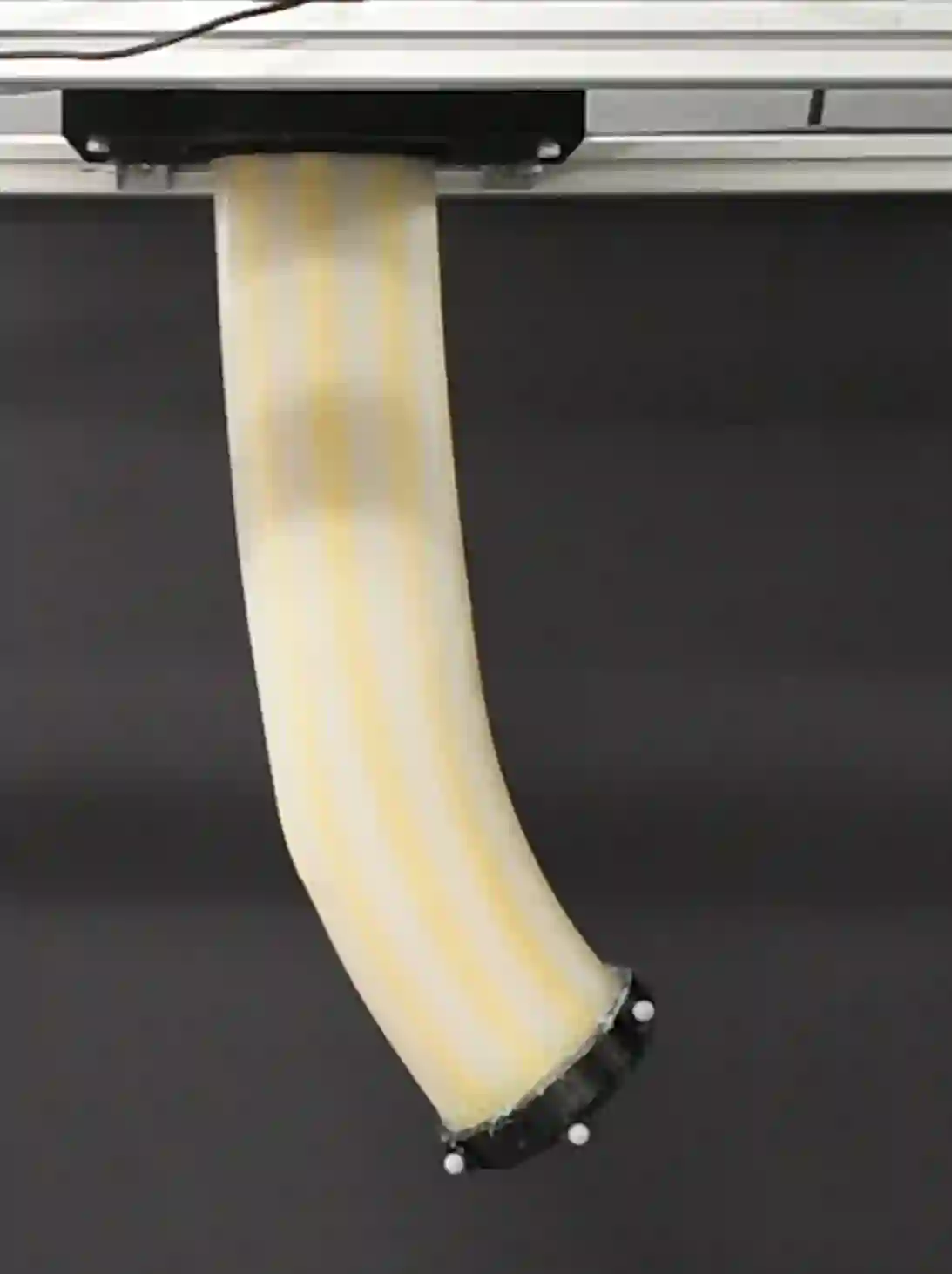
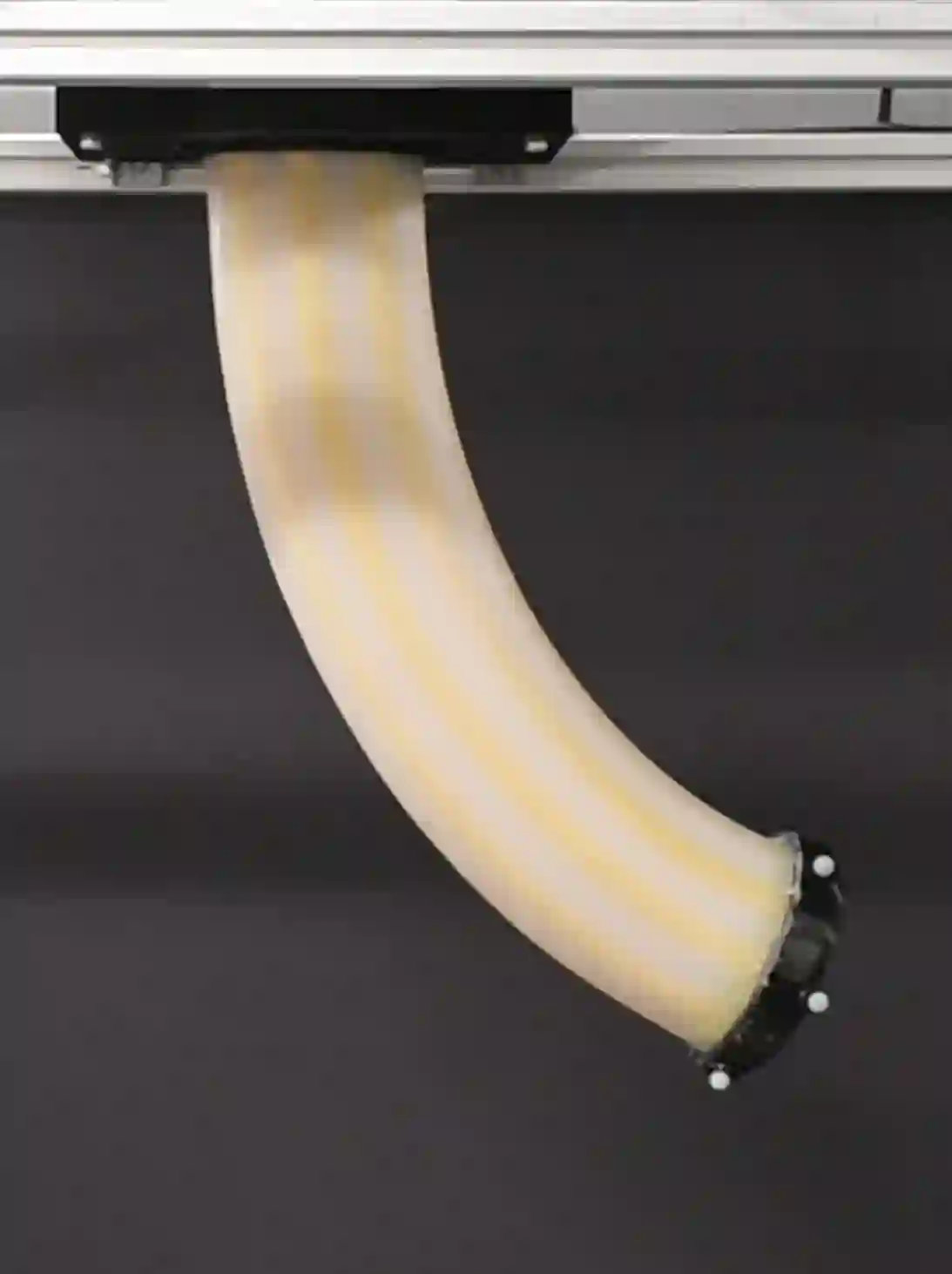
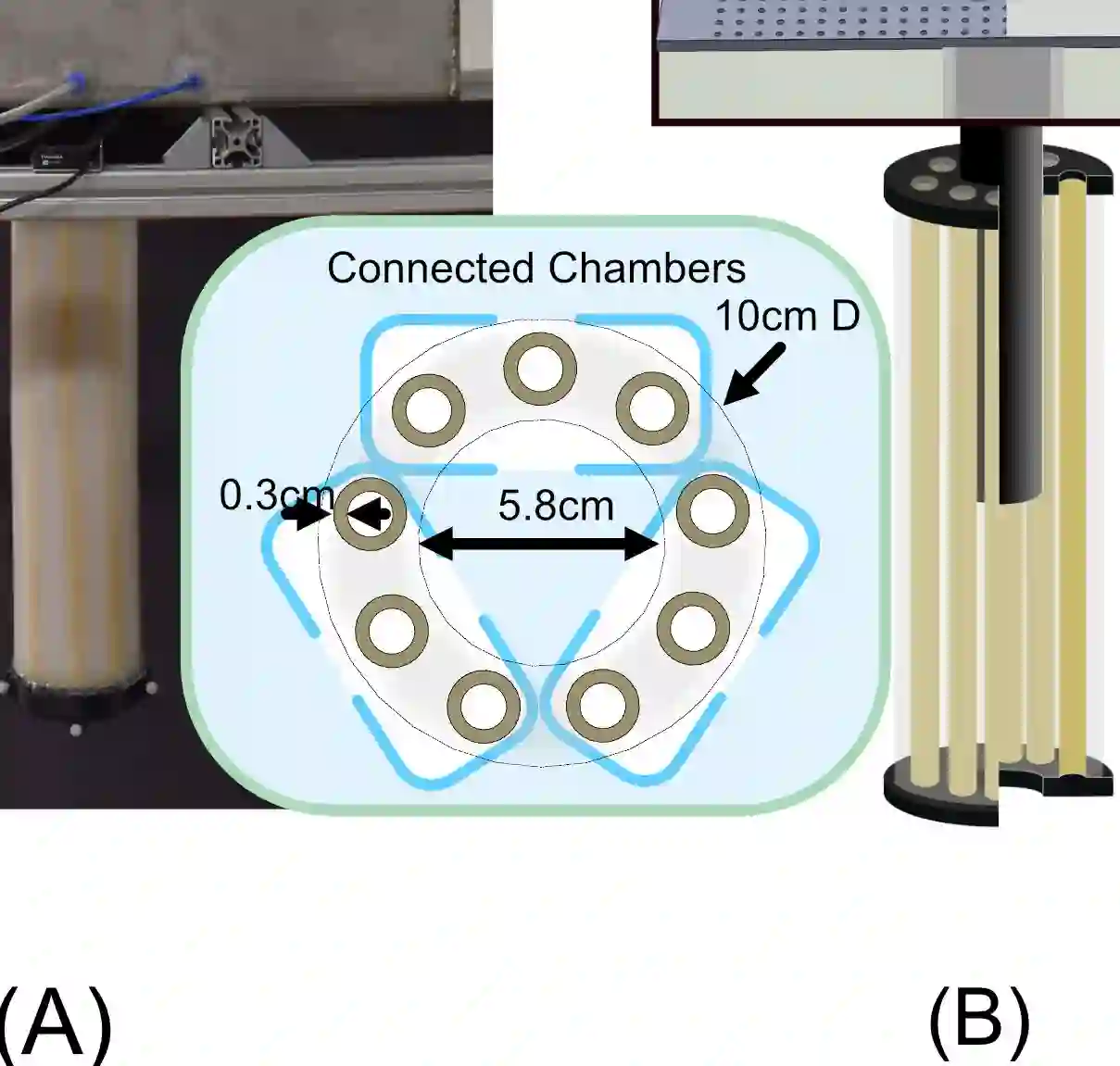
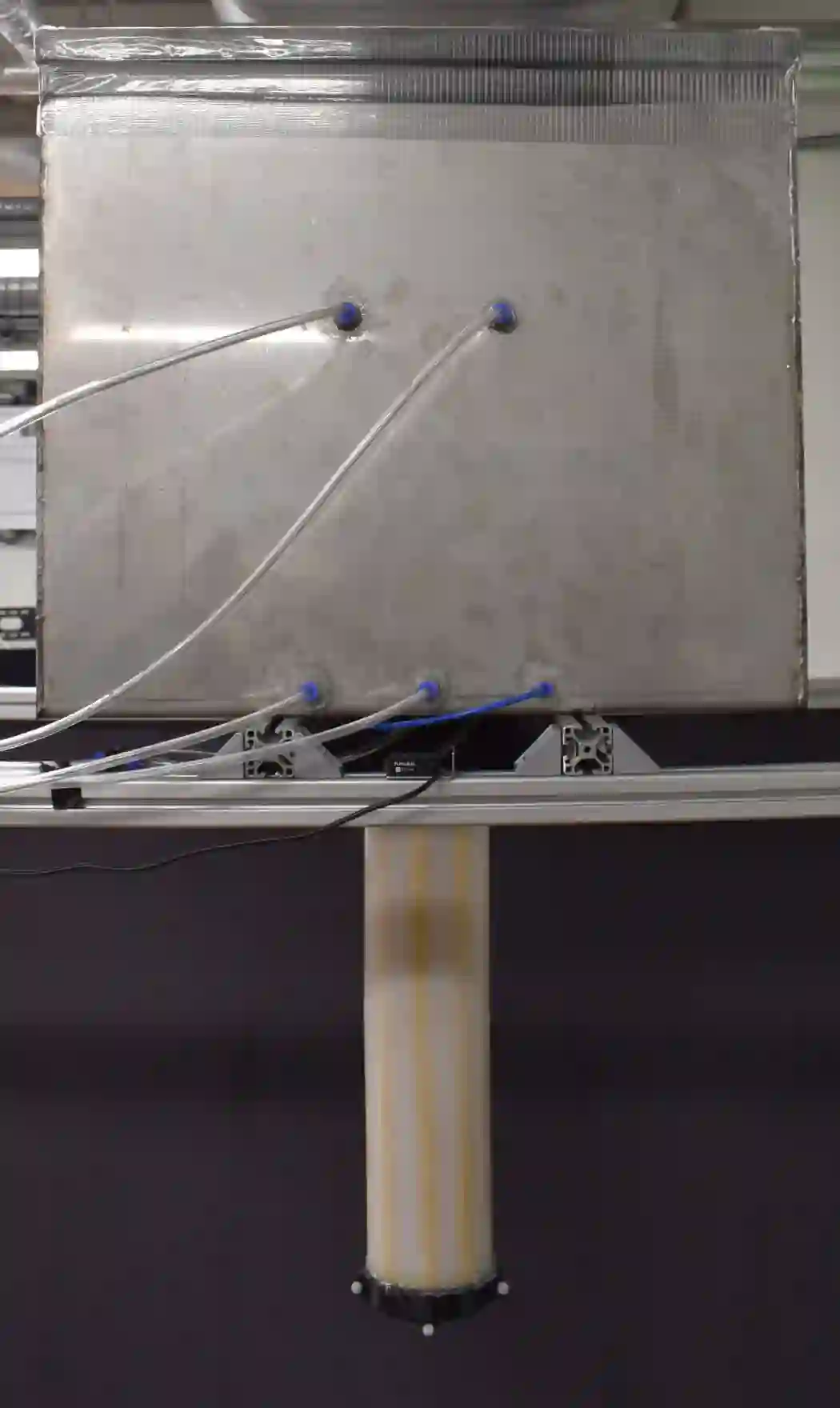
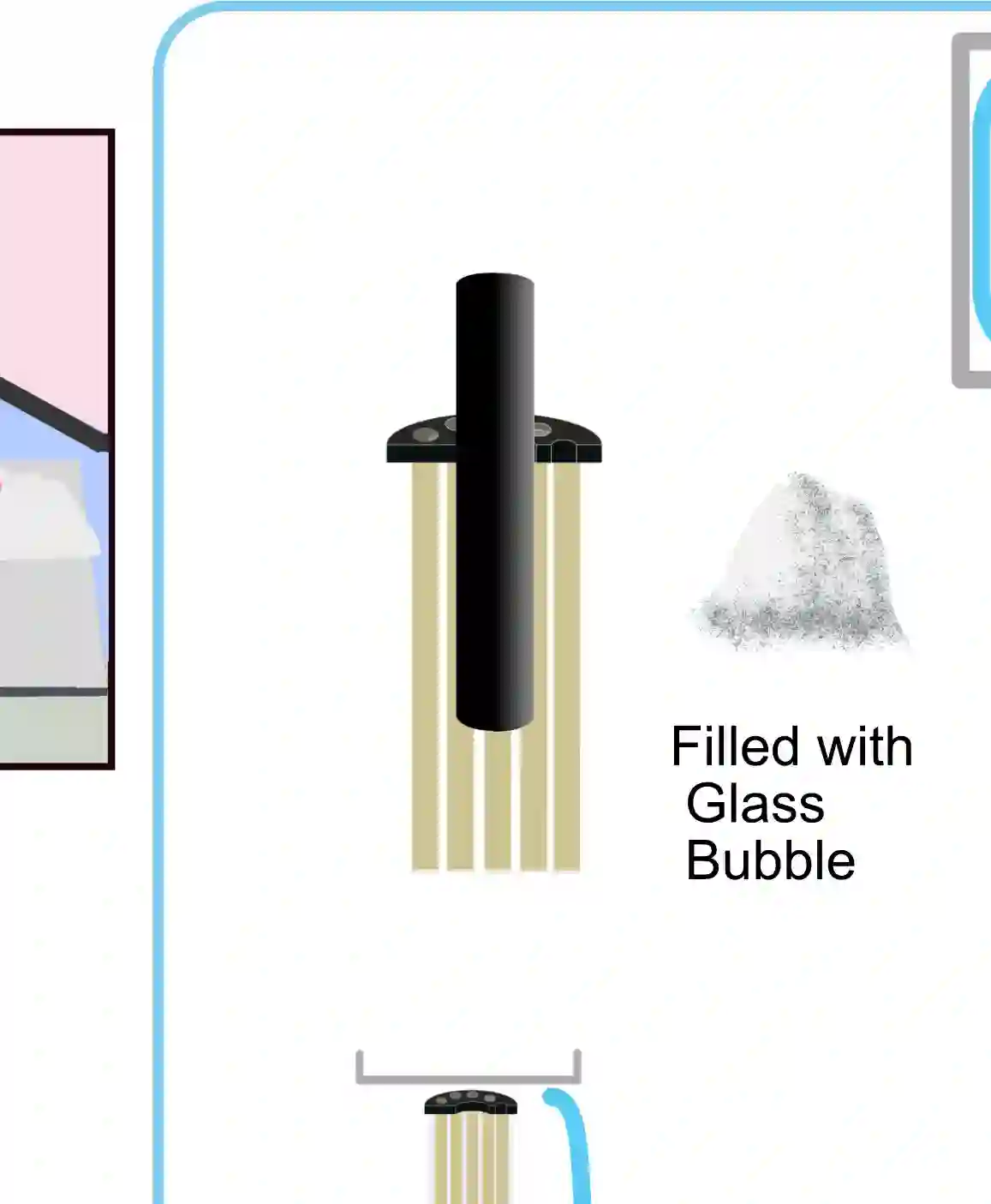
This paper introduces a Cosserat rod based mathematical model for modeling a self-controllable variable curvature soft continuum robot. This soft continuum robot has a hollow inner channel and was developed with the ability to perform variable curvature utilizing a growing spine. The growing spine is able to grow and retract while modifies its stiffness through milli-size particle (glass bubble) granular jamming. This soft continuum robot can then perform continuous curvature variation, unlike previous approaches whose curvature variation is discrete and depends on the number of locking mechanisms or manual configurations. The robot poses an emergent modeling problem due to the variable stiffness growing spine which is addressed in this paper. We investigate the property of growing spine stiffness and incorporate it into the Cosserat rod model by implementing a combined stiffness approach. We conduct experiments with the soft continuum robot in various configurations and compared the results with our developed mathematical model. The results show that the mathematical model based on the adapted Cosserat rod matches the experimental results with only a 3.3\% error with respect to the length of the soft continuum robot.
翻译:本文提出了一种基于Cosserat杆的数学模型,用于建模一种自可控变曲率软体连续体机器人。该软体连续体机器人具有中空内通道,并利用生长脊柱实现变曲率能力。生长脊柱能够伸长和回缩,同时通过微米级颗粒(玻璃微珠)颗粒阻塞效应改变其刚度。与以往曲率变化依赖于锁定机构数量或手动配置的离散方法不同,该软体连续体机器人能够实现连续曲率变化。由于变刚度生长脊柱的存在,该机器人带来了新的建模问题,本文对此进行了研究。我们探究了生长脊柱的刚度特性,并通过实施组合刚度方法将其纳入Cosserat杆模型。我们针对软体连续体机器人进行了多种构型下的实验,并将结果与所建立的数学模型进行比较。结果表明,基于改进Cosserat杆的数学模型与实验结果高度吻合,误差仅为软体连续体机器人长度的3.3%。




相关内容




 微信扫码咨询专知VIP会员