

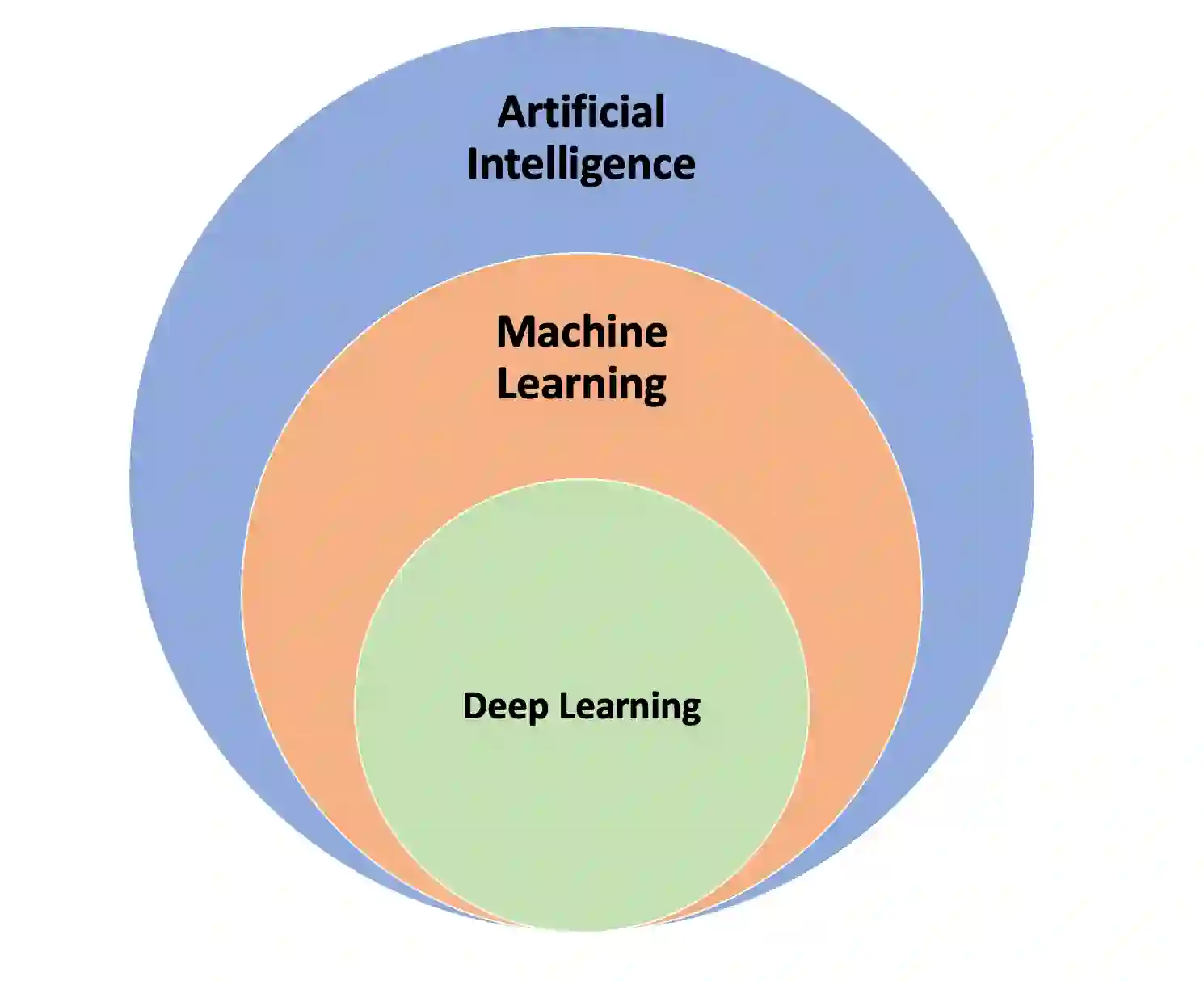
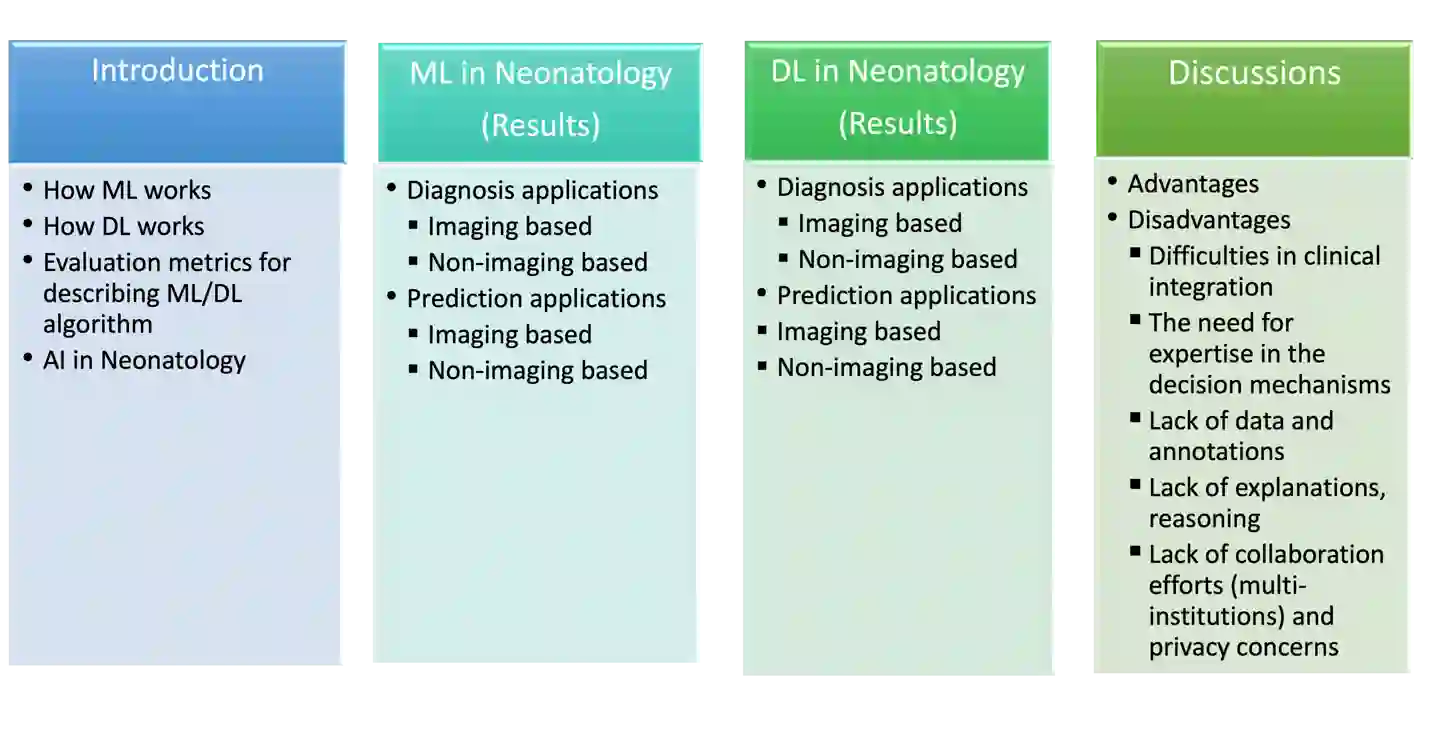
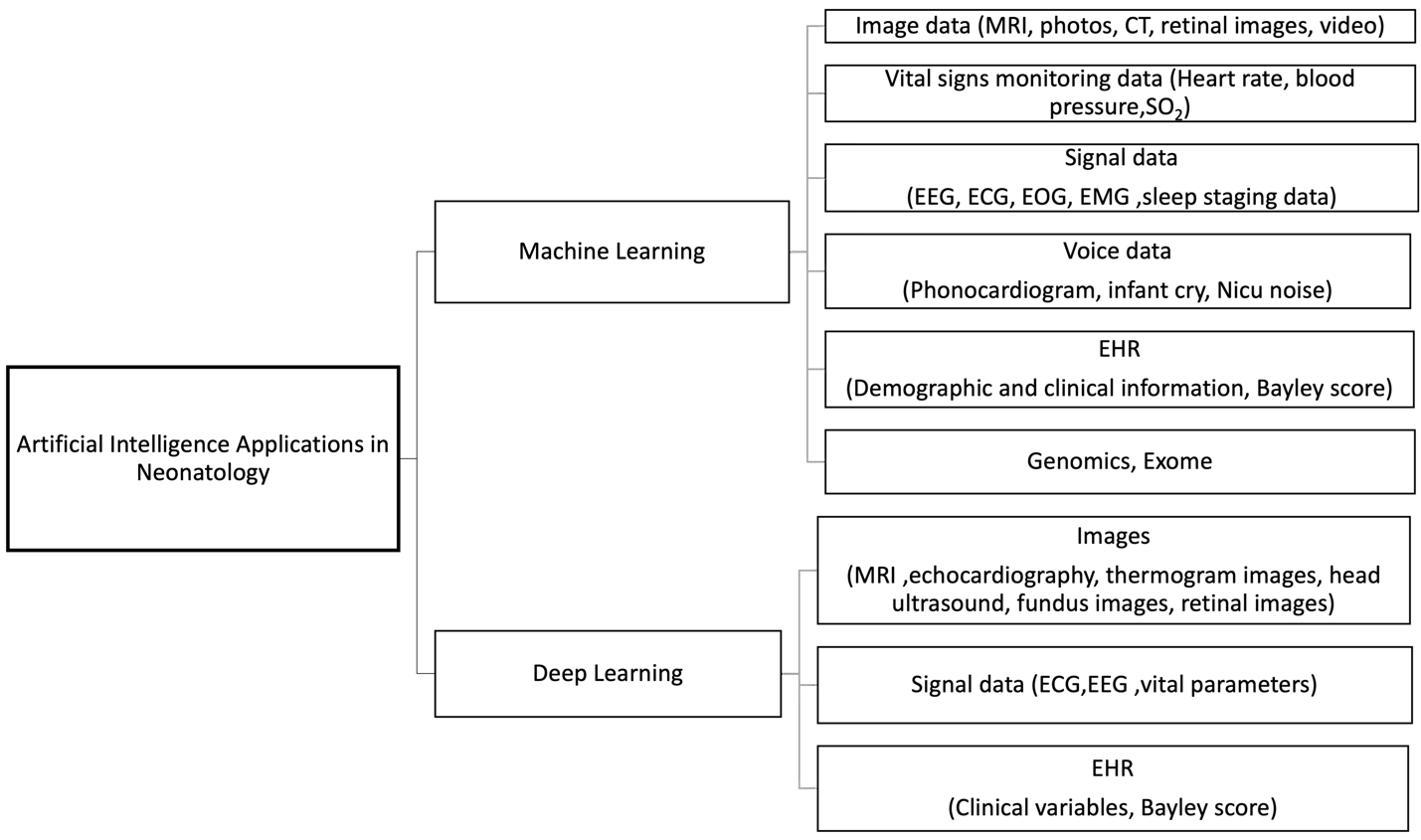
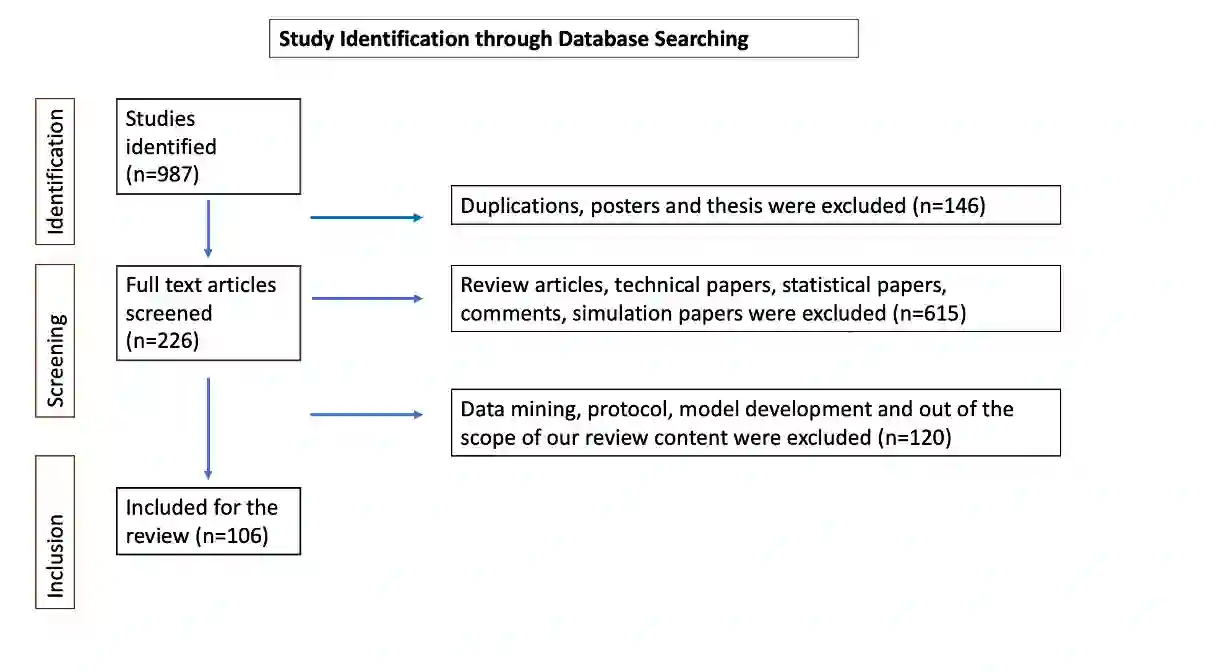
Machine learning and deep learning are two subsets of artificial intelligence that involve teaching computers to learn and make decisions from any sort of data. Most recent developments in artificial intelligence are coming from deep learning, which has proven revolutionary in almost all fields, from computer vision to health sciences. The effects of deep learning in medicine have changed the conventional ways of clinical application significantly. Although some sub-fields of medicine, such as pediatrics, have been relatively slow in receiving the critical benefits of deep learning, related research in pediatrics has started to accumulate to a significant level, too. Hence, in this paper, we review recently developed machine learning and deep learning-based solutions for neonatology applications. We systematically evaluate the roles of both classical machine learning and deep learning in neonatology applications, define the methodologies, including algorithmic developments, and describe the remaining challenges in the assessment of neonatal diseases by using PRISMA 2020 guidelines. To date, the primary areas of focus in neonatology regarding AI applications have included survival analysis, neuroimaging, analysis of vital parameters and biosignals, and retinopathy of prematurity diagnosis. We have categorically summarized 106 research articles from 1996 to 2022 and discussed their pros and cons, respectively. In this systematic review, we aimed to further enhance the comprehensiveness of the study. We also discuss possible directions for new AI models and the future of neonatology with the rising power of AI, suggesting roadmaps for the integration of AI into neonatal intensive care units.
翻译:机器学习和深度学习是人工智能的两个子集,涉及教授计算机从任何类型数据中学习和做出决策。人工智能的最新发展大多来自深度学习,它在从计算机视觉到健康科学等几乎所有领域都具有革命性意义。深度学习在医学中的应用已显著改变了传统临床应用方式。尽管儿科学等医学子领域接受深度学习关键益处的步伐相对较慢,但儿科领域的相关研究也已积累到相当规模。因此,本文综述了近期基于机器学习和深度学习的新生儿学应用解决方案。我们系统评估了经典机器学习与深度学习在新生儿学应用中的作用,界定了包括算法发展在内的方法论,并按照PRISMA 2020指南描述了新生儿疾病评估中尚存的挑战。迄今为止,新生儿学领域在人工智能应用方面的主要关注点包括生存分析、神经影像学、生命参数与生物信号分析以及早产儿视网膜病变诊断。我们分类总结了1996年至2022年间106篇研究文章,并分别讨论了其优缺点。本系统综述旨在进一步提升研究的全面性。我们还探讨了新型人工智能模型的可能方向以及人工智能赋能下新生儿学的未来,为将人工智能整合至新生儿重症监护病房提出路线图建议。




相关内容




 微信扫码咨询专知VIP会员