

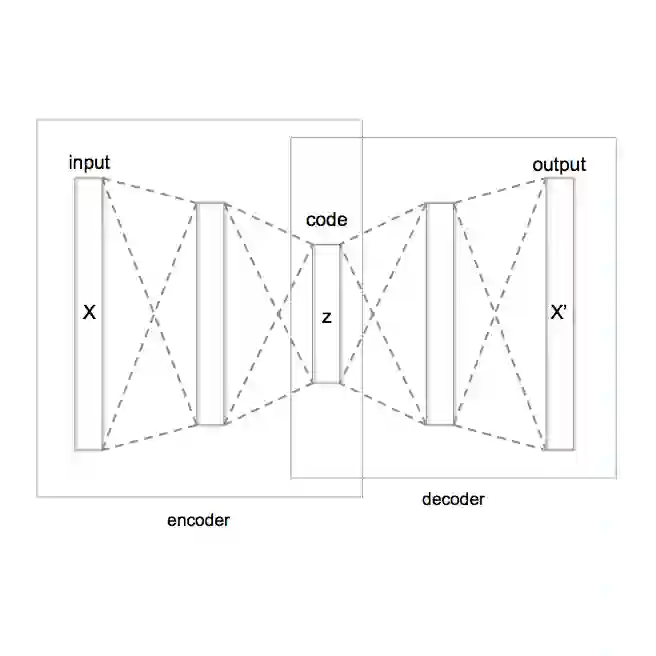
Many real-world processes have complex tail dependence structures that cannot be characterized using classical Gaussian processes. More flexible spatial extremes models such as Gaussian scale mixtures and single-station conditioning models exhibit appealing extremal dependence properties but are often exceedingly prohibitive to fit and simulate from. In this paper, we develop a new spatial extremes model that has flexible and non-stationary dependence properties, and we integrate it in the encoding-decoding structure of a variational autoencoder (extVAE). The extVAE can be used as a spatio-temporal emulator that characterizes the distribution of potential mechanistic model output states and produces outputs that have the same properties as the inputs, especially in the tail. Through extensive simulation studies, we show that our extVAE is vastly more time-efficient than traditional Bayesian inference while also outperforming many spatial extremes models with a stationary dependence structure. To further demonstrate the computational power of the extVAE, we analyze a high-resolution satellite-derived dataset of sea surface temperature in the Red Sea, which includes daily measurements at 16703 grid cells.
翻译:许多真实世界的物理过程具有复杂尾部依赖结构,无法用经典高斯过程表征。更灵活的空间极值模型(如高斯尺度混合模型与单站点条件模型)虽具有理想的极值依赖特性,但其拟合与模拟过程通常极为繁琐。本文提出一种具备灵活非平稳依赖特性的新型空间极值模型,并将其集成于变分自编码器(extVAE)的编码-解码结构中。该extVAE可作为时空模拟器,既能表征潜在机理模型输出状态的分布特征,又可生成与输入具有相同统计特性(尤其是尾部特性)的输出结果。通过大量仿真实验证明,我们的extVAE相比传统贝叶斯推断方法在时间效率上具有显著优势,同时其性能优于多个采用平稳依赖结构的空间极值模型。为进一步验证extVAE的计算能力,我们分析了红海地区高分辨率卫星海表温度数据集,该数据包含16703个网格单元的日观测值。




相关内容




 微信扫码咨询专知VIP会员