

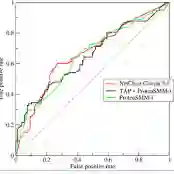
Progression to dialysis or end-stage renal disease is a rare but clinically important outcome. Clinicians need evidence on how medication exposures influence downstream risk. We constructed a fixed-window EHR cohort (90-day observation, 730-day prediction; N=81401; dialysis/ESRD prevalence: 1.1%) and modeled sequences of diagnoses, procedures, and medications with kidney laboratory trends (creatinine, BUN, eGFR). A transformer-based causal multi-head model was trained to estimate drug- and ingredient-level average treatment effects (ATEs) using counterfactual exposure removal and insertion under a full medication history setup. On test set, predictive performance reached an AUC of 0.694 and PR-AUC of 0.094. At the selected decision threshold (0.883), the model achieved an F1 score of 0.201 with a Brier score of 0.018. Post-hoc causal analyses of lab changes (eGFR, creatinine, BUN) using IPTW, AIPW, naive, and covariate-adjusted OLS methods assessed clinical directionality. Results showed partial protective-direction support for ACE/ARB exposures and worsening-direction signals for loop diuretics.
翻译:进展至透析或终末期肾病是罕见但临床重要的结局。临床医生需要了解药物暴露如何影响下游风险的证据。我们构建了一个固定窗口的电子健康记录队列(观察期90天,预测期730天;样本量81401例;透析/终末期肾病患病率:1.1%),并对诊断、手术和用药序列结合肾脏实验室指标趋势(肌酐、血尿素氮、估算肾小球滤过率)进行建模。基于Transformer的因果多头模型在完整用药史设置下,通过反事实暴露移除与插入方法,训练估计药物及成分水平的平均治疗效果(ATEs)。在测试集上,预测性能达到AUC为0.694,PR-AUC为0.094。在选定决策阈值(0.883)下,模型取得F1分数0.201,Brier分数0.018。采用IPTW、AIPW、朴素法和协变量调整OLS方法对实验室指标变化(eGFR、肌酐、BUN)的事后因果分析评估了临床方向性。结果显示ACE/ARB类暴露呈部分保护方向支持,而袢利尿剂暴露呈现恶化方向信号。




相关内容

一是主要脏器无疾病,身体形态发育良好,体形均匀,人体各系统具有良好的生理功能,有较强的身体活动能力和劳动能力,这是对健康最基本的要求;
二是对疾病的抵抗能力较强,能够适应环境变化,各种生理刺激以及致病因素对身体的作用。传统的健康观是“无病即健康”,现代人的健康观是整体健康,世界卫生组织提出“健康不仅是躯体没有疾病,还要具备心理健康、社会适应良好和有道德”。因此,现代人的健康内容包括:躯体健康、心理健康、心灵健康、社会健康、智力健康、道德健康、环境健康等。健康是人的基本权利。健康是人生的第一财富。


 微信扫码咨询专知VIP会员