

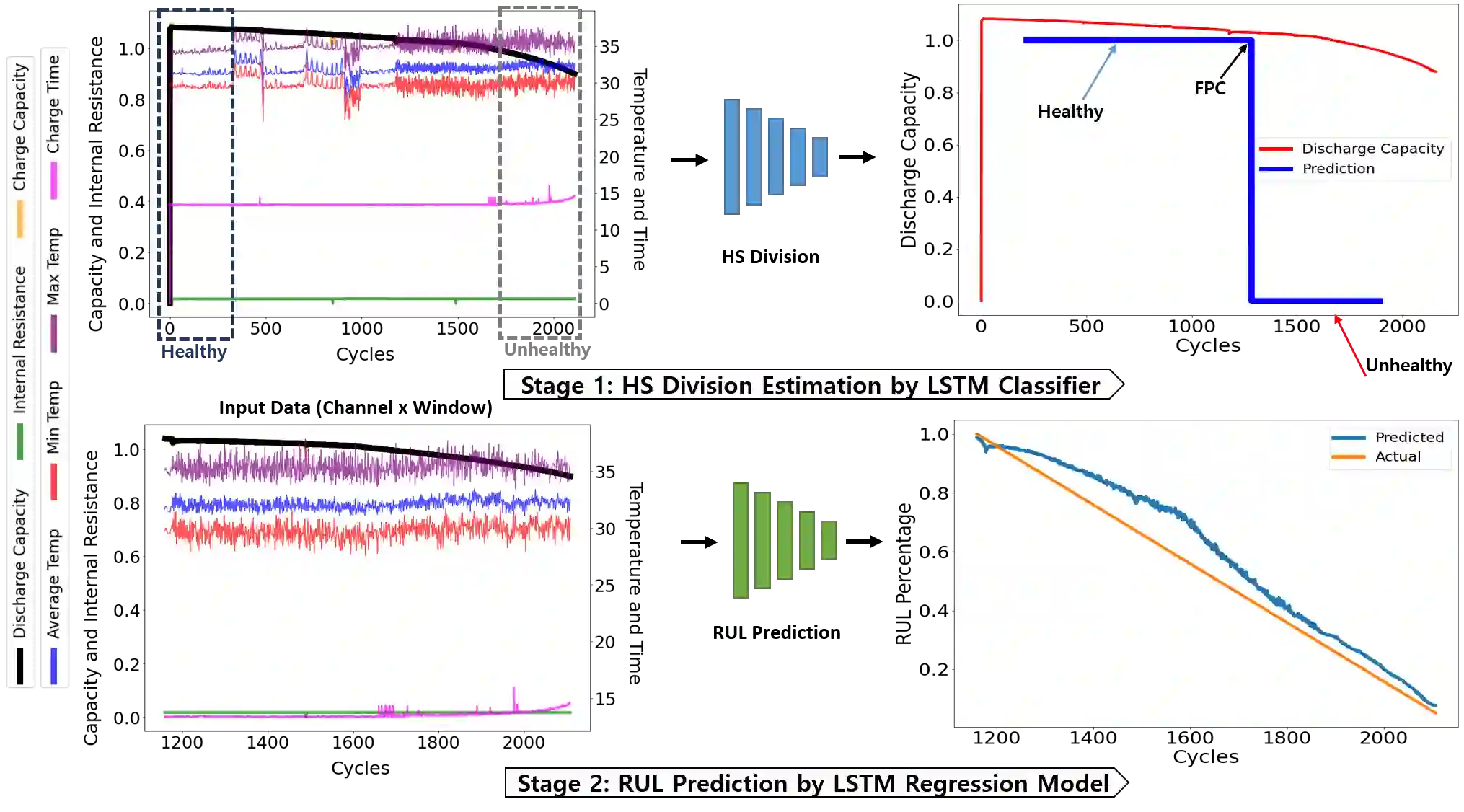
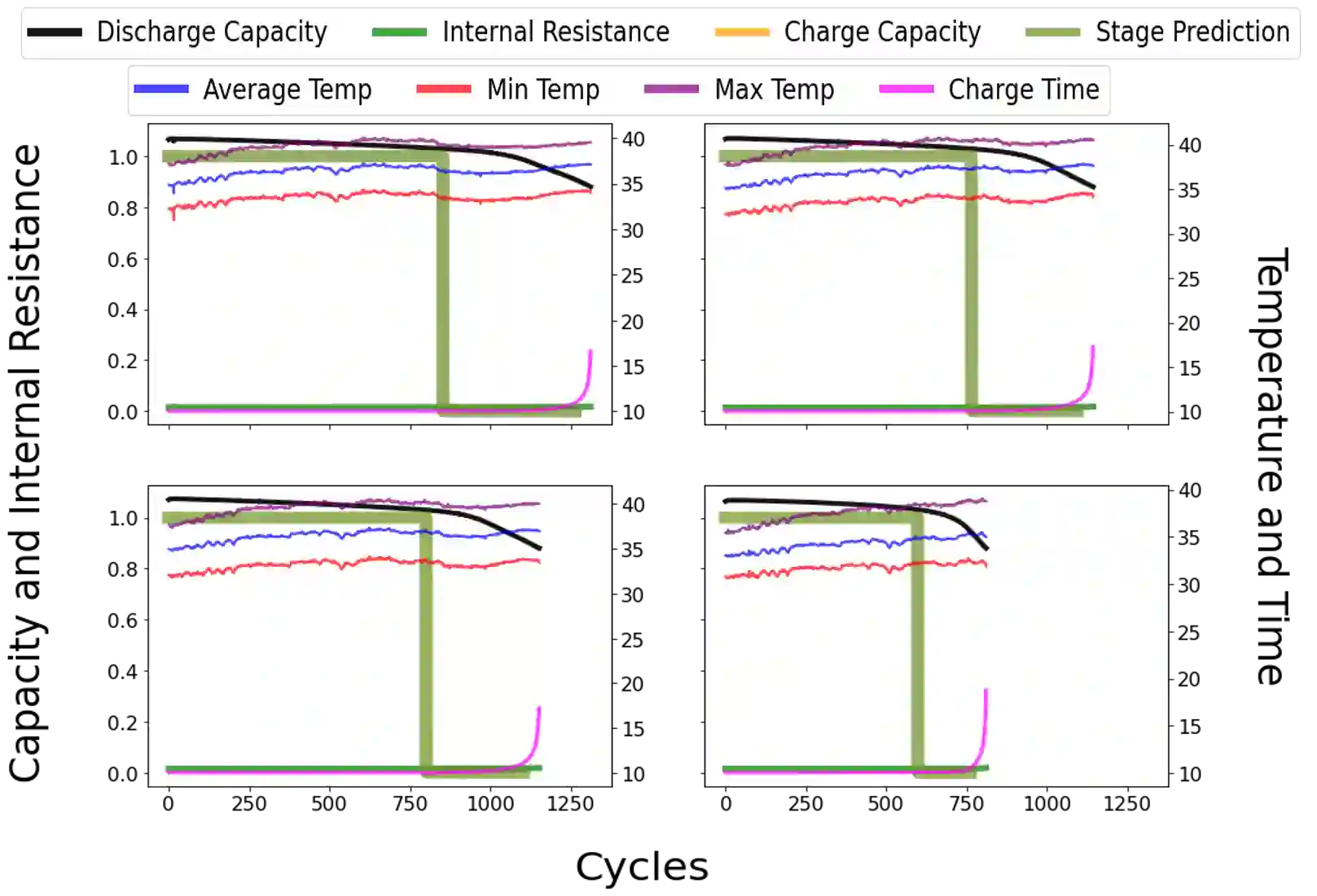
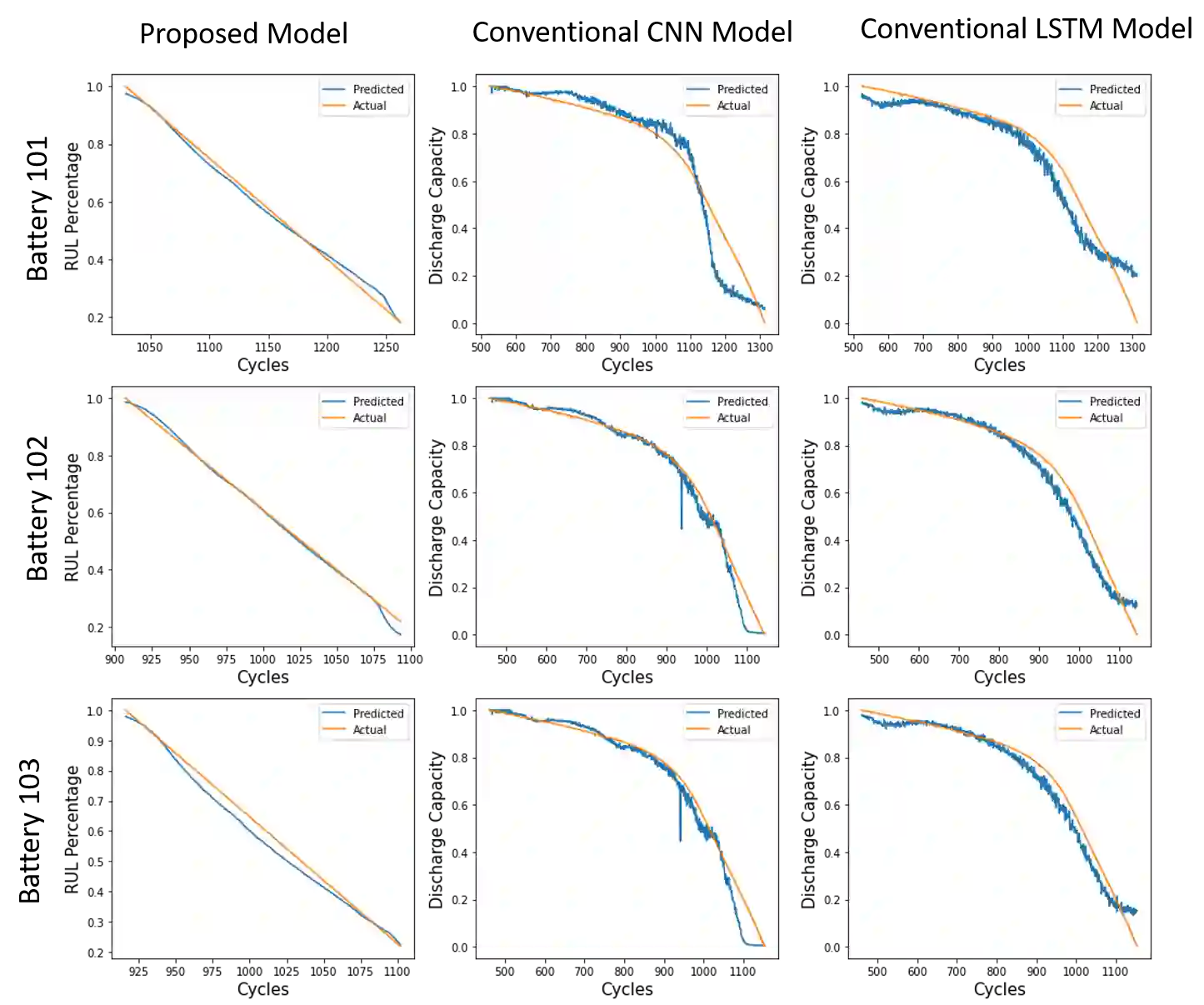
Early prediction of remaining useful life (RUL) is crucial for effective battery management across various industries, ranging from household appliances to large-scale applications. Accurate RUL prediction improves the reliability and maintainability of battery technology. However, existing methods have limitations, including assumptions of data from the same sensors or distribution, foreknowledge of the end of life (EOL), and neglect to determine the first prediction cycle (FPC) to identify the start of the unhealthy stage. This paper proposes a novel method for RUL prediction of Lithium-ion batteries. The proposed framework comprises two stages: determining the FPC using a neural network-based model to divide the degradation data into distinct health states and predicting the degradation pattern after the FPC to estimate the remaining useful life as a percentage. Experimental results demonstrate that the proposed method outperforms conventional approaches in terms of RUL prediction. Furthermore, the proposed method shows promise for real-world scenarios, providing improved accuracy and applicability for battery management.
翻译:剩余使用寿命(RUL)的早期预测对于从家用电器到大规模应用等各行业的有效电池管理至关重要。准确的RUL预测能够提升电池技术的可靠性与可维护性。然而,现有方法存在局限性,包括假设数据来自相同传感器或服从相同分布、需预先获知寿命终止(EOL)时间点,且忽略了确定首次预测周期(FPC)以识别非健康阶段起始点的问题。本文提出了一种锂离子电池RUL预测新方法。该框架包含两个阶段:首先利用基于神经网络的模型确定FPC,将退化数据划分为不同的健康状态;随后预测FPC后的退化模式,以百分比形式估算剩余使用寿命。实验结果表明,该方法在RUL预测方面优于传统方法。此外,该方法在实际场景中展现出潜力,可为电池管理提供更优的准确性与适用性。




相关内容




 微信扫码咨询专知VIP会员