

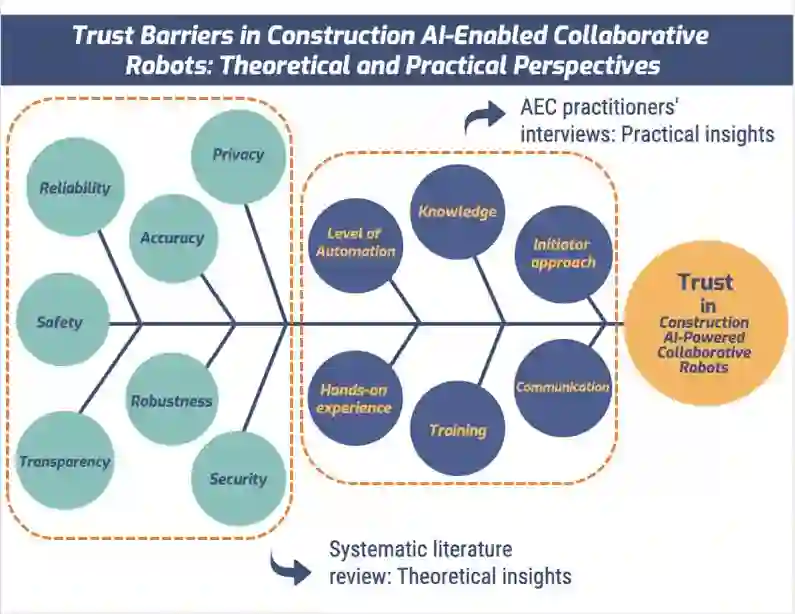
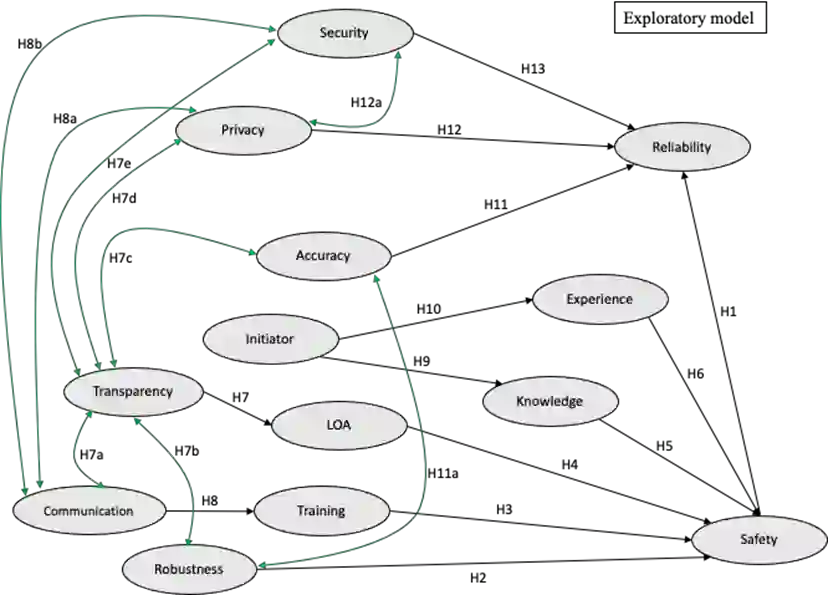
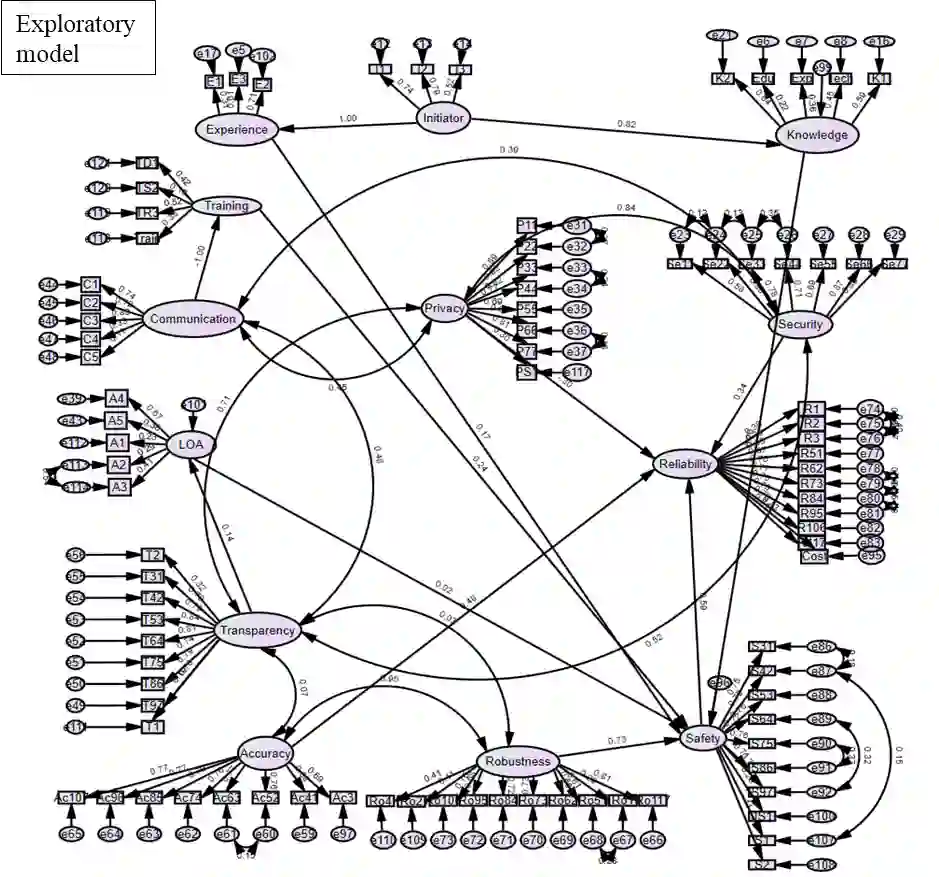
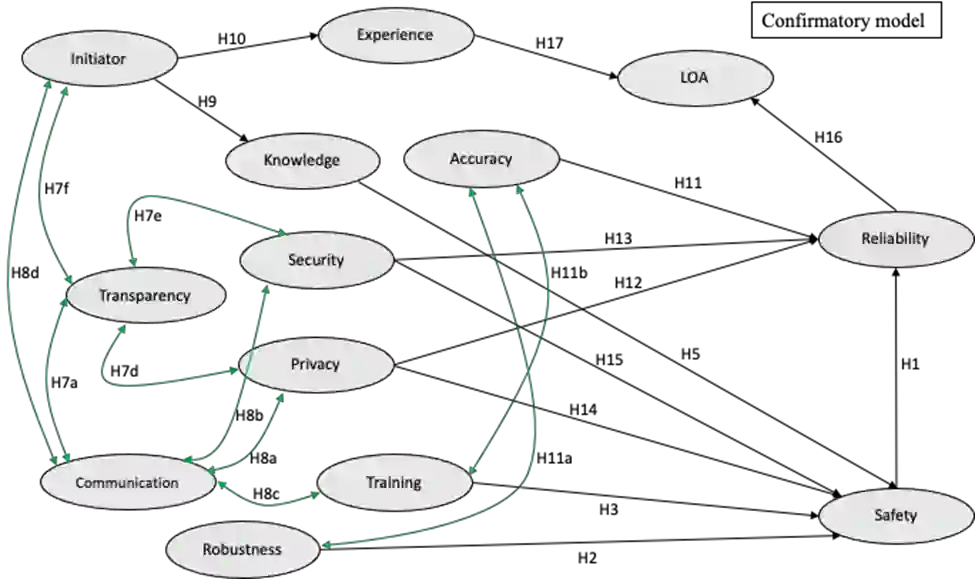
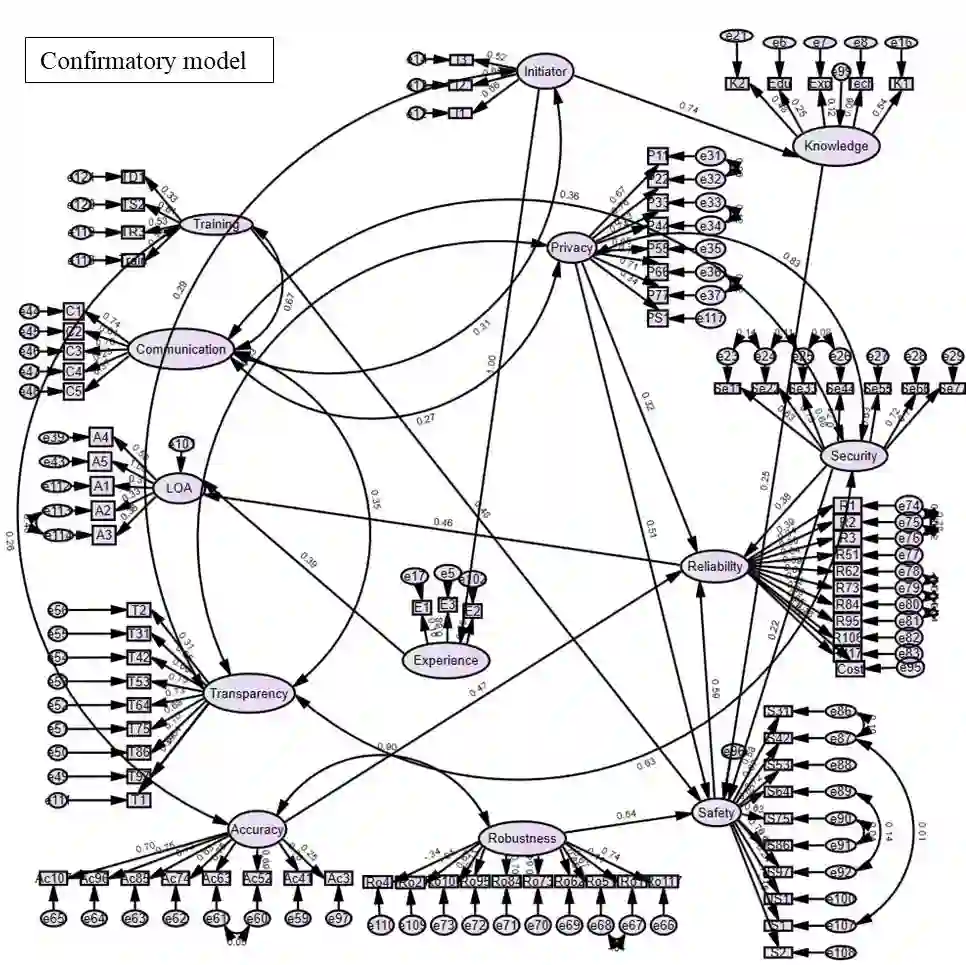
This study aimed to investigate the key technical and psychological factors that impact the architecture, engineering, and construction (AEC) professionals' trust in collaborative robots (cobots) powered by artificial intelligence (AI). The study employed a nationwide survey of 600 AEC industry practitioners to gather in-depth responses and valuable insights into the future opportunities for promoting the adoption, cultivation, and training of a skilled workforce to leverage this technology effectively. A Structural Equation Modeling (SEM) analysis revealed that safety and reliability are significant factors for the adoption of AI-powered cobots in construction. Fear of being replaced resulting from the use of cobots can have a substantial effect on the mental health of the affected workers. A lower error rate in jobs involving cobots, safety measurements, and security of data collected by cobots from jobsites significantly impact reliability, while the transparency of cobots' inner workings can benefit accuracy, robustness, security, privacy, and communication, and results in higher levels of automation, all of which demonstrated as contributors to trust. The study's findings provide critical insights into the perceptions and experiences of AEC professionals towards adoption of cobots in construction and help project teams determine the adoption approach that aligns with the company's goals workers' welfare.
翻译:本研究旨在探究影响建筑、工程与施工(AEC)专业人员对人工智能(AI)驱动的协作机器人信任度的关键技术与心理因素。研究通过全国范围调查600名AEC行业从业者,收集深度反馈与宝贵见解,以探索未来推广采用、培养与培训熟练劳动力以有效利用此技术的机遇。结构方程模型(SEM)分析表明,安全性与可靠性是建筑行业采用AI驱动协作机器人的关键因素。因使用协作机器人产生的被替代恐惧可能对受影响工人的心理健康产生重大影响。涉及协作机器人的作业中较低的错误率、安全措施以及协作机器人在施工现场收集数据的安全性显著影响可靠性,而协作机器人内部运作的透明度有益于准确性、稳健性、安全性、隐私与通信,并促生更高自动化水平——所有这些均被证实为信任的促成因素。研究结果为AEC专业人员对建筑领域采用协作机器人的认知与体验提供了关键见解,并帮助项目团队确定与公司目标及工人福祉相一致的采纳路径。




相关内容




 微信扫码咨询专知VIP会员