

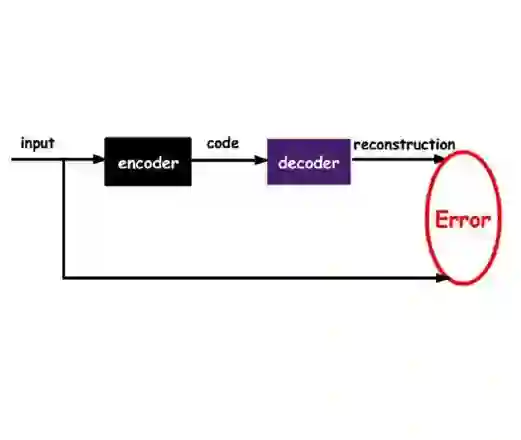
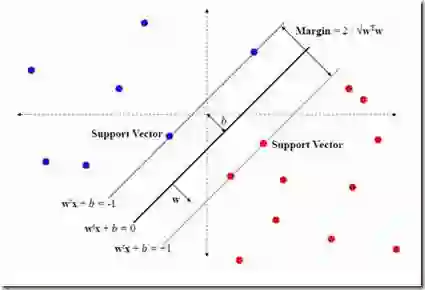
This study explores the application of autoencoder-based machine learning techniques for anomaly detection to identify exoplanet atmospheres with unconventional chemical signatures using a low-dimensional data representation. We use the Atmospheric Big Challenge (ABC) database, a publicly available dataset with over 100,000 simulated exoplanet spectra, to construct an anomaly detection scenario by defining CO2-rich atmospheres as anomalies and CO2-poor atmospheres as the normal class. We benchmarked four different anomaly detection strategies: Autoencoder Reconstruction Loss, One-Class Support Vector Machine (1 class-SVM), K-means Clustering, and Local Outlier Factor (LOF). Each method was evaluated in both the original spectral space and the autoencoder's latent space using Receiver Operating Characteristic (ROC) curves and Area Under the Curve (AUC) metrics. To test the performance of the different methods under realistic conditions, we introduced Gaussian noise levels ranging from 10 to 50 ppm. Our results indicate that anomaly detection is consistently more effective when performed within the latent space across all noise levels. Specifically, K-means clustering in the latent space emerged as a stable and high-performing method. We demonstrate that this anomaly detection approach is robust to noise levels up to 30 ppm (consistent with realistic space-based observations) and remains viable even at 50 ppm when leveraging latent space representations. On the other hand, the performance of the anomaly detection methods applied directly in the raw spectral space degrades significantly with increasing the level of noise. This suggests that autoencoder-driven dimensionality reduction offers a robust methodology for flagging chemically anomalous targets in large-scale surveys where exhaustive retrievals are computationally prohibitive.
翻译:本研究探索了基于自编码器的机器学习异常检测技术,通过低维数据表征识别具有非常规化学特征的系外行星大气。我们利用包含超过10万条模拟系外行星光谱的公开数据集——大气大数据挑战(ABC)数据库,通过将富含CO2的大气定义为异常类、贫CO2大气定义为正常类,构建了异常检测场景。我们评估了四种异常检测策略的性能基准:自编码器重构损失、单类支持向量机(1 class-SVM)、K均值聚类和局部离群因子(LOF)。每种方法均在原始光谱空间和自编码器潜在空间中,采用受试者工作特征(ROC)曲线与曲线下面积(AUC)指标进行评估。为测试各方法在真实条件下的性能,我们引入了10至50 ppm范围的高斯噪声。结果表明,在所有噪声水平下,于潜在空间中进行异常检测均能持续获得更优效果。具体而言,潜在空间中的K均值聚类表现出稳定且卓越的性能。我们证明该异常检测方法在噪声水平高达30 ppm(与实际天基观测条件一致)时仍保持稳健性,即使噪声达到50 ppm,利用潜在空间表征仍具备可行性。相反,直接在原始光谱空间应用的异常检测方法性能随噪声增加而显著下降。这表明在计算上无法进行详尽反演的大规模巡天任务中,自编码器驱动的降维方法为标记化学异常目标提供了稳健的技术路径。




相关内容


 微信扫码咨询专知VIP会员