

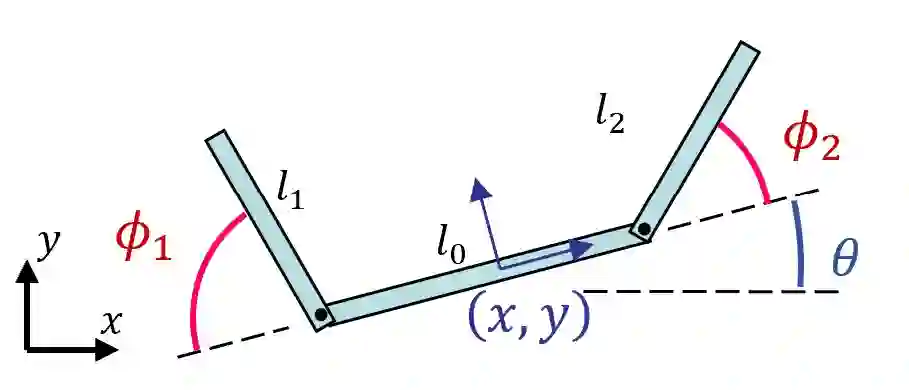
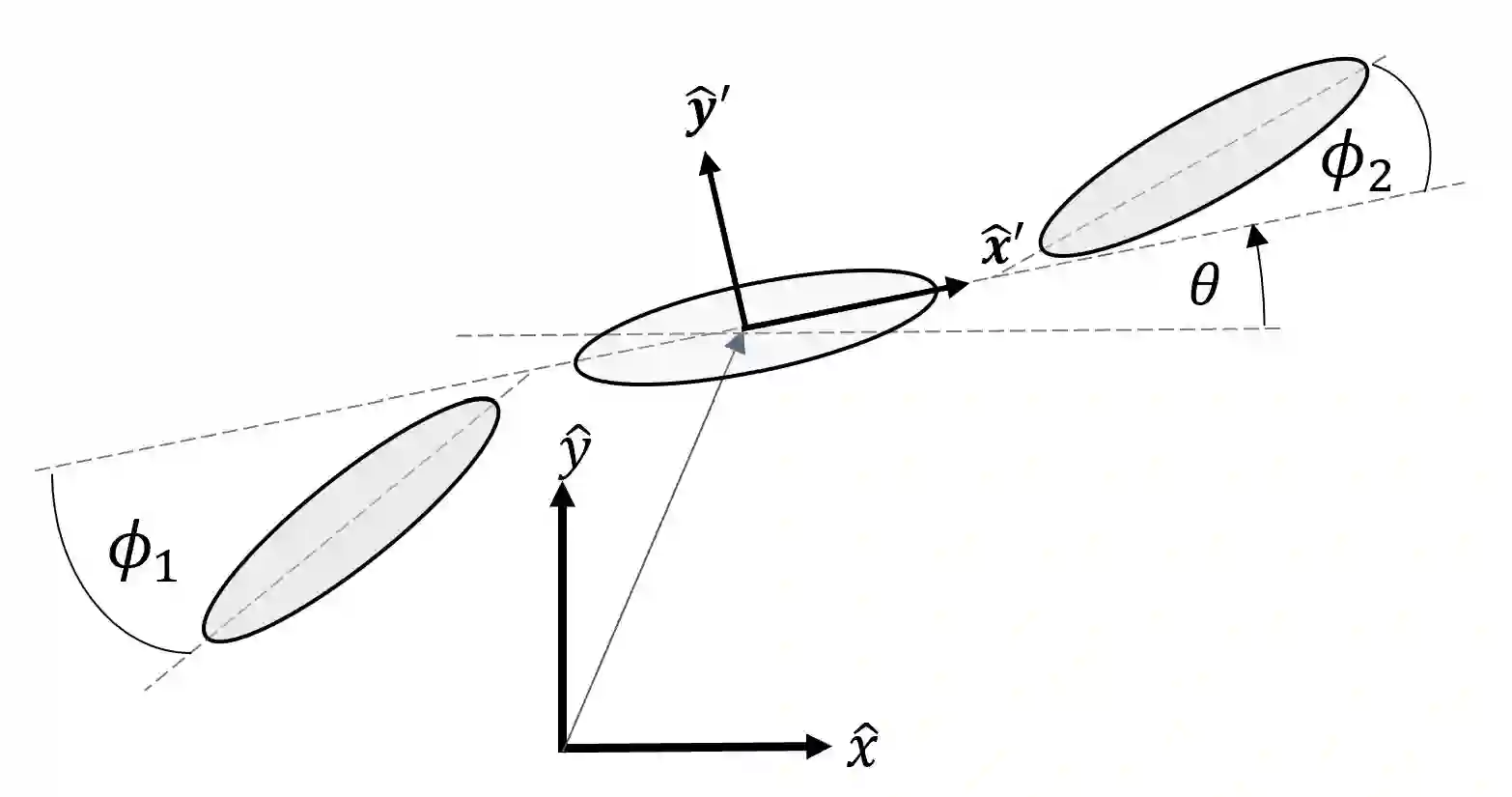
Many robotic systems locomote using gaits - periodic changes of internal shape, whose mechanical interaction with the robot's environment generate characteristic net displacements. Prominent examples with two shape variables are the low Reynolds number 3-link "Purcell swimmer" with inputs of 2 joint angles and the "ideal fluid" swimmer. Gait analysis of these systems allows for intelligent decisions to be made about the swimmer's locomotive properties, increasing the potential for robotic autonomy. In this work, we present comparative analysis of gait optimization using two different methods. The first method is variational approach of "Pontryagin's maximum principle" (PMP) from optimal control theory. We apply PMP for several variants of 3-link swimmers, with and without incorporation of bounds on joint angles. The second method is differential-geometric analysis of the gaits based on curvature (total Lie bracket) of the local connection for 3-link swimmers. Using optimized body-motion coordinates, contour plots of the curvature in shape space give visualization that enables identifying distance-optimal gaits as zero level sets. Combining and comparing results of the two methods enables better understanding of changes in existence, shape and topology of distance-optimal gait trajectories, depending on the swimmers' parameters.
翻译:许多机器人系统通过步态(即内部形状的周期性变化)实现运动,这些变化与机器人环境的机械相互作用产生特征性的净位移。典型的具有两个形状变量的例子包括低雷诺数下的三连杆“Purcell游泳机器人”(以两个关节角为输入)和“理想流体”游泳机器人。对这些系统的步态分析有助于对游泳机器人的运动特性做出智能决策,从而提升机器人自主性。本研究采用两种方法对步态优化进行对比分析。第一种方法是基于最优控制理论中“庞特里亚金最大值原理”(PMP)的变分方法。我们将PMP应用于三连杆游泳机器人的若干变体,分别考虑包含和不包含关节角约束的情况。第二种方法是基于三连杆游泳机器人局部连接的曲率(总李括号)的微分几何步态分析。通过优化体坐标运动,形状空间中曲率的等高线图可直观显示距离最优步态为零水平集的现象。结合并比较两种方法的结果,有助于深入理解取决于游泳机器人参数的距离最优步态轨迹的存在性、形状及拓扑结构的变化。




相关内容



 微信扫码咨询专知VIP会员