

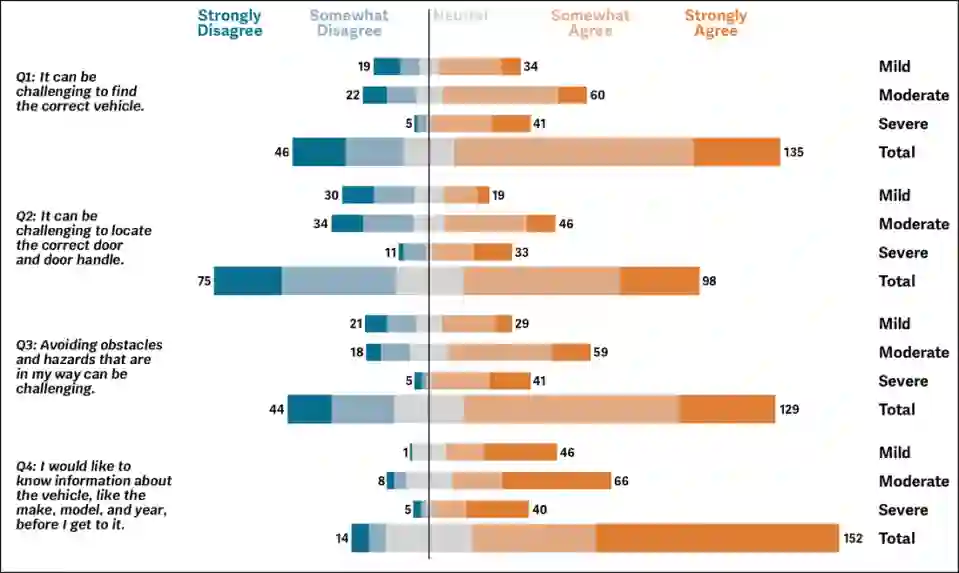
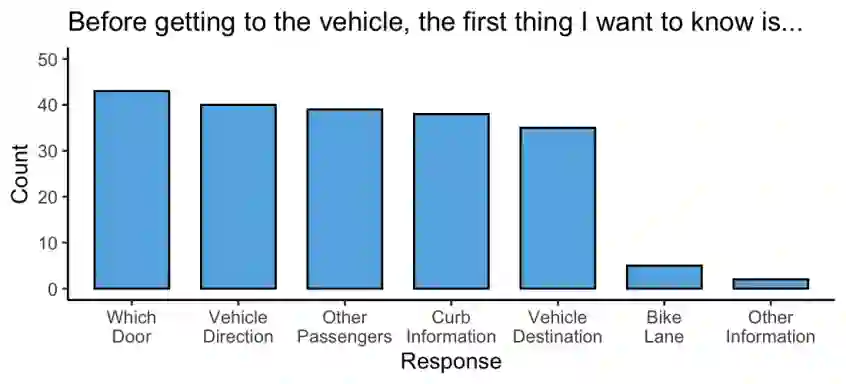
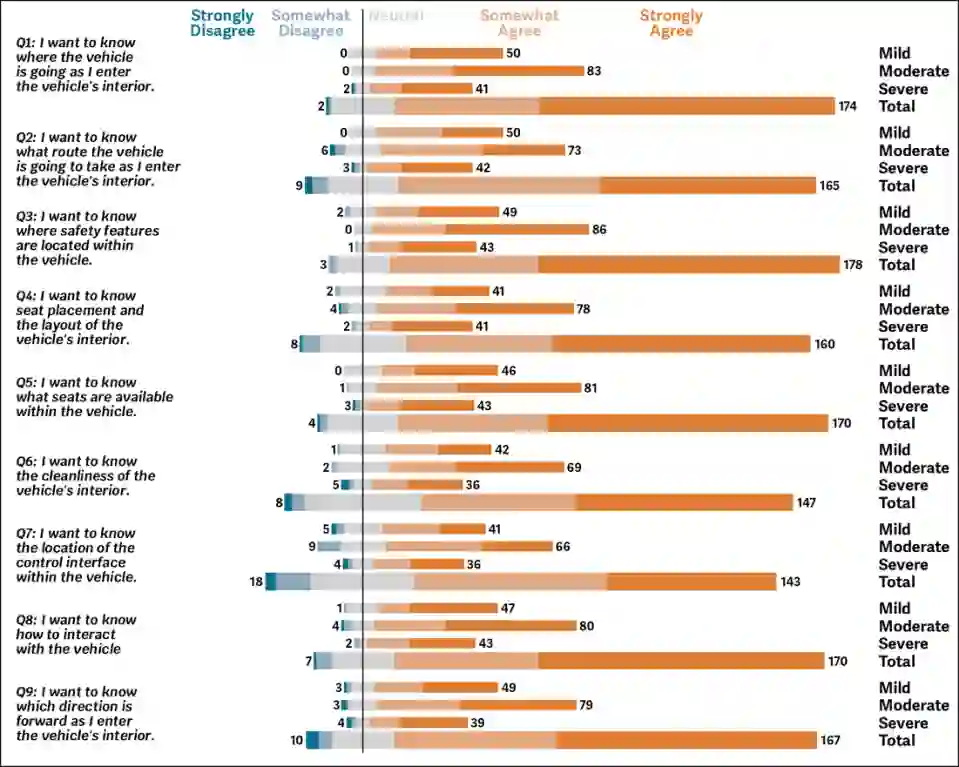
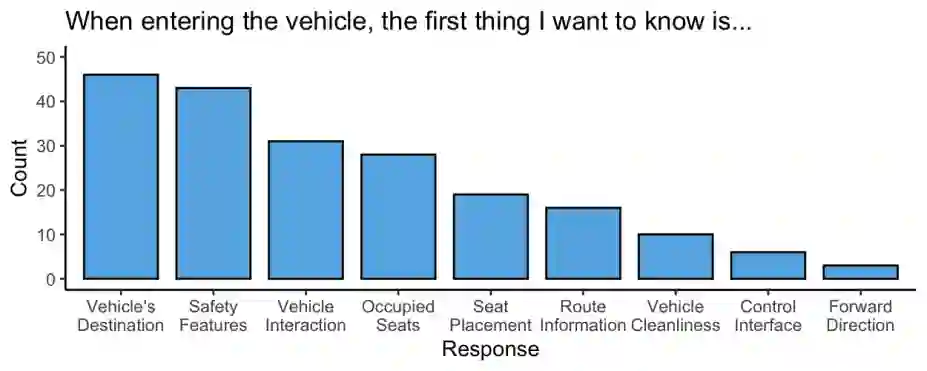
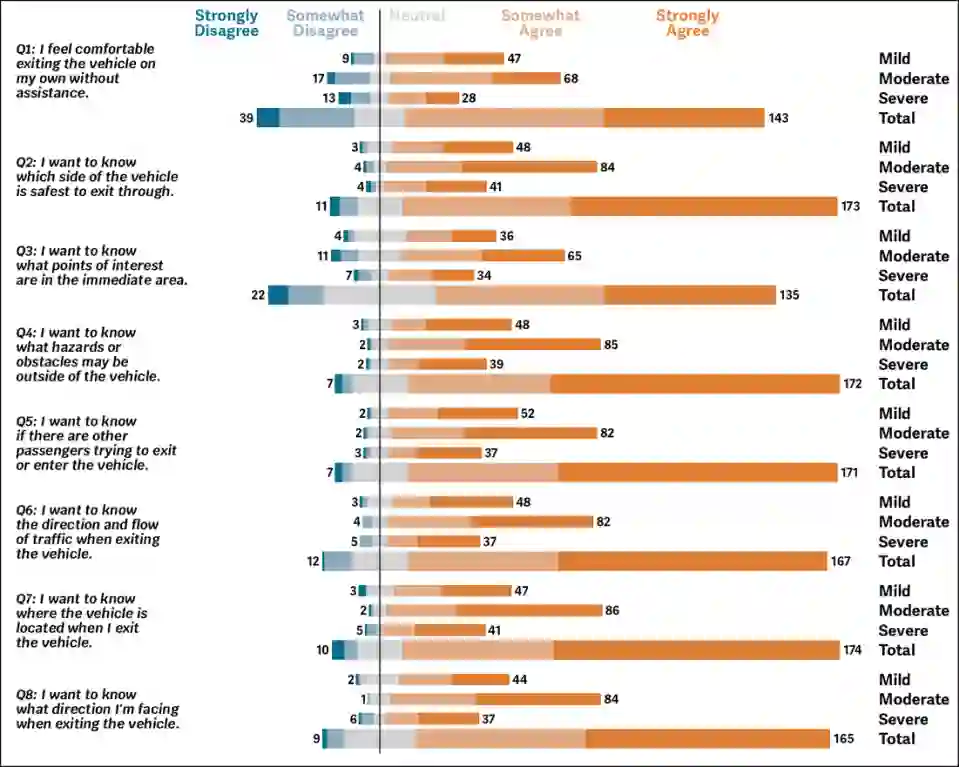
Purpose: Autonomous vehicles (AVs) are becoming a promising transportation solution for blind and low-vision (BLV) travelers, offering the potential for greater independent mobility. This paper explores the information needs of BLV users across multiple steps of the transportation journey, including finding and navigating to, entering, and exiting vehicles independently. Methods: A survey with 202 BLV respondents and interviews with 12 BLV individuals revealed the perspectives of BLV end-users and informed the sequencing of natural language information required for successful travel. Whereas the survey identified key information needs across the three trip segments, the interviews helped prioritize how that information should be presented in a sequence of accessible descriptions to travelers. Results: Taken together, the survey and interviews reveal that BLV users prioritize knowing the vehicle's make and model and how to find the correct vehicle during the navigation phase. They also emphasize the importance of confirmations about the vehicle's destination and onboard safety features upon entering the vehicle. While exiting, BLV users value information about hazards and obstacles, as well as knowing which side of the vehicle to exit. Furthermore, results highlight that BLV travelers desire using their own smartphone devices when receiving information from AVs and prefer audio-based interaction. Conclusion: The findings from this research contribute a structured framework for delivering trip-related information to BLV users, useful for designers incorporating natural language descriptions tailored to each travel segment. This work offers important contributions for sequencing transportation-related descriptions throughout the AV journey, ultimately enhancing the mobility and independence of BLV individuals.
翻译:目的:自动驾驶车辆(AVs)正成为视障(BLV)旅行者一种前景广阔的交通解决方案,有望提供更大的独立出行能力。本文探讨了BLV用户在交通出行多个步骤中的信息需求,包括独立寻找并导航至车辆、进入车辆以及离开车辆。方法:一项针对202名BLV受访者的调查以及对12名BLV人士的访谈,揭示了BLV终端用户的观点,并明确了成功出行所需的自然语言信息序列。调查识别了三个出行阶段的关键信息需求,而访谈则帮助确定了如何将这些信息以一系列可访问描述的形式按优先级顺序呈现给旅行者。结果:综合调查与访谈发现,BLV用户在导航阶段优先关注了解车辆的制造商和型号以及如何找到正确车辆。他们同样强调在进入车辆时,获得关于车辆目的地和车载安全功能的确认信息至关重要。在离开车辆时,BLV用户重视关于危险和障碍物的信息,以及了解应从车辆的哪一侧下车。此外,结果突出表明,BLV旅行者希望使用自己的智能手机设备接收来自AVs的信息,并偏好基于音频的交互方式。结论:本研究的结果为向BLV用户提供出行相关信息贡献了一个结构化框架,有助于设计者为每个出行阶段定制自然语言描述。这项工作为在整个AV出行过程中序列化交通相关描述提供了重要贡献,最终将增强BLV个体的出行能力和独立性。




相关内容



 微信扫码咨询专知VIP会员