

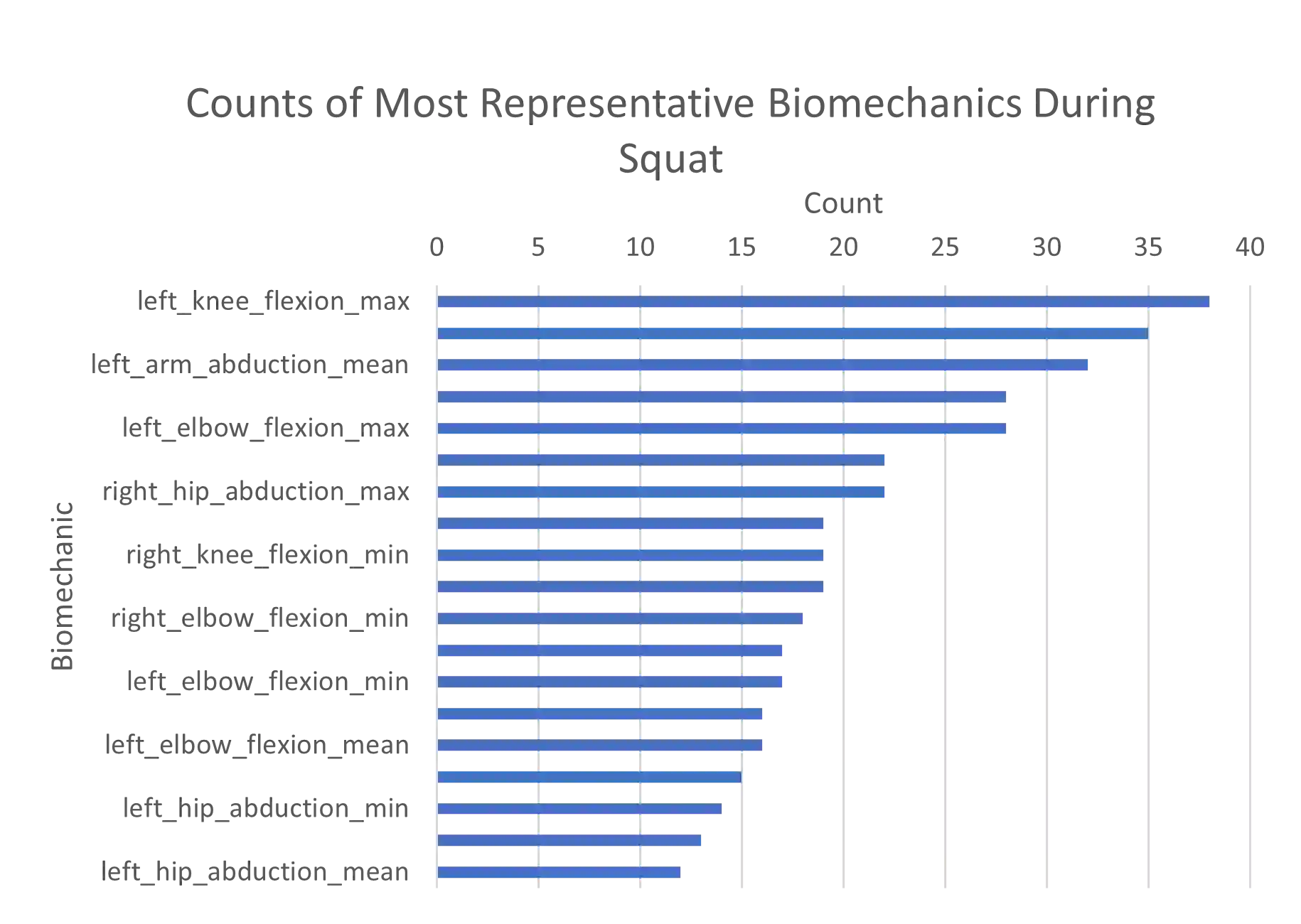
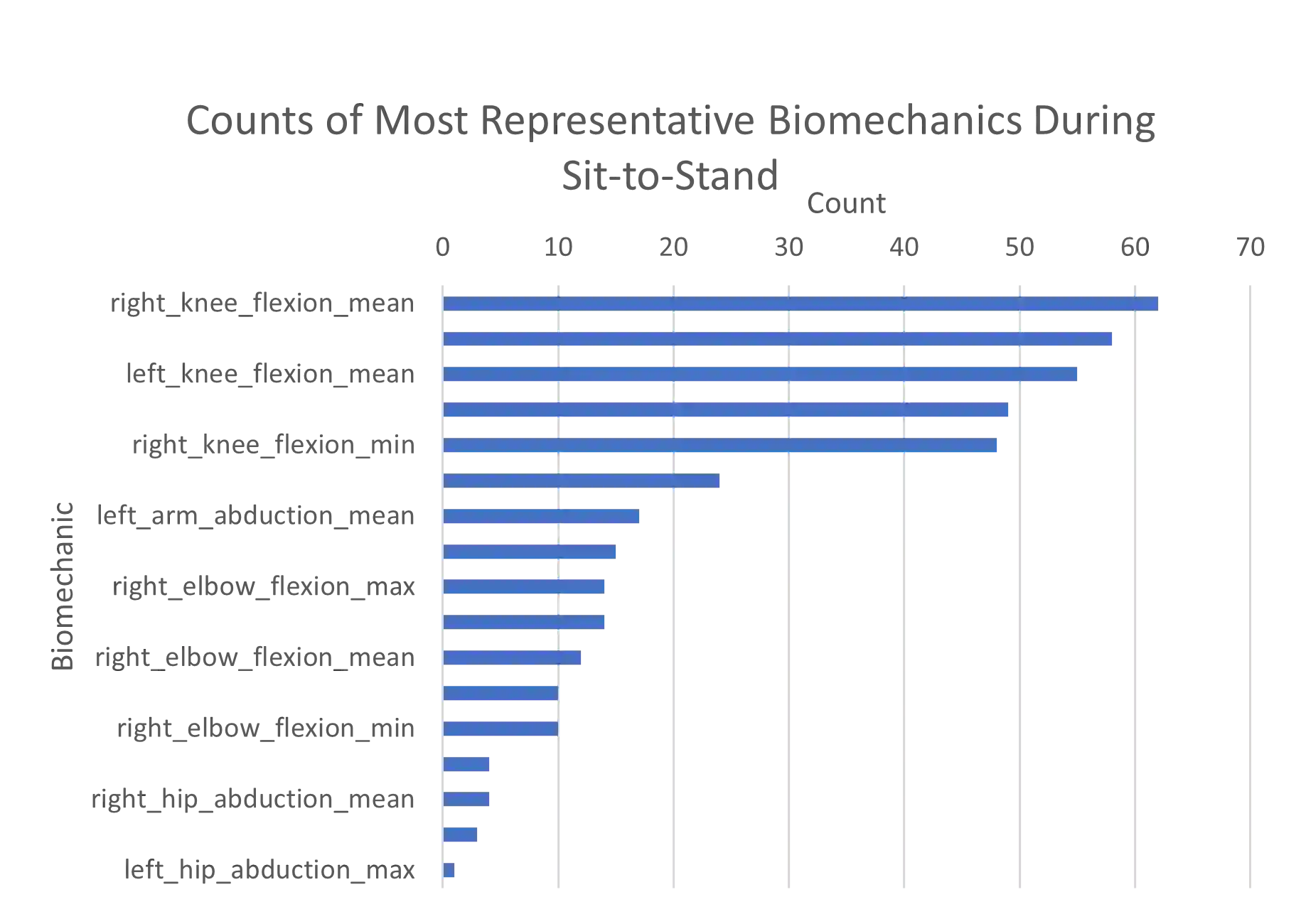
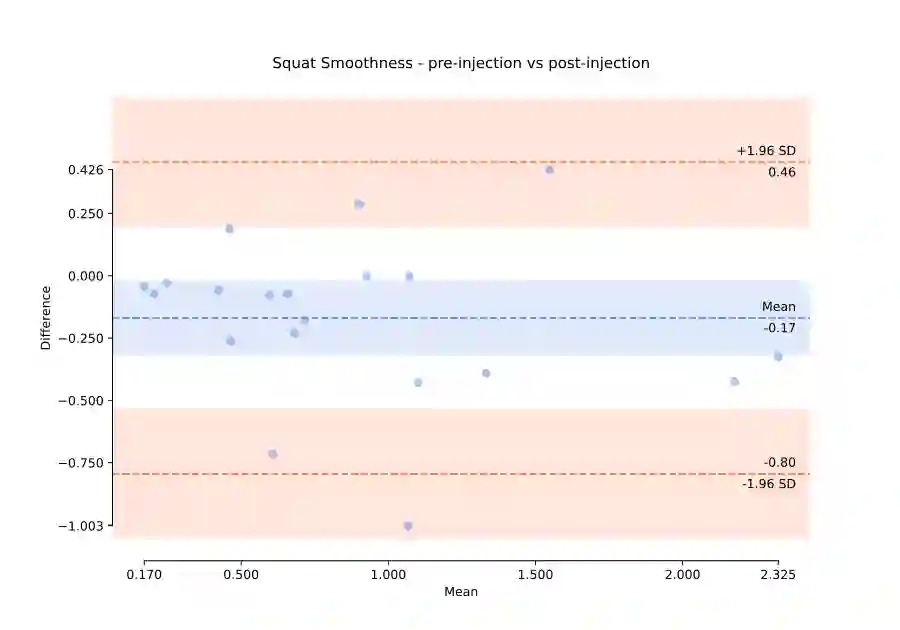
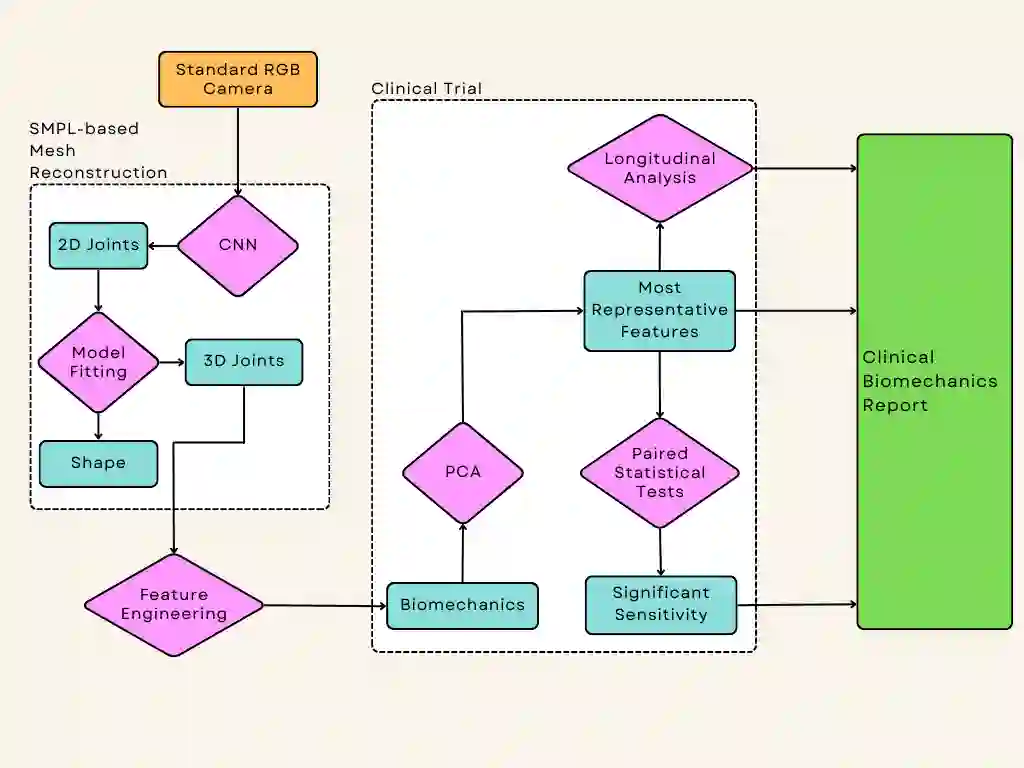
In recent years the NHS has been having increased difficulty seeing all low-risk patients, this includes but not limited to suspected osteoarthritis (OA) patients. To help address the increased waiting lists and shortages of staff, we propose a novel method of automated biomarker identification for diagnosis of knee disorders and the monitoring of treatment progression. The proposed method allows for the measurement and analysis of biomechanics and analyse their clinical significance, in both a cheap and sensitive alternative to the currently available commercial alternatives. These methods and results validate the capabilities of standard RGB cameras in clinical environments to capture motion and show that when compared to alternatives such as depth cameras there is a comparable accuracy in the clinical environment. Biomarker identification using Principal Component Analysis (PCA) allows the reduction of the dimensionality to produce the most representative features from motion data, these new biomarkers can then be used to assess the success of treatment and track the progress of rehabilitation. This was validated by applying these techniques on a case study utilising the exploratory use of local anaesthetic applied on knee pain, this allows these new representative biomarkers to be validated as statistically significant (p-value < 0.05).
翻译:近年来,英国国家医疗服务体系(NHS)在接诊所有低风险患者方面日益困难,包括但不限于疑似骨关节炎(OA)患者。为协助解决候诊名单增加及人员短缺问题,我们提出一种用于膝关节疾病诊断与治疗进展监测的自动化生物标志物识别新方法。该方法能够以低成本且灵敏度高的方式测量与分析生物力学特征及其临床意义,作为现有商业替代方案的可行选择。这些方法与结果验证了标准RGB摄像头在临床环境中捕捉运动的能力,并表明与深度摄像头等替代方案相比,在临床环境下具有相当的准确性。通过主成分分析(PCA)进行生物标志物识别,可降低数据维度以提取运动数据中最具代表性的特征,这些新生物标志物随后可用于评估治疗效果并追踪康复进展。本研究通过案例研究验证了该方法——将局部麻醉剂探索性应用于膝关节疼痛,结果证实这些新型生物标志物具有统计学显著性(p值<0.05)。




相关内容




 微信扫码咨询专知VIP会员