

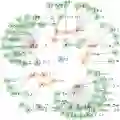
Alkaptonuria (AKU) is an ultra-rare autosomal recessive metabolic disorder caused by mutations in the HGD (Homogentisate 1,2-Dioxygenase) gene, leading to a pathological accumulation of homogentisic acid (HGA) in body fluids and tissues. This leads to systemic manifestations, including premature spondyloarthropathy, renal and prostatic stones, and cardiovascular complications. Being ultra-rare, the amount of data related to the disease is limited, both in terms of clinical data and literature. Knowledge graphs (KGs) can help connect the limited knowledge about the disease (basic mechanisms, manifestations and existing therapies) with other knowledge; however, AKU is frequently underrepresented or entirely absent in existing biomedical KGs. In this work, we apply a text-mining methodology based on PubTator3 for large-scale extraction of biomedical relations. We construct two KGs of different sizes, validate them using existing biochemical knowledge and use them to extract genes, diseases and therapies possibly related to AKU. This computational framework reveals the systemic interactions of the disease, its comorbidities, and potential therapeutic targets, demonstrating the efficacy of our approach in analyzing rare metabolic disorders.
翻译:尿黑酸尿症(Alkaptonuria,AKU)是一种超罕见常染色体隐性遗传代谢疾病,由HGD(尿黑酸1,2-双加氧酶)基因突变引起,导致尿黑酸在体液和组织中病理性蓄积。该病症引发全身性临床表现,包括早发性脊柱关节病、肾脏与前列腺结石以及心血管并发症。由于该疾病极为罕见,其相关数据(包括临床数据和文献资料)均十分有限。知识图谱能够帮助将有限的疾病知识(基础机制、临床表现及现有疗法)与其他知识建立关联;然而,现有生物医学知识图谱中往往缺乏或完全未包含AKU相关信息。本研究采用基于PubTator3的文本挖掘方法进行生物医学关系的大规模提取。我们构建了两个不同规模的知识图谱,利用现有生化知识进行验证,并从中提取可能与AKU相关的基因、疾病及治疗方法。该计算框架揭示了该疾病的系统性相互作用、共病症及潜在治疗靶点,证明了本方法在分析罕见代谢疾病方面的有效性。




相关内容


 微信扫码咨询专知VIP会员