

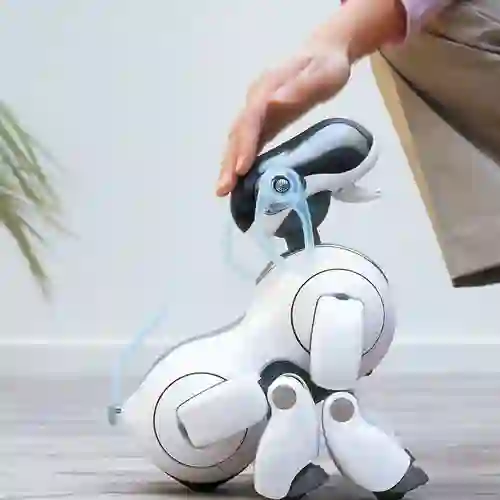
Family-school partnerships (FSP) are critical to children's development, yet families often face barriers such as time constraints, fragmented communication, and limited opportunities for meaningful engagement. As a step toward facilitating broader family-school partnerships, we explore a novel approach that integrates a social robot into family settings, specifically supporting home-based activities. Through interviews and co-design sessions, we designed and developed a robotic system informed by both parents and children, that supported, among other interactions, family communication about school topics. We evaluated the robot in a week-long, in-home study with 10 families. Our findings show how families integrated the robot into daily life, how parental facilitation styles shaped use, and how families perceived both the helpfulness and challenges of the robot. We contribute empirical insights, a modular system, and design implications for family- and child-robot interactions. We discuss ethical and privacy considerations, and broaden the design space for technologies supporting family-school partnerships.
翻译:家庭-学校合作(FSP)对于儿童发展至关重要,然而家庭常面临时间限制、沟通碎片化以及缺乏有意义的参与机会等障碍。为促进更广泛的家庭-学校合作,我们探索了一种将社交机器人融入家庭环境的新方法,特别是用于支持居家活动。通过访谈和协同设计会议,我们设计并开发了一套基于家长和儿童需求洞察的机器人系统,该系统在支持家庭围绕学校话题进行沟通等互动中发挥作用。我们让10个家庭参与为期一周的入户研究,对机器人进行评估。研究结果显示:家庭如何将机器人融入日常生活、家长引导方式如何影响使用模式,以及家庭对机器人实用性与挑战的感知。我们提供了实证洞察、模块化系统方案,以及面向家庭-儿童机器人交互的设计启示。此外,还讨论了伦理与隐私考量,拓展了支持家庭-学校合作的技术设计空间。




相关内容



 微信扫码咨询专知VIP会员