

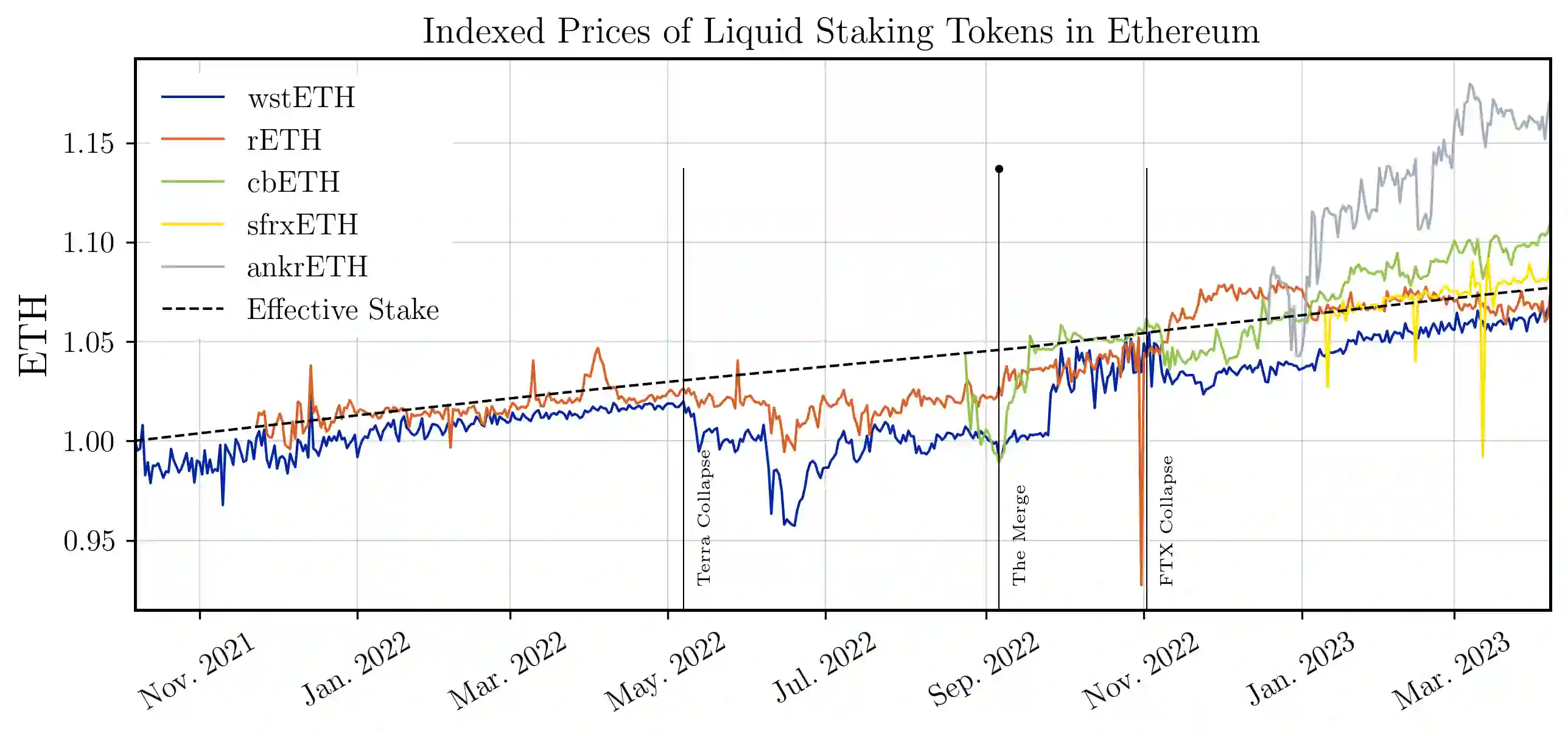
Liquid staking has become the largest category of decentralized finance protocols in terms of total value locked. However, few studies exist on its implementation designs or underlying risks. The liquid staking protocols allow for earning staking rewards without the disadvantage of locking the capital at the validators. Yet, they are seen by some as a threat to the Proof-of-Stake blockchain security. This paper is the first work that classifies liquid staking implementations. It analyzes the historical performance of major liquid staking tokens in comparison to the traditional staking for the largest Proof-of-Stake blockchains. Furthermore, the research investigates the impact of centralization, maximum extractable value and the migration of Ethereum from Proof-of-Work to Proof-of-Stake on the tokens' performance. Examining the tracking error of the liquid stacking providers to the staking rewards shows that they are persistent and cannot be explained by macro-variables of the currency, such as the variance or return.
翻译:流动性质押已锁定总价值而言成为去中心化金融协议中规模最大的类别。然而,现有对其实现设计或潜在风险的研究寥寥无几。流动性质押协议允许在不锁定验证者资金的情况下获得质押奖励,但部分观点认为其对权益证明区块链安全性构成威胁。本文首次对流动性质押实现方案进行分类,分析了主要流动性质押代币与最大权益证明区块链传统质押方式的历史表现。此外,研究还探讨了中心化、最大可提取价值以及以太坊从工作量证明向权益证明迁移对代币表现的影响。通过检验流动性质押提供者相对于质押奖励的跟踪误差,发现该误差具有持续性且无法由货币的宏观变量(如方差或收益率)解释。




相关内容



 微信扫码咨询专知VIP会员